
 Lifestyle
 Food & Nutrition
 Fitness
Morning stretches for desk workers are not a luxury or a nice-to-have. They are a practical defense against the damage that eight or more hours of sitting does to your body every single day. Prolonged desk sitting compresses spinal discs, shortens hip flexors, tightens the neck and shoulders, and can reduce flexibility by up to 20 percent over a typical workday. A 2024 study published in Applied Ergonomics found that workers who stretched regularly experienced 41 percent less neck and shoulder pain and 38 percent less lower back discomfort compared to those who only moved during lunch.
The routine below takes 10 minutes. It targets every muscle group that gets wrecked by desk work, requires zero equipment, and can be done in pajamas before your first coffee. You do not need to be flexible. You just need to be consistent.
- 1 Why Morning Stretches for Desk Workers Matter More Than You Think
- 2 Neck and Upper Trap Release: 2 Minutes
- 3 Chest and Shoulder Opener: 2 Minutes
- 4 Hip Flexor Stretch: The Single Most Important Move
- 5 Thoracic Spine Rotation: Undo the Desk Hunch
- 6 Hamstring and Calf Stretch: 2 Minutes
- 7 Wrist and Forearm Stretches for Desk Workers
- 8 The Complete 10-Minute Morning Routine
- 9 Frequently Asked Questions
- 9.1 How long should morning stretches for desk workers last?
- 9.2 Can morning stretches reduce back pain from sitting all day?
- 9.3 Is it better to stretch before or after sitting at a desk?
- 9.4 What are the most important morning stretches for desk workers?
- 9.5 How often should desk workers stretch during the day?
- 10 Conclusion
Why Morning Stretches for Desk Workers Matter More Than You Think
When you sleep, your spinal discs rehydrate and expand slightly. This is why most people are taller in the morning than at night. It also means your spine is stiffer and more vulnerable to compression forces first thing in the day. Sitting down immediately after waking, without any movement preparation, means you start compressing a stiff spine before your muscles have activated to support it.
A 2023 Cornell University study found that just 30 seconds of movement every 20 minutes was enough to prevent spinal tissue deformation from prolonged sitting. Morning stretches go further by proactively lengthening the muscles and fascia that will be placed under sustained tension throughout the day. Think of it as setting a baseline: the more range of motion you start with, the less stiffness accumulates by afternoon.
The CDC recommends that adults get at least 150 minutes of moderate physical activity per week plus muscle-strengthening activities on two or more days. Most desk workers fall well short of this. A 10-minute morning stretch routine will not replace exercise, but it addresses the specific tissue shortening and joint stiffness that sitting causes, which general exercise often does not.
Neck and Upper Trap Release: 2 Minutes

Neck tightness is the most common complaint among desk workers. Hours spent looking at a screen with the head pushed slightly forward tightens the upper trapezius, levator scapulae, and suboccipital muscles. Over time, this forward head posture can add up to 20 extra pounds of perceived load on the cervical spine.
Lateral neck stretch: Sit or stand tall. Gently tilt your right ear toward your right shoulder until you feel a stretch along the left side of your neck. Hold 20 seconds. Repeat on the other side. Do two rounds per side. Keep your shoulders relaxed and down throughout. Do not pull your head with your hand. Gravity is enough.
Chin tuck: Look straight ahead. Draw your chin directly backward, creating a double chin, and hold for 5 seconds. Release. Repeat 10 times. This stretch decompresses the cervical spine and counteracts forward head posture. It looks silly and works extremely well.
For a deeper approach to morning neck and back work, the morning stretches for lower back pain guide includes complementary moves that pair well with this routine.
Chest and Shoulder Opener: 2 Minutes

Sitting at a desk pulls your shoulders forward and shortens your chest muscles (pectoralis major and minor). This creates the rounded upper back posture that makes you look and feel older than you are. It also restricts breathing by limiting ribcage expansion. Opening the chest in the morning reverses this pattern before it sets in for the day.
Doorway chest stretch: Stand in a doorway with your forearms against the door frame, elbows at shoulder height. Step one foot forward and lean gently through the doorway until you feel a stretch across your chest and the front of your shoulders. Hold 20 seconds. Step back. Repeat three times. Adjust the height of your elbows to target different parts of the chest: lower for the upper chest, higher for the lower fibers.
Shoulder rolls: Roll your shoulders backward in large circles 10 times, then forward 10 times. Focus on squeezing the shoulder blades together at the top of each backward roll. This activates the rhomboids and lower trapezius, which are the muscles responsible for pulling your shoulders back into good posture. It takes 30 seconds and primes your upper back for the day.
Hip Flexor Stretch: The Single Most Important Move
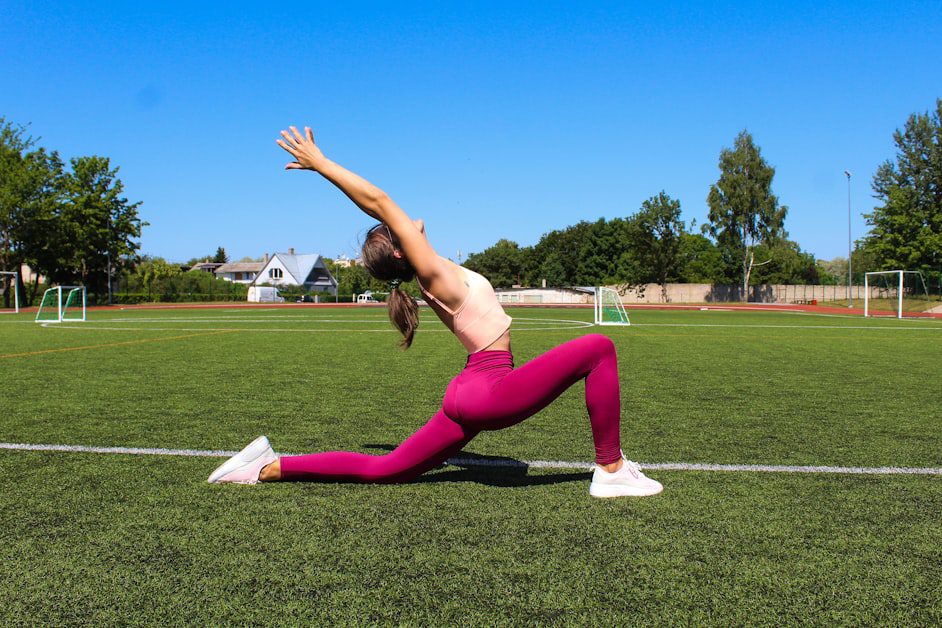
Your hip flexors (primarily the iliopsoas) are shortened every minute you sit. When hip flexors are chronically tight, they pull the pelvis into an anterior tilt, which increases the curve in your lower back and contributes directly to lower back pain. If you only do one stretch from this entire routine, make it this one.
Half-kneeling hip flexor stretch: Kneel on your right knee with your left foot flat on the floor in front of you, both knees at 90 degrees. Tuck your tailbone slightly under you (posterior pelvic tilt) and shift your weight gently forward until you feel a stretch at the front of your right hip. Hold 30 seconds. Switch sides. Do two rounds per side.
The tailbone tuck is critical. Without it, most people just arch their lower back to create the illusion of a stretch without actually lengthening the hip flexor. Keep your torso upright and your core gently braced. You should feel the stretch deep in the front of the hip, not in your lower back.
This stretch pairs directly with the seated work covered in the chair workout guide, which includes complementary hip mobility work you can do throughout the day without leaving your desk area.
Thoracic Spine Rotation: Undo the Desk Hunch
Your thoracic spine (mid-back) is designed to rotate. Desk work locks it in a flexed, forward position for hours. Reduced thoracic rotation forces the lumbar spine and neck to compensate, which is a common but preventable cause of both lower back and neck pain. Morning thoracic rotation restores the mid-back mobility you will need all day.
Open book stretch: Lie on your side with your knees bent at 90 degrees and your arms extended in front of you, palms together. Keeping your knees stacked, slowly rotate your top arm up and over to the other side, opening your chest toward the ceiling. Follow your hand with your eyes. Hold 15 seconds at end range. Return. Do five repetitions per side.
If your top arm does not reach the floor on the opposite side, that is fine and completely normal for most desk workers. The range will improve within two to three weeks of daily practice. Do not force it. Let gravity and your breathing do the work. Exhale as you rotate and you will find you can go a little further each breath.
Hamstring and Calf Stretch: 2 Minutes
Tight hamstrings are another consequence of chronic sitting. When hamstrings shorten, they pull on the pelvis from below, contributing to the same pelvic imbalance that tight hip flexors create from the front. Stretching both muscle groups in the morning addresses the pelvis from both angles.
Standing hamstring stretch: Place one foot on a low step, bench, or sturdy chair. Keep your standing leg slightly bent. Hinge forward at the hips with a flat back until you feel a stretch behind your raised thigh. Hold 20 seconds. Switch sides. Two rounds each. Do not round your back. The stretch should come from the hip hinge, not from curling your spine forward.
Wall calf stretch: Stand facing a wall with your hands against it at chest height. Step one foot back about two feet and press the heel into the floor. Keep the back leg straight and lean gently toward the wall. Hold 20 seconds. Bend the back knee slightly to shift the stretch to the soleus (deeper calf muscle) and hold another 20 seconds. Switch sides. Tight calves limit ankle mobility, which affects how you walk and stand and contributes to compensatory knee and hip strain.
Wrist and Forearm Stretches for Desk Workers
Hours of typing and mouse work stress the forearm extensors and flexors. Over time, this contributes to repetitive strain conditions, including carpal tunnel syndrome and lateral epicondylitis (tennis elbow). Morning stretches for desk workers should include the wrists and forearms, especially if you type for more than four hours per day.
Prayer stretch: Press your palms together in front of your chest with your fingers pointing up. Slowly lower your hands toward your waist while keeping your palms pressed together. Stop when you feel a stretch in your wrists and inner forearms. Hold 20 seconds. Repeat twice.
Reverse prayer stretch: Press the backs of your hands together with your fingers pointing down. Gently push downward until you feel a stretch along the outer forearms. Hold 20 seconds. This targets the forearm extensors, which are the muscles most stressed by mouse use. Two repetitions is enough.
The Mayo Clinic recommends taking brief breaks from typing every 20 to 30 minutes to stretch the wrists and shake out the hands. Doing these morning stretches for desk workers before you start typing gives your forearm tissues a head start on flexibility before the repetitive stress begins.
The Complete 10-Minute Morning Routine
Here is the full sequence in order. Set a timer or just work through it at a comfortable pace. The entire routine takes 8 to 12 minutes depending on how long you hold each stretch.
- Lateral neck stretch – 20 seconds each side, 2 rounds (80 seconds)
- Chin tucks – 10 reps, 5-second holds (60 seconds)
- Doorway chest stretch – 20 seconds, 3 reps (60 seconds)
- Shoulder rolls – 10 backward, 10 forward (30 seconds)
- Half-kneeling hip flexor stretch – 30 seconds each side, 2 rounds (2 minutes)
- Open book thoracic rotation – 5 reps each side (2 minutes)
- Standing hamstring stretch – 20 seconds each side, 2 rounds (80 seconds)
- Wall calf stretch – 20 seconds straight leg + 20 seconds bent knee, each side (80 seconds)
- Prayer + reverse prayer wrist stretch – 20 seconds each, 2 rounds (80 seconds)
Do this every weekday morning before you sit down at your desk. On weekends, do it if you like. The minimum effective dose for noticeable improvement is five days per week for three consecutive weeks. A 12-week stretching study found significant improvements in physical functioning, pain, and mental health when office workers stretched just twice per week for 10 minutes. Five times per week delivers faster and more durable results.
If you also deal with chronic low back pain, integrating these morning stretches for desk workers with the habit-based back pain strategies gives you a full daily protocol for both prevention and relief.
Frequently Asked Questions
How long should morning stretches for desk workers last?
Ten minutes is the sweet spot for most people. Research shows that stretching programs as short as 10 minutes per session, done consistently, produce measurable improvements in pain, physical functioning, and mental health within 12 weeks. You can compress the routine into 7 to 8 minutes by reducing hold times to 15 seconds or expand it to 15 minutes by adding extra repetitions. The key is consistency over duration. A 10-minute routine done five days a week outperforms a 30-minute session done once a week.
Can morning stretches reduce back pain from sitting all day?
Yes, and there is strong evidence to support this. The 2024 Applied Ergonomics study found a 38 percent reduction in lower back discomfort among workers who incorporated regular stretching compared to those who only moved during lunch. Morning stretches specifically target hip flexors, hamstrings, and thoracic spine mobility, which are the three primary contributors to sitting-related back pain. By restoring baseline range of motion before you sit down, you reduce the cumulative compression that builds throughout the day.
Is it better to stretch before or after sitting at a desk?
Before is better for prevention. After is better for recovery. Ideally you do both. Morning stretches before desk work set your muscles and joints to a longer baseline length, which means they have further to shorten before reaching the stiffness threshold that causes pain. Stretching after a long sitting session helps restore some of the range of motion lost during the day. If you can only pick one, the morning session gives you more protective benefit because the effects carry forward for several hours.
What are the most important morning stretches for desk workers?
The hip flexor stretch is the single most valuable stretch for desk workers. Tight hip flexors from sitting create an anterior pelvic tilt that directly causes or worsens lower back pain. After that, the doorway chest stretch (to counter rounded shoulders), thoracic spine rotation (to restore mid-back mobility), and chin tucks (to counteract forward head posture) are the highest-priority moves. These four stretches address the specific postural distortions that prolonged sitting creates.
How often should desk workers stretch during the day?
Research from Cornell University suggests movement every 20 minutes is ideal for preventing spinal tissue deformation. In practical terms, a 30-second to 2-minute stretch break every 60 minutes during your workday produces significant pain reduction. Workers who stretched hourly reported 41 percent less neck and shoulder pain than those who only stretched at lunch. Setting a quiet phone timer or using an app reminder every hour is the most effective compliance strategy, since self-reported adherence to stretch breaks without reminders is only 25 to 39 percent.
Conclusion
Morning stretches for desk workers are a 10-minute investment that pays off across your entire workday. The routine above targets every muscle group that chronic sitting tightens and weakens: neck, chest, hip flexors, thoracic spine, hamstrings, calves, and forearms. The research is consistent. Regular stretching reduces pain, improves posture, and supports mental health in office workers.
Start tomorrow morning. Do not wait for the perfect time. Stand up when your alarm goes off, work through the sequence, and sit down at your desk with a body that is actually prepared for what the day demands. Three weeks of consistency is all it takes to feel the difference.
Medical Disclaimer: This content is for informational purposes only and does not constitute medical advice. Consult a qualified healthcare provider before making any health decisions.