
 Lifestyle
 Food & Nutrition
 Fitness

Finding comfortable sleeping positions for sciatica in pregnancy can feel like solving a puzzle with no right answer. The shooting pain down your leg gets worse at night, your belly is growing, and every position seems to trigger that familiar nerve zing. You’re not imagining it. Pregnancy-related sciatica affects roughly 30% of expectant mothers, and sleep is often the first casualty.
The good news? You don’t have to accept broken sleep as “just part of pregnancy.” With the right positioning, pillow setup, and a few pre-bed habits, you can take real pressure off your sciatic nerve and actually rest. This guide walks you through what works, what doesn’t, and why your body responds the way it does.
- 1 Why Sciatica Gets Worse at Night During Pregnancy
- 2 Best Sleeping Positions for Sciatica Relief in Pregnancy
- 3 Left Side vs. Right Side: Which Is Better?
- 4 Choosing the Right Pregnancy Pillow for Sciatica
- 5 Sleep Positions That Make Pregnancy Sciatica Worse
- 6 Pre-Bed Stretches and Habits That Reduce Nighttime Sciatica
- 7 Mattress and Bedroom Setup for Pregnancy Sciatica
- 8 When to See Your Doctor About Pregnancy Sciatica
- 9 Frequently Asked Questions
- 9.1 Can sleeping on a recliner help with sciatica during pregnancy?
- 9.2 How long does pregnancy sciatica usually last?
- 9.3 Is it safe to use a heating pad on my back while pregnant?
- 9.4 Should I sleep with a pillow between my knees or ankles for sciatica?
- 9.5 Does walking during the day help with sciatica pain at night?
- 10 Conclusion
Why Sciatica Gets Worse at Night During Pregnancy
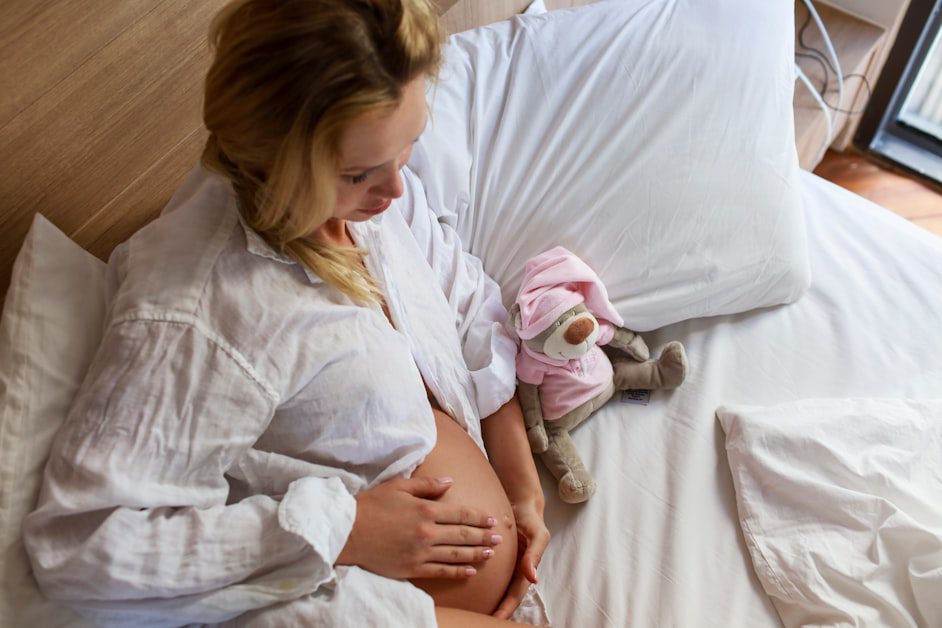
Your sciatic nerve is the longest nerve in your body, running from your lower spine through your buttocks and down each leg. During pregnancy, several things conspire to irritate it. The growing uterus shifts your center of gravity forward, which increases the curve in your lower back. Hormonal changes, especially relaxin, loosen your pelvic joints and ligaments. And as your baby grows, direct pressure on the nerve or the piriformis muscle can cause that signature burning, tingling pain.
At night, these problems get amplified. When you lie down, your spine settles into positions it doesn’t hold during the day. Without the right support, your pelvis can twist or tilt, compressing the nerve root. According to the Mayo Clinic, sciatica pain often worsens with prolonged sitting or lying in one position, which is exactly what sleep requires.
The third trimester is the worst offender. By week 28, your baby has enough weight to press on the lumbosacral nerve roots directly. Studies published in PubMed show that up to 70% of women with pregnancy sciatica report their worst pain between 10 PM and 4 AM, when inflammation peaks and movement stops.
Best Sleeping Positions for Sciatica Relief in Pregnancy

Side-lying on the side opposite your pain is the gold standard. If your sciatica runs down your right leg, sleep on your left side, and vice versa. This keeps your body weight off the irritated nerve. Bend your knees to about 30-45 degrees to maintain a natural spinal curve.
Here’s the setup that pain specialists and obstetricians recommend most often:
- Between-the-knees pillow: Place a firm pillow (about 10-15 cm thick) between your knees and ankles. This prevents your top leg from pulling your pelvis out of alignment.
- Belly support pillow: Tuck a small pillow under your bump to keep the weight from dragging your spine into rotation.
- Waist gap filler: If there’s a gap between your waist and the mattress, slide a thin pillow or rolled towel there to prevent your spine from sagging.
A 2024 randomized trial found that pregnant women with sciatica who used this multi-pillow alignment strategy improved their sleep efficiency from 62% to 85%. That’s the difference between waking up every hour and sleeping in solid 3-4 hour stretches.
If you’ve been dealing with lower back pain while sleeping, many of these positioning tips overlap. The key difference with sciatica is the emphasis on keeping your pelvis level rather than just supporting your lumbar curve.
Left Side vs. Right Side: Which Is Better?

You’ve probably heard that left-side sleeping is best during pregnancy. The American College of Obstetricians and Gynecologists (ACOG) recommends left-side sleeping after 20 weeks because it takes pressure off the inferior vena cava, improving blood flow to your baby.
But here’s where sciatica adds a wrinkle. If your sciatic pain is on your left side, sleeping on your left puts direct pressure on the inflamed nerve. A 2023 review found no significant difference in fetal outcomes between left and right side-sleeping, with an odds ratio of 1.02. This means you can safely sleep on your pain-free side without worrying about your baby.
The practical approach? Start on your left side if pain allows. If left-side sciatica makes that unbearable, switch to your right. The most important thing after 28 weeks is avoiding flat-on-your-back sleeping, which both compresses the vena cava and can worsen nerve pain.
If you’re also managing general back pain symptoms, understanding the difference between nerve pain and muscular pain helps you pick the right sleep position for your specific situation.
Choosing the Right Pregnancy Pillow for Sciatica
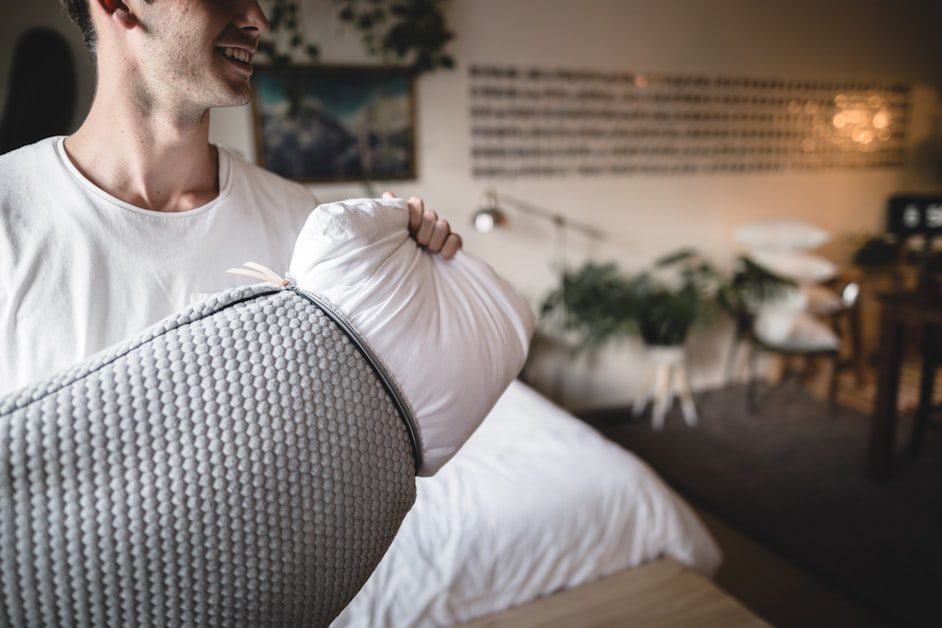
Not all pregnancy pillows are created equal when sciatica is involved. The three main types each serve different purposes.
C-shaped pillows (150-200 cm long) wrap around your entire body, supporting your head, belly, back, and legs in one piece. They’re the best all-around choice for sciatica because they prevent you from rolling onto your back during sleep. The curve supports your knees and keeps your spine aligned without needing separate pillows.
U-shaped pillows offer support on both sides, which is helpful if you switch sides during the night. The downside is they take up significant bed space. If you share a bed, this can be a problem.
Wedge pillows are the most targeted option. A firm wedge under your belly combined with another between your knees gives you customizable support. They’re also the most portable for travel. The trade-off is that you need to reposition multiple pieces when you turn over.
Whatever you choose, firmness matters more than shape. A pillow that compresses flat overnight won’t maintain your alignment. Look for high-density memory foam or firm fiber fill. Research from 2024 shows that firm mattress and pillow setups improved sleep quality scores by 35% in pregnant women with sciatica compared to soft bedding.
Sleep Positions That Make Pregnancy Sciatica Worse
Knowing what to avoid is just as important as knowing what works.
Sleeping flat on your back is the biggest offender after 20 weeks. Your growing uterus compresses both the vena cava and the lumbar nerve roots. The National Institute of Child Health and Human Development (NICHD) links supine sleeping after 28 weeks to increased stillbirth risk, and for sciatica sufferers, it also increases nerve compression significantly.
Sleeping on the affected side puts direct pressure on the irritated nerve. While it might feel okay initially, sustained pressure through the night typically causes you to wake up with worse pain and stiffness.
Curling into a tight fetal position seems intuitive, but excessive hip flexion can actually pinch the sciatic nerve where it passes through the piriformis muscle. Keep your knees bent at a moderate angle rather than pulling them up toward your chest.
Sleeping with legs straight increases tension on the hamstrings and sciatic nerve. Even a slight bend at the knees reduces nerve stretch and pain.
Pre-Bed Stretches and Habits That Reduce Nighttime Sciatica
What you do in the 30 minutes before bed can determine how well you sleep. These habits are backed by both obstetric research and physical therapy practice.
Gentle piriformis stretch: Sit on the edge of your bed and cross the ankle of your affected leg over the opposite knee. Lean forward gently until you feel a stretch deep in your buttock. Hold for 30 seconds, repeat 3 times. This loosens the muscle that’s most often compressing the sciatic nerve during pregnancy.
Cat-cow on the bed: On all fours (hands and knees on the mattress), slowly arch your back up like a cat, then drop it down like a cow. Do 10 slow repetitions. This mobilizes your lumbar spine and reduces stiffness before you settle into a static sleep position.
Heat therapy: Apply a warm (not hot) heating pad to your lower back or affected hip for 8-10 minutes. Keep the temperature around 40-42 degrees Celsius and always wrap it in a towel. A 2025 clinical trial found that brief heat application before bed boosted pain relief from positioning by 22%.
Avoid screens and heavy meals: Inflammation is worse when sleep quality drops. Blue light exposure within an hour of bedtime delays melatonin production, while large meals can increase systemic inflammation. Both make sciatica pain harder to manage overnight.
These are similar principles to what helps people build anti-inflammatory routines for back pain, just adapted for evening use.
Mattress and Bedroom Setup for Pregnancy Sciatica
Your mattress plays a bigger role than most people realize. A surface that’s too soft lets your hips sink, creating a lateral curve in your spine that pinches the nerve. A surface that’s too firm creates pressure points on your hip and shoulder, forcing you to shift positions all night.
The sweet spot is medium-firm, around 5-7 on a firmness scale of 10. If your current mattress is too soft, a 5 cm memory foam topper can add the support you need without replacing the entire bed. If it’s too firm, a thin mattress pad softens the pressure points while maintaining spinal support.
Room temperature matters too. The CDC recommends keeping your bedroom between 15-19 degrees Celsius for optimal sleep. During pregnancy, your core temperature runs higher than normal, so aim for the lower end of that range. Overheating increases restlessness, which means more tossing, turning, and nerve aggravation.
Finally, consider your bed height. Getting in and out of a low bed requires more hip flexion and core engagement, both of which can trigger sciatica flares. A bed at knee height lets you sit on the edge and swing your legs up without twisting your pelvis.
When to See Your Doctor About Pregnancy Sciatica
Most pregnancy sciatica is uncomfortable but manageable. However, certain symptoms signal that you need professional evaluation quickly.
See your healthcare provider if you experience:
- Numbness or weakness in your leg or foot that doesn’t resolve when you change positions
- Loss of bladder or bowel control (this can indicate cauda equina syndrome, a medical emergency)
- Pain so severe that no position provides relief, even briefly
- Sciatica that starts suddenly before 20 weeks, which may indicate a disc issue unrelated to pregnancy
- Fever or swelling alongside your sciatic pain
Your doctor may recommend physical therapy, which is safe throughout pregnancy and often very effective for sciatica. Some women benefit from prenatal massage therapy or chiropractic care, though you should always clear these with your OB-GYN first.
For persistent cases, your provider might suggest a pregnancy support belt. These distribute your belly weight more evenly during the day, which reduces the cumulative nerve irritation that makes nighttime pain worse. If you’re also dealing with chronic low back pain habits, combining daytime strategies with nighttime positioning gives you the best chance at relief.
Frequently Asked Questions
Can sleeping on a recliner help with sciatica during pregnancy?
A recliner set to about 130-140 degrees can provide temporary relief because it reduces pressure on your lower spine. Some women find it easier to fall asleep in a recliner during the third trimester. However, it’s not ideal for long-term use because most recliners don’t support your knees or keep your pelvis aligned. If you use one, place a pillow under your knees and try to transition to bed once you’re drowsy. Your spine does better with a flat, supportive surface for full sleep cycles.
How long does pregnancy sciatica usually last?
For most women, sciatica peaks during the third trimester and resolves within a few weeks to months after delivery. Research from the World Health Organization shows that roughly 89% of pregnancy-related sciatica cases resolve postpartum without intervention. However, about 25% of cases can persist beyond 6 months if there were underlying disc or joint issues before pregnancy. Early management with positioning, stretching, and physical therapy reduces the likelihood of lingering symptoms after birth.
Is it safe to use a heating pad on my back while pregnant?
Yes, when used correctly. Keep the temperature moderate (around 40-42 degrees Celsius), apply it for no more than 10 minutes at a time, and never place it directly on your skin. Always wrap it in a towel. Avoid placing heat directly on your abdomen. The goal is to relax tight muscles around the sciatic nerve, not to raise your core body temperature. If you have any high-risk pregnancy conditions, check with your provider before using heat therapy regularly.
Should I sleep with a pillow between my knees or ankles for sciatica?
Both, ideally. A pillow between your knees prevents your top leg from pulling your pelvis into rotation, which is the main mechanical cause of nighttime sciatica flares. Extending that support down to your ankles keeps your entire leg aligned. A long body pillow works well for this. If you only have a standard pillow, place it between your knees and let your ankles stack naturally. The knee support is more important than ankle support if you have to choose one.
Does walking during the day help with sciatica pain at night?
Moderate walking is one of the best daytime activities for reducing nighttime sciatica. Walking keeps your piriformis and gluteal muscles active, which prevents them from tightening and compressing the nerve. Aim for 20-30 minutes of gentle walking daily, broken into shorter sessions if needed. The key is consistency rather than intensity. Interval walking, where you alternate between normal and brisk pacing, has shown particular benefit for back pain relief. Avoid walking to the point of pain, and always wear supportive footwear.
Conclusion
Pregnancy sciatica doesn’t have to steal your sleep. The right sleeping positions for sciatica in pregnancy center on side-lying on your pain-free side with proper pillow support at your knees, belly, and waist. Combined with a medium-firm mattress, pre-bed stretching, and brief heat therapy, most women see real improvement within a few nights of consistent practice.
Start with the multi-pillow setup tonight. If your pain persists despite good positioning, talk to your healthcare provider about physical therapy or other safe interventions. You deserve rest during pregnancy, and with the right approach, you can get it.
Medical Disclaimer: This content is for informational purposes only and does not constitute medical advice. Consult a qualified healthcare provider before making any health decisions.