
 Lifestyle
 Food & Nutrition
 Fitness

Stretches for back pain from sitting are not optional if you spend most of your day at a desk. Prolonged sitting shortens your hip flexors, tightens your lower back muscles, and compresses spinal discs in ways that walking and general exercise do not fully reverse. A workplace study found that reducing sitting time by just over an hour per day cut upper back and neck pain by 54 percent within seven weeks. The problem is that most people do not reduce their sitting time. What they can do is stretch the specific muscles that sitting damages, consistently enough to make a difference.
Nearly 80 percent of adults will experience lower back pain at some point in their lives, and sedentary desk work is one of the most common triggers. The Mayo Clinic specifically recommends targeted rotational stretches for lower back pain caused by sitting, with holds of 5 to 10 seconds and 2 to 3 repetitions per side as a daily practice. This guide walks you through every stretch that matters, when to do them, and how to build a routine that actually sticks.
- 1 Why Sitting All Day Causes Back Pain
- 2 Lower Back Rotational Stretch: The Foundation Move
- 3 Stretches for Back Pain from Sitting You Can Do at Your Desk
- 4 Hip Flexor Stretches: The Root Cause Fix
- 5 Hamstring Stretches for Lower Back Relief
- 6 Thoracic Spine Mobility: Stop the Upper Back Stiffness
- 7 Your 10-Minute Daily Stretching Routine for Desk Workers
- 8 Frequently Asked Questions
- 8.1 How often should I do stretches for back pain from sitting?
- 8.2 Can stretching alone fix back pain from sitting all day?
- 8.3 Which stretch is best for immediate lower back pain relief at a desk?
- 8.4 Is it safe to stretch with a herniated disc from sitting?
- 8.5 How long does it take for stretching to help back pain from sitting?
- 9 Conclusion
Why Sitting All Day Causes Back Pain

Sitting places roughly 40 percent more pressure on your lumbar spine than standing. When you sit with poor posture, which most people do by the third hour, that pressure increases further. The muscles that stabilize your spine (the multifidus, transversus abdominis, and erector spinae) gradually shut down during prolonged sitting because they are not being asked to work. Meanwhile, your hip flexors shorten, your hamstrings tighten, and your thoracic spine locks into a flexed position.
This creates a predictable pattern: tight hip flexors pull your pelvis forward into an anterior tilt, your lower back compensates by increasing its curve, and the muscles along your lumbar spine fatigue from holding a position they were not designed to sustain for hours. The NIH notes that low back pain is one of the most prevalent medical complaints in the United States, with sedentary behavior as a major contributing factor.
Stretches for back pain from sitting work by reversing these specific tissue changes. They lengthen shortened hip flexors, restore mobility to the thoracic spine, and activate the stabilizing muscles that sitting disengages. The key is targeting the right muscles in the right order.
Lower Back Rotational Stretch: The Foundation Move
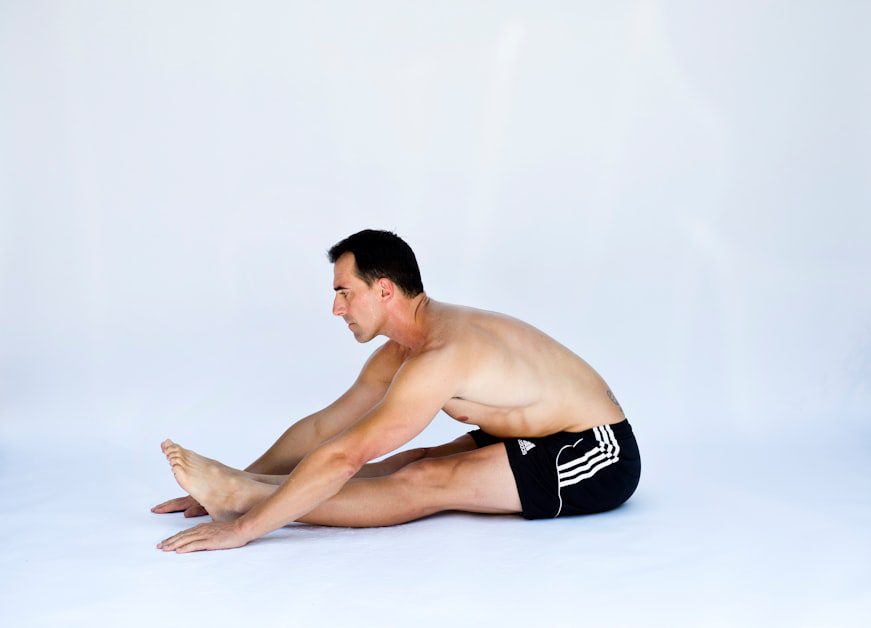
The lower back rotational stretch is the single most recommended stretch for back pain from sitting across Mayo Clinic, NIH, and physical therapy guidelines. It targets the lumbar rotators and lateral stabilizers that stiffen during prolonged sitting.
How to do it: Lie on your back with both knees bent and feet flat on the floor. Keeping your shoulders pressed into the ground, slowly roll both knees to the right side until you feel a gentle stretch through your lower back and left hip. Hold for 5 to 10 seconds. Return to center and repeat on the left side. Do 2 to 3 repetitions per side.
This stretch is safe for most people, including those recovering from acute back pain episodes. The Mayo Clinic recommends doing it twice daily, morning and evening, as part of a consistent routine. The rotation component is particularly effective because desk sitting locks the lumbar spine into a sagittal plane (forward and back only), and rotation restores the lateral mobility that prevents stiffness from compounding over days and weeks.
If you also deal with back pain at work, the guide on how to sit at a desk with lower back pain covers the ergonomic side of the equation, which pairs directly with these stretches.
Stretches for Back Pain from Sitting You Can Do at Your Desk
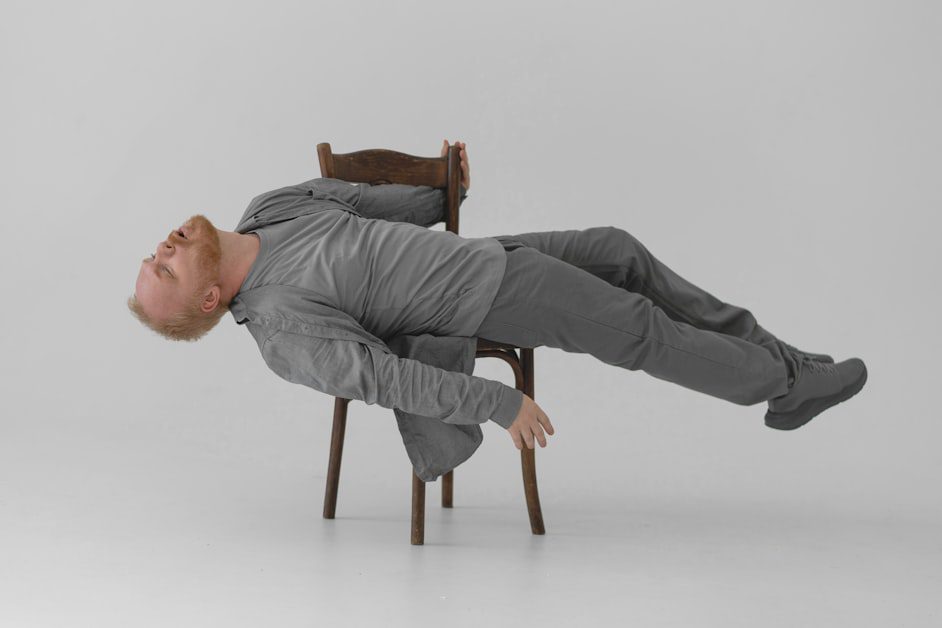
Not every stretch requires lying on the floor. Several effective stretches for back pain from sitting can be done right in your office chair, which makes them far more likely to actually happen during the workday.
Seated lower back rotation: Sit upright in your chair. Cross your right leg over your left. Place your left elbow on the outside of your right knee and gently twist your torso to the right, looking over your right shoulder. Hold for 10 seconds. Do 3 to 5 repetitions per side. The Mayo Clinic recommends this stretch twice daily for sitting-related lower back pain.
Cable stretch (NIH): Sit tall and imagine a cable attached to the top of your head pulling you upward. Tuck your chin slightly, relax your shoulders down and back, and hold for 3 seconds. Repeat 3 times. This decompresses the cervical and upper thoracic spine and resets your posture after periods of slouching.
Seated figure-four stretch: Sit upright, cross your right ankle over your left knee to create a figure-four shape. Keeping your back straight, lean forward gently from the hips until you feel a stretch in your right glute and outer hip. Hold 20 seconds per side. Tight glutes and piriformis muscles are a hidden driver of lower back pain in desk workers because they attach directly to the sacrum and pelvis.
Executive stretch (NIH): Sit in your chair, clasp your hands behind your head, and pull your elbows back while leaning gently backward. Hold for 20 seconds. This opens the chest, extends the thoracic spine, and counteracts the forward-hunched position that accumulates throughout the day.
Hip Flexor Stretches: The Root Cause Fix
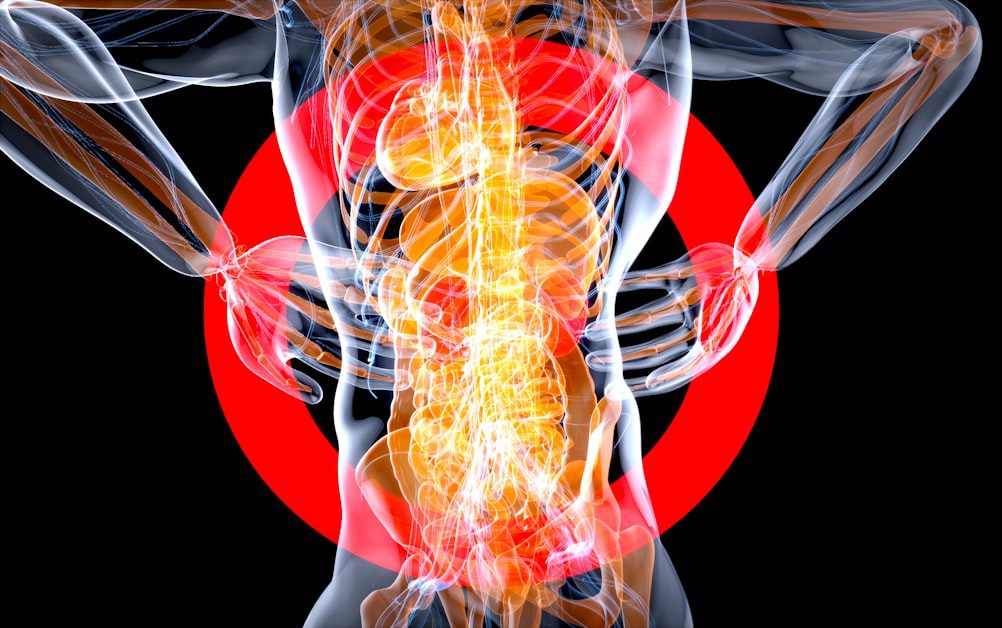
Tight hip flexors are responsible for more sitting-related back pain than most people realize. The iliopsoas muscle group connects your lumbar spine to your femur, and when it shortens from hours of sitting, it pulls your pelvis into an anterior tilt that forces your lower back into excessive extension. Stretching the hip flexors directly addresses this root cause rather than just treating the symptom in your back.
Half-kneeling hip flexor stretch: Kneel on your right knee with your left foot flat on the floor in front of you. Tuck your tailbone slightly under you and shift your weight forward until you feel a deep stretch at the front of your right hip. Hold 30 seconds. Switch sides. Do 2 rounds per side. The tailbone tuck is essential. Without it, you will arch your back instead of actually stretching the hip flexor.
Standing hip flexor stretch: Stand in a staggered stance with your right foot about two feet behind your left. Tuck your tailbone, squeeze your right glute, and shift your hips forward. You should feel a stretch at the front of your right hip and thigh. Hold 20 seconds per side. This version is easier to do in an office setting.
For a deeper dive into morning mobility work that targets these exact muscles, the morning stretches for lower back pain guide includes a full sequence designed to prepare your body before the sitting starts.
Hamstring Stretches for Lower Back Relief
Your hamstrings connect to your pelvis at the ischial tuberosities (sit bones). When hamstrings tighten from prolonged sitting, they pull the pelvis into a posterior tilt, which flattens the natural lumbar curve and increases pressure on the lower spinal discs. This is the opposite problem from tight hip flexors, and many desk workers have both simultaneously, creating competing forces on the pelvis that the lower back must absorb.
Standing hamstring stretch: Place one foot on a low step or chair. Keep your standing leg slightly bent. Hinge forward from your hips with a flat back until you feel a stretch behind your raised thigh. Hold 20 seconds. 2 rounds per side. Do not round your back. The stretch should come from the hip hinge, not from curling forward.
Supine hamstring stretch: Lie on your back. Raise one leg toward the ceiling and loop a towel or belt around the ball of your foot. Gently pull your leg toward you while keeping it straight until you feel a comfortable stretch behind your thigh. Hold 20 to 30 seconds. Switch sides. This version removes any balance challenge and allows a more controlled, deeper stretch.
Research from workplace stretching programs shows that holding stretches for 15 to 30 seconds with 3 to 4 repetitions per muscle group, done daily, produces meaningful flexibility improvements within 4 to 6 weeks. The CDC workplace guidelines recommend 5 to 10 minute activity breaks with stretching to reduce the health risks of prolonged sitting.
Thoracic Spine Mobility: Stop the Upper Back Stiffness
Desk sitting does not only affect your lower back. Your thoracic spine (mid-back) locks into flexion when you hunch over a screen for hours. Reduced thoracic mobility forces the lumbar spine and neck to compensate for movements the mid-back should be handling. Restoring thoracic rotation and extension is one of the most effective ways to reduce both lower back and neck pain simultaneously.
Thoracic extension over a chair: Sit on the edge of your chair. Clasp your hands behind your head. Slowly lean backward over the top of the chair back, letting your mid-back extend over it. Hold 10 seconds. Repeat 5 times. This specifically targets the thoracic segments that desk work locks down and can be done every hour without leaving your workspace.
Thread the needle: Start on all fours. Reach your right arm under your body toward the left side, rotating your thoracic spine until your right shoulder touches or approaches the floor. Hold 15 seconds. Return and repeat 5 times per side. This stretch restores rotational mobility that sitting eliminates.
The anti-inflammatory morning routine for back pain includes additional thoracic mobility work that complements the stretches covered here, along with habits that reduce the inflammation component of chronic sitting pain.
Your 10-Minute Daily Stretching Routine for Desk Workers
Consistency matters more than duration. The NIH recommends holding stretches for 20 seconds with 3 repetitions before work, while the Mayo Clinic advises twice-daily sessions. Here is a practical 10-minute routine that covers every muscle group affected by sitting:
- Lower back rotational stretch (lying) – 5-10s hold, 3 reps per side (2 min)
- Half-kneeling hip flexor stretch – 30s hold, 2 reps per side (2 min)
- Standing hamstring stretch – 20s hold, 2 reps per side (80 sec)
- Thread the needle (thoracic rotation) – 15s hold, 5 reps per side (2.5 min)
- Seated figure-four stretch – 20s hold, 2 reps per side (80 sec)
- Executive stretch – 20s hold, 2 reps (40 sec)
Do this every morning before you sit at your desk. During the workday, add the seated rotation and cable stretch every 60 minutes. A 2024 study in Applied Ergonomics found that workers who took 2-minute stretch breaks every 60 minutes had 41 percent less neck and shoulder pain and 38 percent less lower back discomfort than those who only stretched at lunch.
Track your progress. Most people notice reduced morning stiffness within the first week and measurable pain reduction by week three. If pain persists beyond four weeks of consistent stretching, consult a physical therapist for an individualized assessment.
Frequently Asked Questions
How often should I do stretches for back pain from sitting?
The Mayo Clinic recommends stretching twice daily, morning and evening, for sitting-related back pain. During the workday, adding brief stretches every 60 minutes produces the best results. A 2024 study found that hourly 2-minute stretch breaks reduced lower back pain by 38 percent compared to stretching only at lunch. The key is frequency and consistency rather than long single sessions. A 10-minute morning routine combined with 1 to 2 minute desk stretches every hour throughout the day addresses both prevention and active relief.
Can stretching alone fix back pain from sitting all day?
Stretching addresses the flexibility and mobility component of sitting-related back pain, but it works best when combined with strengthening exercises and ergonomic adjustments. Tight muscles need to be lengthened through stretching, but weak stabilizing muscles (multifidus, transversus abdominis) also need to be strengthened to support the spine during prolonged sitting. The NIH and Mayo Clinic both recommend combining stretches with core strengthening exercises done at least 2 days per week for optimal lower back pain management.
Which stretch is best for immediate lower back pain relief at a desk?
The seated lower back rotation is the fastest way to relieve acute lower back tightness while sitting. Cross one leg over the other, twist your torso toward the raised knee using the opposite elbow for leverage, and hold for 10 seconds. This targets the lumbar rotators that stiffen most during sustained sitting postures. For deeper relief, the executive stretch (hands behind head, lean back over chair) extends the thoracic spine and decompresses the lower back simultaneously. Both can be done without leaving your chair.
Is it safe to stretch with a herniated disc from sitting?
Some stretches are safe and beneficial with a herniated disc, but others can make it worse. Extension-based movements (leaning backward, prone press-ups) are generally recommended for disc herniations because they push the disc material anteriorly, away from the nerve root. Flexion-based stretches (touching your toes, pulling knees to chest) can increase disc pressure and worsen symptoms. If you have a diagnosed herniated disc, consult a physical therapist before starting any stretching program so they can identify which movements are safe for your specific condition.
How long does it take for stretching to help back pain from sitting?
Most people notice reduced morning stiffness and less end-of-day pain within the first 7 to 10 days of consistent daily stretching. Measurable improvements in flexibility and pain reduction typically appear by week 3 to 4. A 12-week workplace stretching study found significant improvements in physical functioning, bodily pain, and mental health scores when participants stretched just twice weekly for 10 minutes per session. However, the benefits reverse quickly when stretching stops. One study found that pain improvements were lost within 2 weeks of discontinuing the stretching program.
Conclusion
Stretches for back pain from sitting work because they directly reverse the tissue changes that prolonged desk work creates. Tight hip flexors, shortened hamstrings, locked thoracic spines, and deactivated lumbar stabilizers all respond to consistent, targeted stretching within weeks. The routine in this guide takes 10 minutes in the morning and less than 2 minutes per hour at your desk. It is backed by Mayo Clinic, NIH, and CDC workplace guidelines.
Start with the lower back rotational stretch and the half-kneeling hip flexor stretch. These two moves address the most common causes of sitting-related back pain. Add the remaining stretches as the habit builds. Three weeks of daily practice is the threshold where most people feel a real, lasting difference.
Medical Disclaimer: This content is for informational purposes only and does not constitute medical advice. Consult a qualified healthcare provider before making any health decisions.




Comments 1