If you hit 40 and noticed that the same eating patterns, the same workouts, and the same sleep schedule suddenly stopped working, you are not imagining it. Metabolic rate does shift after 40, but not as catastrophically as the weight-loss industry suggests. The real story is more specific, more fixable, and more hormonal than most mainstream advice covers. Knowing how to boost metabolism after 40 with daily habits can measurably raise resting energy expenditure within 8 to 12 weeks.
Between 40 and 50, women lose about 0.5 pounds of muscle per year if they do nothing, estrogen starts its perimenopausal decline, thyroid output often drops slightly, and insulin sensitivity quietly falls. The combined result is a body that burns fewer calories at rest, stores fat more readily (especially around the midsection), and responds differently to both food and exercise than it did a decade earlier.
This guide walks through 9 daily habits, each tied to a specific mechanism behind the post-40 slowdown. Every change here is evidence-based, cumulative, and designed to be layered rather than adopted all at once.
How to Boost Metabolism After 40: Why Daily Habits Matter More Than Ever
The myth that metabolism tanks in your 40s is only half true. A 2021 study published in Science tracked energy expenditure in more than 6,400 people and found that resting metabolic rate stays remarkably stable from age 20 to 60. What changes is body composition, hormonal signaling, and activity levels, not raw metabolism.
The four real drivers of the post-40 slowdown are sarcopenia (gradual muscle loss), declining estrogen (which affects fat storage and insulin sensitivity), reduced non-exercise activity (less fidgeting, standing, walking), and disrupted sleep. Each shaves a bit off the calorie budget, and together they add up to the 200 to 400 daily calorie swing that explains midlife weight gain.
The good news is that these drivers are all modifiable. You cannot stop aging, but you can build muscle, balance hormones, restore sleep architecture, and increase daily movement. According to the Mayo Clinic, strength training and activity levels drive most of the modifiable variance in midlife metabolism. The daily habits to boost metabolism after 40 below target these drivers directly.
1. Front-Load Protein at Breakfast (30 to 40 Grams)
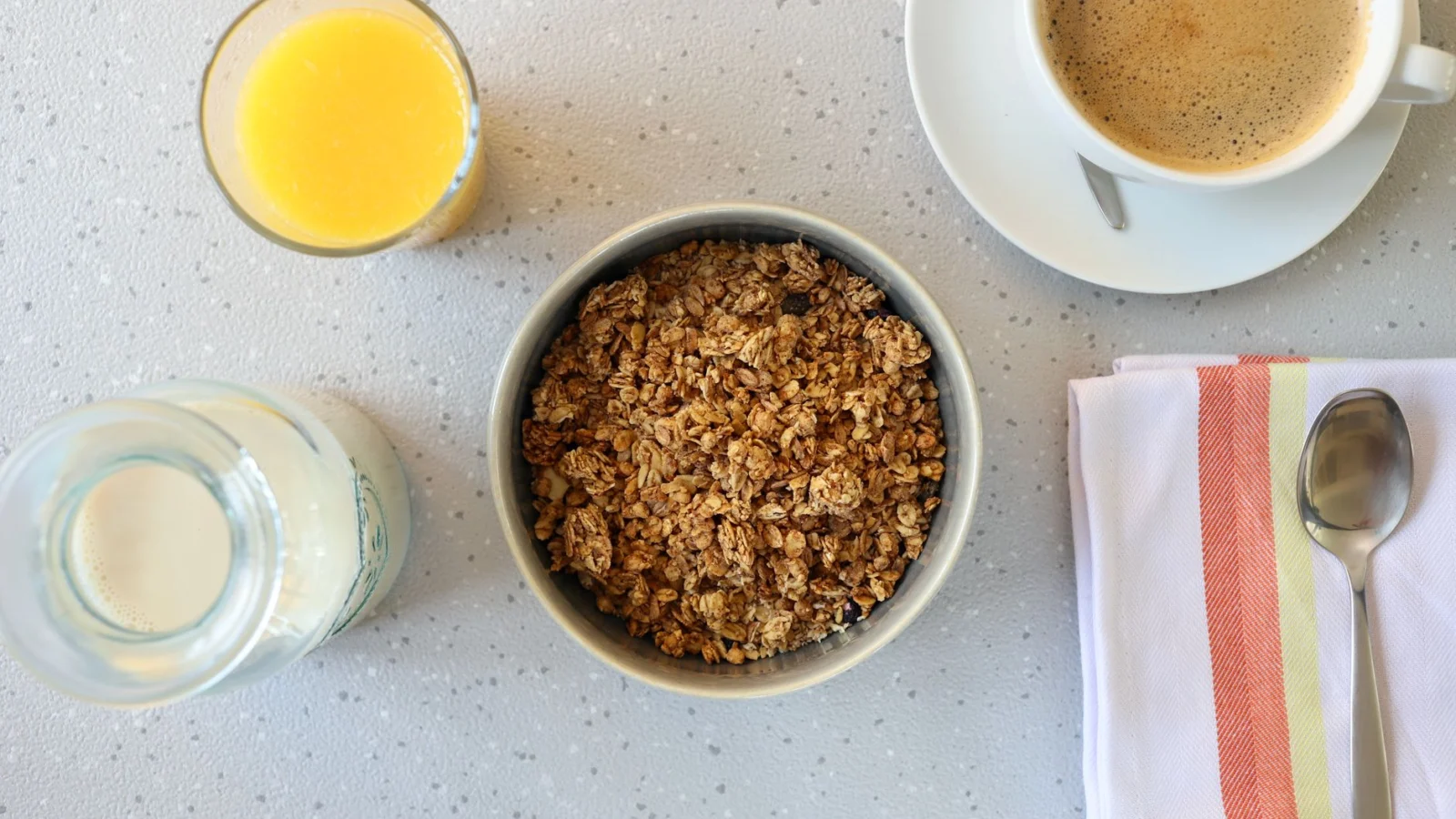
The single most impactful change most women over 40 can make is moving protein to the first meal of the day. The overnight fast of 10 to 12 hours puts the body into muscle-breakdown mode, and the first meal either reverses that or lets it continue. A carb-heavy breakfast (toast, cereal, pastry) does nothing to trigger muscle protein synthesis. A breakfast with 30 to 40 grams of high-quality protein does.
This matters because muscle is metabolically expensive tissue. Every pound of muscle burns roughly 6 to 7 calories per day at rest, compared to 2 calories per pound for fat. Preserving and building muscle is the highest-impact metabolic lever available after 40, and it starts with breakfast.
Practical targets: 3 to 4 whole eggs plus greek yogurt, a whey protein smoothie with 30 grams of protein and berries, cottage cheese with nuts and fruit, or smoked salmon with eggs. Avoid the bagel-and-coffee breakfast that starts most office days. For specific breakfast formulas, see these anti-inflammatory breakfast ideas for women, which double as metabolism-friendly meals.
2. Strength Train Two to Four Times Per Week

If you only do one type of exercise after 40, make it resistance training. Strength work preserves and builds muscle mass, which is the primary determinant of resting metabolic rate. It also improves insulin sensitivity, bone density, joint stability, and posture. Cardio alone cannot do this, which is why women who only run or do yoga often see metabolism keep slowing even with consistent exercise.
Two to four 30 to 45 minute sessions per week is enough to see real results. Focus on compound movements: squats, deadlifts, rows, presses, pull-ups or assisted pull-ups, lunges. These train multiple muscle groups at once and produce the largest metabolic effect per session. Isolation exercises (bicep curls, tricep kickbacks) have their place but should not dominate the program.
For women new to strength training, start with bodyweight movements or dumbbells. Progressive overload is the key principle: each week, add slightly more weight, more reps, or more sets. The body adapts to what you consistently demand of it, and an unchanging routine produces diminishing returns within 6 to 8 weeks.
3. Walk After Meals (Even 10 Minutes)

A 10 to 15 minute walk after meals is one of the most underrated daily habits to boost metabolism after 40. In a crossover trial in Diabetologia, ten minutes of walking after each meal lowered the post-meal blood sugar rise by 12 percent overall and 22 percent after the evening meal in people with type 2 diabetes, and it raises the day’s calorie burn without the recovery cost of intense exercise.
This is especially valuable after the largest meal of the day, typically dinner. Most women over 40 experience insulin resistance creeping in, which increases fat storage and blunts metabolism. A post-meal walk directly counteracts that by signaling muscles to take up glucose without needing extra insulin.
The walk does not need to be fast or long. Ten minutes at a normal conversational pace is enough. For women with sedentary jobs, adding three post-meal walks per day (breakfast, lunch, dinner) quietly adds 2,000 to 3,000 steps and measurably shifts body composition over weeks.
4. Prioritize 7 to 9 Hours of Real Sleep
Sleep deprivation hits metabolism harder after 40 than before. A single night of four hours’ sleep cut insulin sensitivity by about 25 percent the next day in a clamp study in healthy adults, and short sleep raises hunger hormones, making junk food harder to resist. Chronic short sleep over weeks is the fastest way to accelerate metabolic slowdown.
The challenge is that perimenopausal hormone shifts often disrupt sleep architecture, particularly deep sleep, which is when growth hormone peaks and metabolic repair happens. The practical response is to protect sleep aggressively: bedroom temperature at 65 to 68 degrees, no screens in the 90 minutes before bed, no alcohol within 3 hours of sleep, and no caffeine after 1pm.
Magnesium is often suggested for sleep at this stage; the trials are small and what they used is in our article on magnesium for sleep. For a detailed bedtime strategy, see these evening habits to reduce morning anxiety, which also shape sleep quality and morning metabolic signaling.
5. Spread Protein Across Three Meals (30 Grams Each)
Muscle protein synthesis has a ceiling per meal. After about 30 to 40 grams of protein in a single sitting, additional protein is oxidized or stored rather than built into muscle. This is why stacking 80 grams of protein into dinner and skipping breakfast is metabolically worse than spreading 30 grams across each of three meals.
The research on this is specific to older adults and women, who have anabolic resistance (reduced protein-to-muscle conversion) that appears in the 40s and worsens through menopause. The workaround is frequency: protein at breakfast, lunch, and dinner, each meal above the 25 to 30 gram threshold that reliably triggers synthesis.
Total daily protein target for women 40 plus: 0.7 to 1.0 grams per pound of bodyweight. A 150-pound woman should aim for 105 to 150 grams of protein per day, spread across three or four meals. This is higher than most women eat and is the single most common deficit in midlife nutrition.
6. Add Zone 2 Cardio Two to Three Times Per Week
Zone 2 cardio is low-intensity steady-state movement: brisk walking, easy cycling, slow jogging where you can hold a conversation without breathing hard. It trains the mitochondrial efficiency of muscle cells, which is the cellular basis of metabolism. After 40, mitochondrial density drops if not actively maintained, and with it, the ability to burn fat for fuel.
Twenty to 45 minutes of zone 2 work, two to three times per week, is enough to reverse mitochondrial decline and improve metabolic flexibility. This is the ability to switch efficiently between burning carbs and fat, which is strongly linked to healthy body composition and stable energy through the day.
Zone 2 is not the high-intensity interval training that dominates fitness marketing. HIIT has its place but is metabolically costly and hard to recover from after 40. Zone 2 is gentle, sustainable, and addresses the specific cellular changes that accelerate midlife weight gain.
7. Manage Cortisol Through Daily Stress Downshifts
Chronic stress is a metabolic disaster after 40. Elevated cortisol drives visceral fat storage, breaks down muscle tissue, suppresses thyroid output, reduces sex hormones, and promotes cravings for fast carbs. Women in demanding careers, caregiving roles, or perimenopausal transition often live with cortisol patterns that quietly sabotage every other habit on this list.
Daily stress downshifts are the counter. Ten minutes of meditation, a 20-minute walk in nature, breathwork, yoga, sauna time, or any parasympathetic-activating practice done consistently shifts the cortisol curve. The research shows that even brief daily practice measurably lowers baseline cortisol within 4 to 6 weeks.
The specific practice matters less than the consistency. Pick one, schedule it at the same time every day, and protect it like a meeting. For women whose stress is tied to racing thoughts and mental overload, these tips to stop overthinking at night help reduce the mental component of cortisol load.
8. Hydrate Enough to Support Metabolic Function
After 40, thirst signalling becomes less reliable, so most women under-drink without noticing it. The consequences include slower digestion, increased cravings (thirst often masquerades as hunger), worse exercise performance, and reduced calorie burn.
A reasonable target is half your bodyweight in ounces of water per day as a baseline, plus more for exercise, heat, or caffeine intake. A 150-pound woman needs at least 75 ounces, with 100 ounces being a better target on active days. This is substantially more than most women drink.
Practical structure: a full glass of water upon waking, another before each meal, one after each coffee, and steady sips through the workday. Cold water slightly edges out room-temperature water for metabolic effect because the body expends energy warming it, but any water is better than no water.
9. Hit 30 Grams of Fiber Daily for Gut and Hormone Balance
Fiber is metabolically underrated. It feeds the gut microbiome (which produces short-chain fatty acids that regulate appetite and insulin), supports estrogen metabolism through the estrobolome (a community of gut bacteria that process and eliminate estrogen), and improves satiety without adding digestible calories. Most women over 40 eat 12 to 18 grams of fiber per day, roughly half the 25 to 30 gram target.
The practical way to hit 30 grams is to build meals around fiber-dense foods: beans, lentils, chickpeas, oats, berries, chia seeds, flaxseed, broccoli, artichokes, avocado, and nuts. Adding two tablespoons of chia or ground flax to breakfast plus a serving of beans at lunch or dinner gets most women past the threshold.
Ramp up gradually. Going from 15 to 30 grams of fiber overnight causes bloating and gas that discourage the habit. Add 5 grams per week over four weeks and drink more water. For the broader connection between gut health and hormone balance, see these daily habits to balance hormones naturally.
The Perimenopause and Menopause Layer
Every habit above becomes more important during perimenopause (typically late 30s to mid 50s) and menopause. Estrogen protects insulin sensitivity, supports muscle retention, and keeps cortisol responsive. When estrogen declines, the metabolic effects compound: fat redistributes to the abdomen, insulin resistance rises, sleep worsens, and the same food choices produce different outcomes.
The response is not to give up or to chase extreme diets. It is to lean harder on the 9 habits listed here, especially protein, strength training, and sleep. Many women find that changes that used to feel optional now feel mandatory, and that is an accurate read of what their physiology is requesting.
For women who find lifestyle alone insufficient, hormone replacement therapy (HRT) is worth discussing with a qualified menopause-trained clinician. The trials on estradiol and progesterone started within ten years of menopause report better body composition, more muscle preserved and improved metabolic markers than those starting later, which is the reasoning behind the timing question your clinician will raise.
How Long Until You See Changes
Once the daily habits to boost metabolism after 40 become routine, energy and sleep typically shift within 1 to 2 weeks. Body composition changes (leaner midsection, better clothes fit) usually take 8 to 12 weeks. Strength gains from consistent resistance training appear within 4 to 6 weeks. Metabolic blood markers (fasting glucose, insulin, HbA1c) shift in 12 to 16 weeks with testing.
Expect fluctuations. A bad sleep week, a stressful travel period, or a holiday season of carb-heavy meals will create temporary setbacks. The pattern across months matters more than day-to-day perfection. According to research on age-related body composition, women who consistently combine strength training and adequate protein retain muscle mass well into their 70s.
Because muscle falls and fat rises after 40 even at a steady weight, the number on the scale is the least useful one to watch; how much you should weigh lays out the four measures that matter more and the tools that give each.
FAQ
Can you really speed up metabolism after 40?
Yes, within a range. Resting metabolic rate rises with muscle gained, modestly. The bigger lever is total daily energy expenditure, which includes activity and the thermic effect of food, and that is what the habits in this guide move. You cannot make your metabolism behave like it did at 25, but you can close most of the gap.
What is the best diet for metabolism after 40?
There is no single best diet, but the common features across diets that work are: adequate protein (0.7 to 1.0 grams per pound of bodyweight), 25 to 30 grams of fiber, enough fat to support hormones (0.4 to 0.5 grams per pound), low ultra-processed food intake, and minimal alcohol. Mediterranean-style eating fits this pattern naturally. Strict low-carb or high-carb dogmas rarely help long-term. What matters most is protein, fiber, and calorie range, not macro extremes.
Does intermittent fasting boost metabolism after 40?
The evidence is mixed. Intermittent fasting (typically 14 to 16 hour overnight fasts) works for some women and not others. It can improve insulin sensitivity when done moderately. It can also disrupt hormones and sleep if the fasting window is too long, particularly for perimenopausal and postmenopausal women. If you try it, keep the window moderate (12 to 14 hours), eat enough protein during the feeding window, and stop if sleep or energy suffers.
Why is belly fat so stubborn after 40?
Belly fat (visceral fat) is particularly sensitive to cortisol and insulin. When estrogen declines, fat redistributes from hips and thighs to the abdomen. Combined with rising insulin resistance and cortisol-driven visceral storage, the midsection becomes the default fat depot. The fix is specific: strength training, protein, sleep, stress management, and reducing alcohol. Crunches and ab exercises do not spot-reduce belly fat. Full-body metabolic work does.
Should I take supplements to boost metabolism?
Supplements play a minor role compared to habits. Magnesium (for sleep and insulin), vitamin D (low levels are common in winter and with little sun), omega-3s (for inflammation and insulin), and creatine (the 3 to 5 grams a day the ISSN position stand reviews, for muscle and energy) have the best evidence. Green tea extract, caffeine, and cayenne provide modest short-term boosts but no long-term transformation. Avoid stimulant-heavy fat burners, which raise cortisol and often backfire after 40.
Conclusion
Metabolism does change after 40, but not in the catastrophic way most headlines suggest. The real shifts are in muscle mass, hormonal signaling, sleep architecture, and daily movement. Each is modifiable with consistent practice, and the daily habits to boost metabolism after 40 in this guide target those drivers directly. The women who reach their 50s and 60s in strong metabolic health are not genetically lucky. They have built habits that compound.
Start with the three highest-impact habits: 30-gram protein breakfast, strength training twice weekly, and protected 7 to 8 hours of sleep. Add zone 2 cardio, daily walks, and hydration from there. Expect real changes in 8 to 12 weeks, not 8 to 12 days. The body rewards consistency over intensity, especially after 40.
Midlife is not the beginning of decline. It is the beginning of a new training protocol, one that values muscle, sleep, and steady daily movement over crash diets and random workouts. The body you build through these habits is stronger, more resilient, and leaner at 50 than most women were at 35.
Related Articles
- Daily Habits to Boost Dopamine Naturally: 9 Science-Backed Rituals for Motivation
- Daily Habits to Reduce Cortisol Naturally: 9 Science-Backed Ways for Women
- Daily Habits to Balance Hormones Naturally: 9 Science-Backed Methods
This article is for informational purposes only and does not replace medical advice. Women over 40 considering significant exercise or dietary changes should consult with a qualified healthcare provider, particularly if they have thyroid issues, metabolic conditions, or are considering hormone replacement therapy.