


If mornings feel flat, tasks feel pointless, and the only thing that gets you through the afternoon is a sixth coffee and a scroll break, you are not lazy or broken. Your dopamine system is under-stimulated in the ways that matter and over-stimulated in the ways that drain it. Learning how to boost dopamine naturally can rebuild the reward loop in a few weeks, and most of them cost nothing.
Dopamine is the brain chemical of motivation, pursuit, and the satisfaction that comes with finishing a task. It is not the chemistry of pleasure itself, but of wanting the pleasure enough to work for it. When levels are steady and responsive, you feel driven, curious, and alert. When they are erratic, you feel tired but wired, bored but restless, and unable to start anything you know you should start.
This guide walks through 9 daily habits to boost dopamine naturally, what each one does at the neurochemical level, and how to sequence them into a rhythm that holds. Every habit here is backed by published research, and none of them require supplements, prescriptions, or a wellness budget.
Why Daily Habits to Boost Dopamine Naturally Actually Work

Most people think of dopamine as a feel-good chemical. That framing is incomplete and partly misleading. Dopamine is the neurotransmitter of anticipation, pursuit, and learning. It rises when you expect a reward, spikes when the reward is better than expected, and drops when the reward disappoints. This predictive function is why dopamine drives behavior, not just mood.
According to the Cleveland Clinic, low dopamine activity is linked to fatigue, low motivation, difficulty concentrating, loss of pleasure in normal activities, and mood instability. It does not always mean you are clinically depressed. It often means your reward system is misfiring because of modern overstimulation, poor sleep, nutrient gaps, and chronic stress.
The best daily habits to boost dopamine naturally work in two directions at once. They raise tonic dopamine (the steady baseline that supports motivation) and they protect phasic dopamine (the short bursts that reward effort). You need both. A high baseline without reward sensitivity feels blunted. A flood of quick hits without steady supply feels like an anxious, empty loop.
The Dopamine Drainers Sabotaging Your Motivation

Before adding new habits, remove the patterns that strip dopamine faster than anything can replace it. Short-form video platforms, phone notifications, binge streaming, sugar-dense snacks, alcohol, and late-night doom-scrolling are the biggest culprits. Each one triggers a quick dopamine spike, followed by a compensatory drop that can sit below baseline for hours.
Over weeks of this pattern, the brain downregulates dopamine receptors. The same activities that used to feel good stop delivering, and ordinary tasks start to feel impossibly boring by comparison. Stanford psychiatrist Anna Lembke calls this the pleasure-pain balance, where the brain pulls in the opposite direction of every high to restore equilibrium.
Four changes cut the worst of the damage. Keep your phone out of the bedroom until after breakfast. Cap short-form video time at 20 minutes a day, ideally in one sitting rather than grazed. Drink alcohol three times a week at most, and never in the two hours before bed. And stop eating ultra-processed food alone, which pairs sugar-fat-salt hyperpalatability with the dopamine of habit.
1. Morning Sunlight Within 30 Minutes of Waking

Direct sunlight in the first 30 minutes after waking is the single most effective dopamine habit most people skip. Morning light striking the eyes triggers a cascade in the suprachiasmatic nucleus that boosts both dopamine and cortisol in the exact way you want them: cortisol high in the morning, dopamine primed for motivation, melatonin suppressed so you do not feel foggy at 11am.
You do not need to stand outside for an hour. Five to ten minutes of direct morning sunlight (not through a window, and without sunglasses) is enough. On overcast days, aim for 15 to 20 minutes because cloud cover cuts the relevant lux. If you cannot get outside, a 10,000-lux lightbox within two feet of your face for 15 minutes is a reasonable substitute, especially in winter.
This habit pairs perfectly with anything else you do in the morning. For a sequenced routine, see this morning routine to reduce anxiety, which stacks sunlight with movement and protein for a reliable dopamine start.
2. Protein at Breakfast for Tyrosine Synthesis
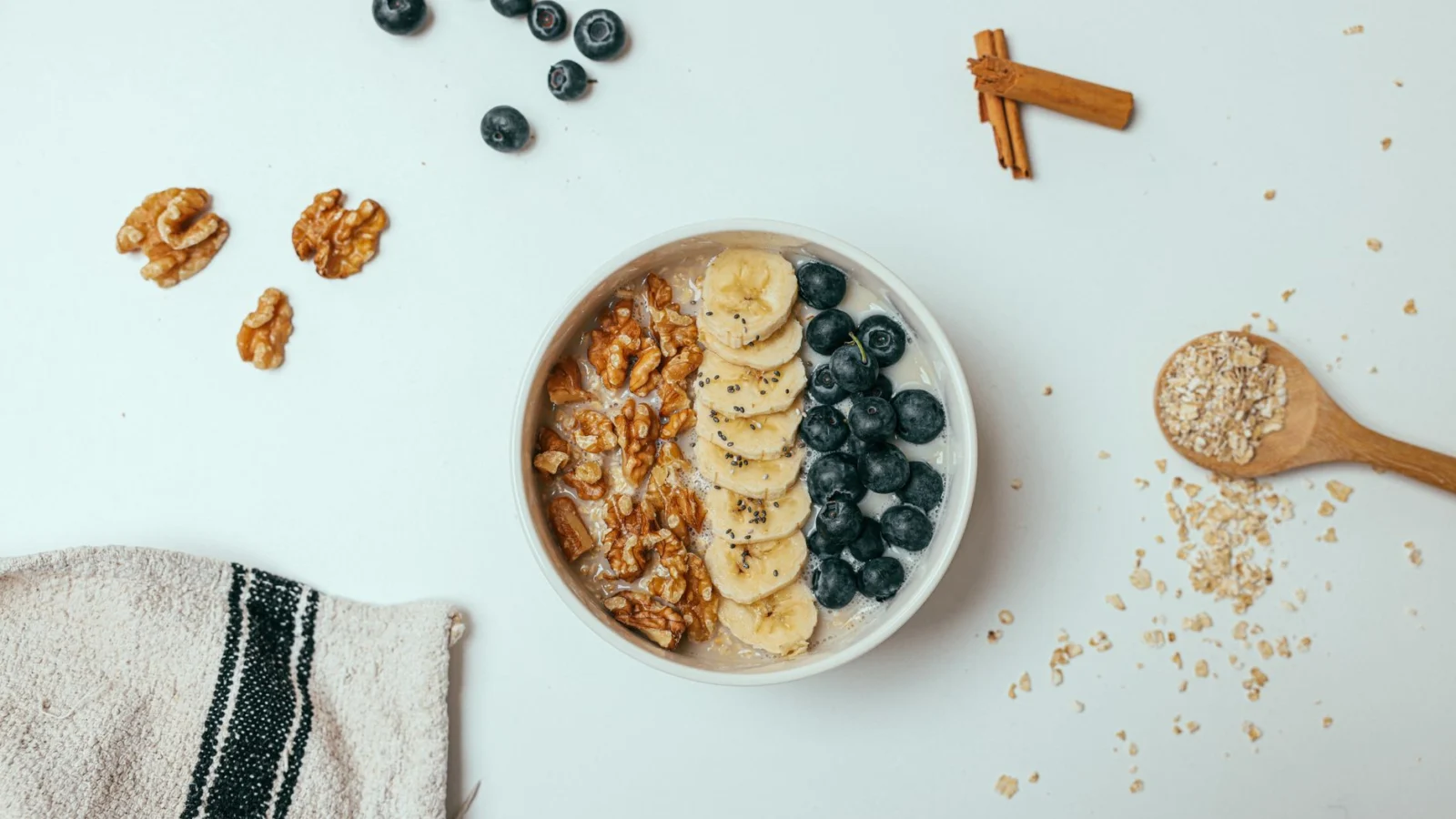
Dopamine is built from an amino acid called tyrosine, which the body makes from another amino acid called phenylalanine. Both come from protein. If the day starts with a carb-heavy breakfast (toast, cereal, pastry), the brain gets a glucose spike but lacks the building blocks to make dopamine for the hours ahead.
A breakfast with at least 25 to 30 grams of protein gives the brain what it needs. Eggs, greek yogurt, cottage cheese, smoked salmon, lean meat, or a whey protein smoothie all work. Tyrosine-rich foods specifically include eggs, chicken, turkey, lean beef, fish, lentils, pumpkin seeds, almonds, and dairy.
If you are looking for specific ideas, these anti-inflammatory breakfast ideas for women double as high-protein dopamine breakfasts. Pair the protein with a slow carb (oats, berries, sweet potato) and a fat source (avocado, nuts, olive oil) to stabilize blood sugar and avoid a post-meal dopamine crash.
3. Cold Exposure for a Sustained Dopamine Surge
Cold water raises dopamine sharply: in a study in the European Journal of Applied Physiology, an hour in 14-degree Celsius water raised plasma dopamine by 250 percent and noradrenaline by 530 percent. A two to three minute cold shower is a much smaller dose of the same stimulus.
You do not need an ice bath. Ending a normal shower with 30 to 90 seconds of water as cold as your tap runs is enough to trigger the response. The trick is to do it consistently, not intensely. Three to five cold finishes per week create a reliable dopamine signal without becoming a chore.
If cold showers are not an option, cold face immersion works through the same vagus-nerve and sympathetic pathway. Fill a bowl with cold water and ice, hold your breath, and submerge your face for 15 to 30 seconds. This is also a fast way to shift out of an anxiety spiral, which is why it shows up in these grounding techniques for anxiety and panic attacks.
4. Exercise That Stacks Effort with Reward
Every form of physical movement raises dopamine, but not all movement is equal. Steady-state cardio (jogging, cycling, brisk walking for 30 minutes) elevates dopamine broadly across the session. Resistance training raises it in sharper spikes tied to set completion. High-intensity interval training delivers the highest short-term spike but requires recovery. Zone 2 walking after meals combines dopamine release with blood sugar stabilization, a rare two-for-one.
The science-backed minimum for meaningful dopamine effects is 150 minutes of moderate movement per week, or 30 minutes five days. If that sounds impossible, the habit matters more than the duration. A 10-minute walk every morning beats a 60-minute workout you skip three weeks out of four.
Importantly, exercise works at two timescales. It raises dopamine immediately during the session, and over weeks it increases dopamine receptor density in the prefrontal cortex. That is why people who have exercised for months feel better at rest, not just during workouts.
5. The “Dopamine Menu” Framework
This is the framework no generic listicle covers, and it is the single most useful mental tool for anyone rebuilding their reward system. A dopamine menu is a written list of activities that reliably produce a small dopamine lift, sorted by effort and time. When you feel the urge to scroll, snack, or check email out of boredom, you consult the menu instead.
Divide the menu into four tiers. Tier 1 is 2-minute lifts: pet the dog, text a friend a compliment, step outside, do ten pushups. Tier 2 is 15-minute lifts: take a walk, cook something, play an instrument, clean a drawer. Tier 3 is 1-hour lifts: go to a yoga class, have coffee with a friend, work on a hobby project. Tier 4 is half-day lifts: hiking, day trips, concentrated creative work.
The menu works because dopamine responds to choice and effort, not just stimulation. Choosing from a predefined list removes the decision fatigue that leads people to default to their phone. Over a few weeks, the menu itself becomes a trigger: seeing the list releases a small anticipatory dopamine signal before you have even done the activity.
6. Gut Health and the Dopamine-Microbiome Connection
Roughly half of the body’s dopamine is produced in the gut, and gut microbiota directly influence how much dopamine reaches the brain. A 2021 study published in Nature found that specific strains of Lactobacillus and Bifidobacterium increase dopamine signaling by producing precursor compounds and modulating inflammation that otherwise suppresses neurotransmitter function.
The practical habit here is three-fold. Eat fermented foods daily (yogurt, kefir, sauerkraut, kimchi, miso, tempeh). Eat 25 to 35 grams of fiber daily from vegetables, fruit, legumes, and whole grains to feed beneficial bacteria. And minimize artificial sweeteners, emulsifiers, and frequent antibiotic use, all of which disrupt microbiome diversity.
Gut health also shapes how you feel hormones, which matters because estrogen directly influences dopamine receptors. Women whose microbiome is dysregulated often experience steeper mood drops in the luteal phase. For the broader pattern, see these daily habits to balance hormones naturally, which cover the estrobolome in detail.
7. Strategic Dopamine Fasting From Phones and Sugar
The term dopamine fasting has been misused online to mean abstaining from all pleasure, which is neither possible nor useful. The real strategy is periodic removal of the specific stimuli that overload and desensitize the reward system: short-form video, sugar, alcohol, and caffeine past a personal threshold.
A reasonable protocol is to pick one drainer and remove it completely for 14 days. Most people feel a clear baseline shift within 10 days. Sensitivity to smaller rewards returns, which is when activities like reading, cooking, or walking suddenly feel satisfying again instead of boring.
The habit that sustains this long-term is phone boundaries. Charge your phone outside the bedroom. Keep it in grayscale mode until lunch. Delete social apps from the home screen so opening them requires a conscious search. None of these are permanent deprivations. They are friction that lets your reward system recalibrate.
8. Social Touch, Oxytocin, and Dopamine Release
Physical touch and close social connection release oxytocin, which in turn stimulates dopamine release in the ventral tegmental area of the brain. A 20-second hug, a shoulder massage, sex, or time spent petting a dog all produce measurable increases in both neurotransmitters.
For people who live alone or work remotely, this is the most commonly overlooked dopamine habit. A weekly coffee with a friend, a phone call to a sibling, an in-person yoga class, or even regular small-talk with neighbors all count. The mechanism is social safety signaling through the nervous system, which suppresses cortisol and allows dopamine to rise.
If touch feels inaccessible right now, self-massage works too. A 10-minute foam roll, a scalp massage with oil, or a warm bath with Epsom salts all activate parasympathetic pathways that support dopamine. This is part of the broader self-care protocol described in this daily self care routine for depression.
9. Small Wins and the Goal-Completion Loop
Dopamine is released every time you finish a task, not just when you start one. The brain rewards completion more than intent, which is why writing a to-do list and crossing items off literally makes the next task easier. Each check-off triggers a small dopamine hit that primes motivation for what follows.
Two rules maximize this effect. First, make at least half the daily list trivially easy. Brush teeth, make the bed, drink a glass of water, answer one email. These are not real work. They are dopamine primers that move you into motion. Second, break bigger tasks into sub-tasks of 15 to 45 minutes, each with a clear finish. “Work on report” is a vague directive that produces no dopamine. “Write report intro, 20 minutes” is a completable unit.
Over weeks, this practice rewires the baseline reward response. The brain starts releasing anticipatory dopamine at the thought of the task, not the reward. This is the neurochemical definition of self-discipline, and it is trained, not inherited.
How Dopamine Shifts Across the Female Cycle
Dopamine sensitivity is not stable across the menstrual cycle. Estrogen amplifies dopamine release, which is why energy and motivation typically peak in the follicular phase (days 6 to 14) and the early ovulatory window. As estrogen drops in the luteal phase and progesterone rises, dopamine responsiveness falls, often producing the classic PMS pattern of low mood, low motivation, and cravings for fast dopamine hits like sugar and scrolling.
This is not a character flaw. It is cycle-linked neurochemistry, and the right response is to adjust habits, not fight the dip. In the luteal week, lean harder on the daily habits to boost dopamine naturally listed above. Frontload protein earlier in the day. Double down on sunlight and movement even when motivation feels low. Reduce alcohol and caffeine, both of which worsen the dopamine dip. Consider the week a recovery phase rather than a performance phase.
Perimenopausal and menopausal women experience a larger, more sustained version of this pattern. Declining estrogen means less dopamine amplification, which is why motivation, focus, and mood often shift substantially in the early 40s. The habits in this guide matter more in that phase, not less.
How Long Until You Feel the Difference
Most people notice a real shift within 10 to 21 days of consistent practice. The first change is usually energy stability: fewer afternoon crashes, less dependence on caffeine or sugar to push through tasks. Within three to four weeks, motivation for previously boring activities starts to return. By the six-week mark, the changes compound, and activities like morning sunlight and cold exposure start to feel like things you crave rather than things you force.
Research from the NIH National Library of Medicine confirms that neurotransmitter systems respond plastically to behavioral interventions over weeks, not days. Expect fluctuation. A bad week does not undo the progress. The pattern is two steps forward, one step back, with the baseline drifting upward over months.
Dopamine and sleep run on the same clock, and the page on how to fall asleep faster explains the fixed wake time and the light rules that set it.
FAQ
What foods boost dopamine naturally?
Tyrosine-rich foods are the strongest dietary levers. Eggs, chicken, turkey, lean beef, fish, greek yogurt, cottage cheese, cheese, almonds, pumpkin seeds, lentils, and dark chocolate all provide the amino acid precursor the brain converts into dopamine. Magnesium-rich foods (leafy greens, avocado, cashews) and B6-rich foods (bananas, chickpeas, salmon) support the conversion enzymes. Fermented foods like yogurt, kefir, sauerkraut, and kimchi support gut bacteria that produce dopamine precursors. A breakfast built around 25 to 30 grams of protein plus vegetables, fruit, and healthy fat is a reliable dopamine-friendly meal structure.
Can you really reset your dopamine?
Yes, within limits. Dopamine receptors can downregulate from chronic overstimulation (constant phone use, high sugar intake, frequent alcohol) and then upregulate again when those inputs are reduced. The process typically takes 2 to 8 weeks of consistent change. What you cannot do is reset dopamine in a weekend, despite the promises of some wellness protocols. The receptor density changes are structural and require sustained behavior over weeks.
How long does it take to increase dopamine levels?
Short-term dopamine release from a single habit (sunlight, cold shower, exercise) happens within minutes. Sustained baseline shifts from consistent daily habits take 10 to 21 days to become noticeable and 6 to 12 weeks to stabilize. Deeper changes, like improved receptor density and reduced reactivity to cheap stimuli, build over months of repeated practice.
Does caffeine boost or drain dopamine?
Both, depending on dose and timing. Moderate caffeine, a cup or two of coffee inside the FDA’s 400 mg a day, raises dopamine signaling by blocking adenosine receptors. Higher doses or late-day caffeine disrupt sleep, which is the largest dopamine-regulating factor in your day. The best pattern is caffeine before 10am, with a second small dose before 1pm if needed, and none after 2pm. If you are caffeine-dependent for basic function, that is a sign of underlying sleep or dopamine-system dysregulation rather than a caffeine issue.
Do dopamine supplements actually work?
L-tyrosine (500 to 2000 mg), rhodiola rosea, and mucuna pruriens have some clinical support for short-term dopamine support, especially under stress or sleep deprivation. These work best for acute situations, not daily use. Chronic supplementation can downregulate natural dopamine production. Vitamin D, B6, magnesium, and omega-3s support dopamine synthesis indirectly and are safer for daily use, particularly if dietary intake is low. Always talk to a healthcare provider before starting any supplement, especially if you take medications.
Conclusion
The difference between feeling motivated and feeling stuck is rarely a matter of willpower. It is a matter of whether the daily habits to boost dopamine naturally have been built into your rhythm, or whether your reward system is running on the fumes of short-form video, sugar crashes, and underslept mornings. The 9 habits in this guide are not new, not exotic, and not expensive. They are the consistent signals the brain needs to maintain a responsive reward system.
Start the daily habits to boost dopamine naturally with sunlight, protein, and one removed drainer (phone in bedroom, daily alcohol, or short-form video are the usual heavy hitters). Add one habit per week rather than trying to change everything at once. Expect the luteal-phase dip and respond with support rather than frustration. Track how you feel at the 21-day mark, and again at the 6-week mark. Most people find the change unmistakable.
Motivation is not a personality trait. It is a pattern of daily choices reflected in brain chemistry, and the brain is plastic enough to rebuild what has been depleted. You have the levers. Pull them consistently, and the rest follows.
Related Articles
- Daily Habits to Reduce Cortisol Naturally: 9 Science-Backed Ways for Women
- Daily Habits to Boost Metabolism After 40: 9 Science-Backed Changes That Actually Work
- Daily Habits to Balance Hormones Naturally: 9 Science-Backed Methods
This article is for informational purposes only and does not replace medical advice. If you are experiencing persistent low mood, extreme fatigue, or symptoms of depression, please consult a qualified healthcare provider. Suspected dopamine-related conditions (Parkinson’s disease, ADHD, depression, addiction) require clinical evaluation.