
 Lifestyle
 Food & Nutrition
 Fitness

Learning how to relieve upper back pain between shoulder blades can save you from weeks of nagging discomfort that makes everything from working at your desk to sleeping through the night feel impossible. That burning, aching sensation right between your shoulder blades is one of the most common musculoskeletal complaints doctors hear about. The good news is that you can relieve upper back pain between shoulder blades with consistent home-based treatment.
Upper back pain in the thoracic spine region affects roughly 15 to 35 percent of the general population at any given time. Unlike lower back pain, which gets most of the attention, pain between the shoulder blades often flies under the radar until it becomes constant. If you’re tired of rubbing that spot between your shoulders and getting nowhere, this guide walks you through what’s causing the discomfort and the best ways to relieve upper back pain between shoulder blades without a doctor visit.
- 1 Why You Get Pain Between Your Shoulder Blades
- 2 Posture Corrections That Make an Immediate Difference
- 3 Best Stretches to Relieve Upper Back Pain Between Shoulder Blades
- 4 Strengthening Exercises to Prevent Recurring Pain
- 5 When to Use Heat vs. Cold for Shoulder Blade Pain
- 6 Daily Habits That Reduce Upper Back Tension
- 7 Self-Massage Techniques for Quick Relief
- 8 When Upper Back Pain Needs Medical Attention
- 9 Frequently Asked Questions
- 10 Conclusion
Why You Get Pain Between Your Shoulder Blades

The area between your shoulder blades sits in the thoracic spine, roughly from T1 to T8. This region supports your ribcage, protects your organs, and anchors the muscles that control your shoulders and neck. When something goes wrong here, you feel it every time you breathe, twist, or reach.
The most common cause is muscular strain from poor posture. When you hunch over a screen, your rhomboids and middle trapezius muscles stretch and weaken. Meanwhile, your chest muscles (pectorals) shorten and tighten. This imbalance creates a constant pulling sensation between the shoulder blades that worsens throughout the day.
Other frequent causes include myofascial trigger points (knots in the muscle tissue), thoracic disc issues, and referred pain from the neck or shoulders. According to the Mayo Clinic, muscle or ligament strain from repeated heavy lifting or sudden awkward movements ranks among the top reasons for back pain across all regions of the spine.
Stress also plays a significant role. When you’re anxious or tense, your shoulders creep upward and your upper back muscles tighten. Over time, this chronic tension creates inflammation and pain that feels like it’s lodged right between your shoulder blades.
Posture Corrections That Make an Immediate Difference

Fixing your posture is the single most effective long-term strategy to relieve upper back pain between shoulder blades. It doesn’t require expensive equipment or hours of exercise. It requires awareness and a few deliberate adjustments to how you sit, stand, and move.
Start with your workstation. Your monitor should sit at eye level so you’re not tilting your head down. Your elbows should rest at roughly 90 degrees, and your feet should be flat on the floor. If you work on a laptop, consider a separate keyboard and a laptop stand. These small changes reduce the forward head posture that strains your thoracic spine. You can find more tips in our guide to sitting positions that reduce back pain.
Throughout the day, practice the “chin tuck” exercise. Pull your chin straight back (like you’re making a double chin) and hold for five seconds. Repeat ten times every hour. This simple move realigns your cervical spine and takes pressure off the muscles between your shoulder blades.
When standing, imagine a string pulling the crown of your head toward the ceiling. Roll your shoulders back and down, away from your ears. This position engages your rhomboids and middle trapezius, the exact muscles that weaken when you slouch.
Best Stretches to Relieve Upper Back Pain Between Shoulder Blades
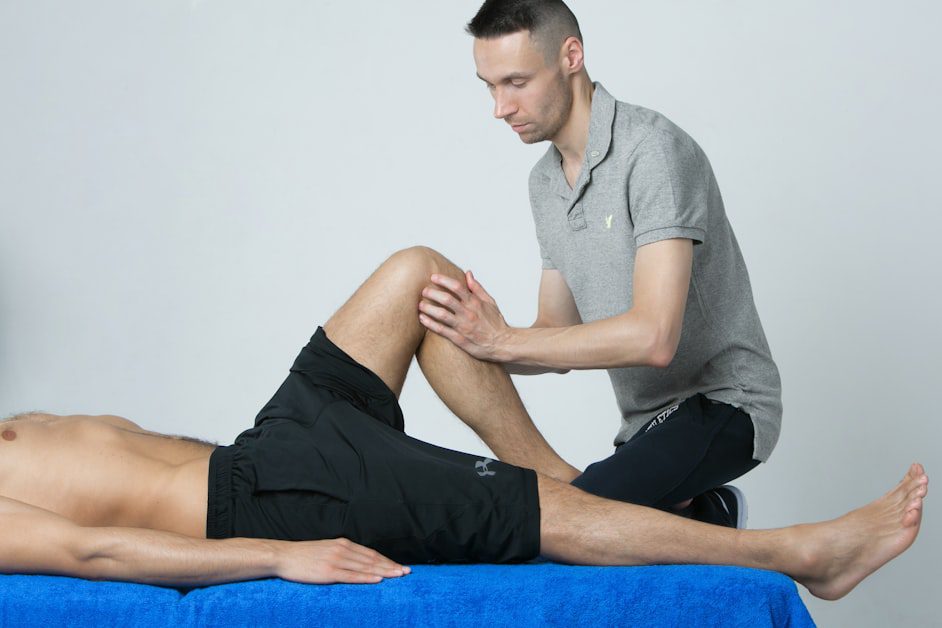
Targeted stretching is one of the fastest ways to relieve upper back pain between shoulder blades and restore the flexibility you’ve lost from hours of sitting. These stretches target the specific muscle groups responsible for pain between the shoulder blades.
Doorway chest stretch: Stand in a doorway with both arms raised to 90 degrees, forearms resting on the door frame. Step one foot forward and lean gently until you feel a stretch across your chest and the front of your shoulders. Hold for 30 seconds. This stretch opens up the pectoral muscles that pull your shoulders forward and compress the upper back.
Cat-cow stretch: Get on your hands and knees. Inhale as you drop your belly and lift your chest (cow). Exhale as you round your spine and tuck your chin (cat). Move slowly through 10 to 15 repetitions. This mobilizes every segment of your thoracic spine and releases tension in the surrounding muscles.
Thread the needle: From all fours, slide your right arm under your left arm and rotate your upper body until your right shoulder touches the floor. Hold for 20 seconds, then switch sides. This rotation stretch targets the muscles between and around your shoulder blades directly.
Cross-body shoulder stretch: Bring your right arm across your chest and use your left hand to press it closer to your body. Hold for 20 seconds per side. This stretches the posterior deltoid and the muscles that attach to the shoulder blade. If you enjoy morning stretching routines, our guide to morning stretches for easing back pain covers additional movements you can add to your daily routine.
Strengthening Exercises to Prevent Recurring Pain
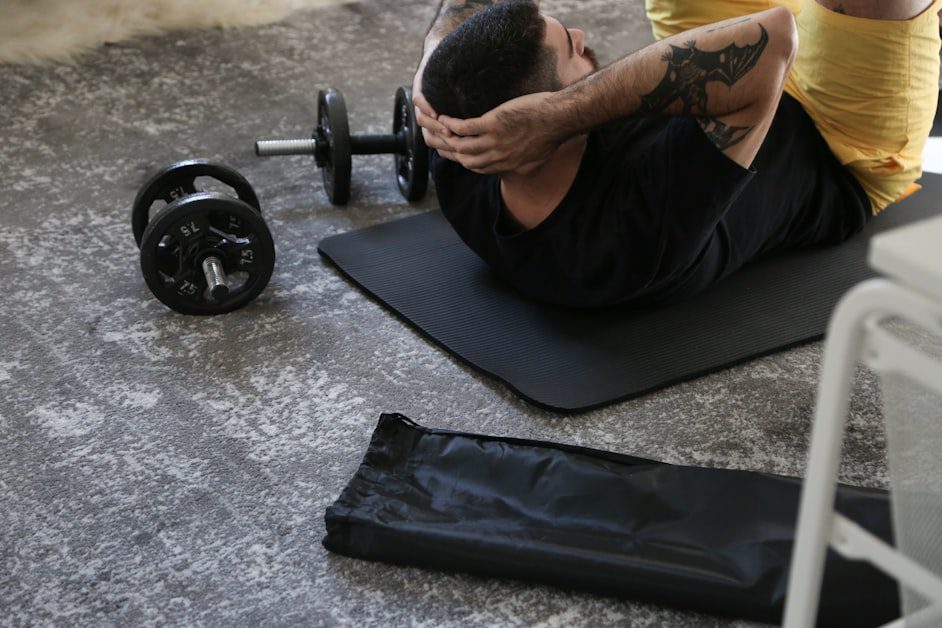
Stretching helps you relieve upper back pain between shoulder blades quickly, but strengthening the muscles around your thoracic spine is what keeps the pain from coming back. Weak rhomboids, lower trapezius, and serratus anterior muscles are often the root cause of chronic interscapular pain.
Wall angels: Stand with your back flat against a wall, arms raised to 90 degrees like a goal post. Slowly slide your arms up and down the wall while keeping your entire back, head, and arms in contact with the surface. Perform 10 to 15 repetitions. This exercise strengthens the lower trapezius and serratus anterior while reinforcing proper posture.
Prone Y raises: Lie face down on the floor with your arms extended overhead in a Y shape, thumbs pointing toward the ceiling. Lift both arms a few inches off the ground, squeeze your shoulder blades together, and hold for three seconds. Lower and repeat 12 to 15 times. Research published by the National Institutes of Health confirms that targeted strengthening exercises for the back are a primary recommendation in evidence-based management of musculoskeletal back pain.
Resistance band pull-aparts: Hold a resistance band at shoulder height with both hands, arms extended forward. Pull the band apart by squeezing your shoulder blades together until your arms form a T shape. Slowly return to the starting position. Do three sets of 15 repetitions. This directly targets the rhomboids and middle trapezius.
Scapular squeezes: Sit or stand with good posture. Squeeze your shoulder blades together as if you’re trying to hold a pencil between them. Hold for five seconds and release. Repeat 15 to 20 times. You can do this exercise anywhere, at your desk, in the car, or while watching TV.
When to Use Heat vs. Cold for Shoulder Blade Pain
Knowing when to apply heat and when to reach for ice can speed up your recovery significantly. Using the wrong one at the wrong time can actually make your pain worse.
For the first 48 to 72 hours after the pain starts, or if you notice any swelling or sharp, acute pain, use cold therapy. Wrap an ice pack in a thin towel and apply it to the painful area for 15 to 20 minutes at a time, with at least 45 minutes between sessions. Cold reduces inflammation and numbs the nerve endings that transmit pain signals.
After the initial acute phase, switch to heat therapy. A heating pad, warm towel, or hot water bottle applied for 15 to 20 minutes increases blood flow to the area, relaxes tight muscles, and promotes healing. Many people find that moist heat (a damp towel heated in the microwave) penetrates deeper than dry heat.
The UK National Health Service recommends using an ice pack wrapped in a tea towel to reduce pain and swelling, and a heat pack for joint stiffness or muscle spasms. If your pain is chronic and recurring, heat before stretching and cold after exercise is a combination that works well for many people.
Daily Habits That Reduce Upper Back Tension
The stretches and exercises above help relieve upper back pain between shoulder blades, but they work best when paired with daily habits that prevent tension from building up in the first place. Small changes to your routine can dramatically reduce how often that pain between your shoulder blades flares up.
Take movement breaks every 30 to 45 minutes if you sit for long periods. Stand up, walk around, roll your shoulders, and do a quick stretch. Even 60 seconds of movement resets your posture and relieves muscle fatigue. Our article on stretches for back pain from sitting all day has a full routine you can do at your desk.
Pay attention to how you sleep. Side sleepers should use a pillow thick enough to keep the spine neutral. Back sleepers benefit from a thinner pillow and a small rolled towel under the natural curve of the neck. Sleeping on your stomach forces your thoracic spine into rotation and extension, which strains the muscles between your shoulder blades.
Manage your stress levels. Chronic stress triggers muscle tension patterns that settle in the upper back and shoulders. Regular walking, deep breathing exercises, and consistent sleep schedules all help lower your baseline stress level. Even a 10-minute walk outdoors can break the tension cycle. For a structured approach, check out our anti-inflammatory morning routine for back pain.
Watch your phone posture. Looking down at your phone creates what’s sometimes called “tech neck,” which adds up to 60 pounds of extra force on your cervical and upper thoracic spine. Hold your phone at eye level or limit the time you spend scrolling with your head tilted forward.
Self-Massage Techniques for Quick Relief
When you need to relieve upper back pain between shoulder blades right now, self-massage can help release the muscle tension and trigger points that are causing the discomfort.
Tennis ball technique: Place a tennis ball between your back and a wall. Position it on the painful spot between your shoulder blades. Lean into the ball and slowly roll it around the area by bending and straightening your knees. When you find a particularly tender spot (a trigger point), hold steady pressure on it for 20 to 30 seconds until you feel the tension release.
Foam roller thoracic extension: Lie on your back with a foam roller positioned horizontally under your upper back, just below your shoulder blades. Support your head with your hands and slowly extend backward over the roller. Roll up and down from mid-back to the base of your neck, spending extra time on any tight or tender spots. This technique mobilizes stiff thoracic vertebrae and stretches the muscles along your spine.
Lacrosse ball between shoulder blades: Lie on the floor with a lacrosse ball positioned on one side of your spine, between the shoulder blade and the vertebral column. Let your body weight press into the ball. Move slightly up, down, and side to side to massage the rhomboid and middle trapezius muscles. Spend one to two minutes on each side.
These techniques work best when your muscles are already warm, so try them after a hot shower or a few minutes of gentle movement.
When Upper Back Pain Needs Medical Attention
Most upper back pain between the shoulder blades responds to the home treatments outlined above. However, certain symptoms indicate that something more serious may be going on, and you should see a doctor promptly.
Seek medical attention if your pain is accompanied by numbness or tingling that radiates into your arms or hands. This could indicate nerve compression in the cervical or thoracic spine. Similarly, if you experience weakness in your arms, difficulty gripping objects, or changes in coordination, these are neurological warning signs that require evaluation.
Pain that started after a fall, car accident, or any traumatic injury needs professional assessment to rule out fractures or ligament damage. Upper back pain accompanied by chest tightness, shortness of breath, or jaw pain could signal a cardiac event and requires immediate emergency care.
You should also consult a healthcare provider if your pain persists for more than four to six weeks despite consistent home treatment, gets worse instead of better over time, is accompanied by unexplained weight loss or fever, or wakes you from sleep regularly. According to the Mayo Clinic, back pain that causes new bowel or bladder problems requires immediate emergency care.
Frequently Asked Questions
What causes a burning sensation between the shoulder blades?
A burning sensation between the shoulder blades most commonly results from myofascial trigger points or muscle fatigue in the rhomboids and middle trapezius. When these muscles are overworked or held in a shortened position for hours (like when hunching over a computer), they develop areas of restricted blood flow that create a burning or aching feeling. Poor posture, stress, and repetitive movements all contribute to this pattern. In most cases, stretching, posture correction, and self-massage resolve the burning within a few weeks.
How long does upper back pain between shoulder blades last?
Mild to moderate upper back pain from muscle strain or poor posture typically improves within two to four weeks with consistent home treatment. If the pain is related to chronic postural habits, you may notice significant improvement within one to two weeks of correcting your workstation setup and doing daily stretches, though full resolution takes longer. Pain lasting beyond six weeks without improvement warrants a visit to your healthcare provider to rule out underlying conditions like disc issues or thoracic outlet syndrome.
Can sleeping position cause pain between shoulder blades?
Yes, your sleeping position significantly affects upper back pain. Stomach sleeping is the worst position for interscapular pain because it forces your thoracic spine into extension and rotation for hours. Side sleeping with an unsupportive pillow can also cause the upper shoulder to roll forward, straining the muscles between the shoulder blades. The best position for upper back pain is on your back with a supportive pillow that keeps your neck in a neutral position, or on your side with a pillow between your knees and a properly sized pillow under your head.
Is upper back pain between shoulder blades serious?
In most cases, pain between the shoulder blades is not serious and results from muscular strain, poor posture, or stress. However, it can occasionally indicate conditions that need medical attention, including herniated discs in the thoracic spine, gallbladder problems, or in rare cases, cardiac issues. If your pain comes with numbness in your arms, chest tightness, difficulty breathing, or follows a traumatic injury, seek medical evaluation right away. Persistent pain that doesn’t respond to four to six weeks of home treatment also deserves professional attention.
Do resistance bands help with shoulder blade pain?
Resistance bands are one of the most effective and accessible tools for treating and preventing pain between the shoulder blades. Exercises like band pull-aparts, face pulls, and external rotations directly strengthen the rhomboids, middle and lower trapezius, and rotator cuff muscles that support proper shoulder blade positioning. Using a light to moderate resistance band for 10 to 15 minutes three to four times per week can significantly reduce upper back pain and improve posture over time. Start with a lighter band and increase resistance gradually as the exercises become easier.
Conclusion
You don’t need expensive treatments or specialist visits to relieve upper back pain between shoulder blades. The combination of posture corrections, targeted stretches, strengthening exercises, and smart daily habits outlined in this guide addresses the root causes of interscapular pain, not just the symptoms.
Start with the posture fixes and two or three stretches from this guide. Add the strengthening exercises once the acute pain settles down. Build movement breaks into your workday, and pay attention to your sleeping position. Most people notice meaningful improvement within the first two weeks of consistent effort.
If your pain persists beyond six weeks, gets worse, or comes with neurological symptoms like numbness or weakness, don’t wait. See your healthcare provider for a proper evaluation. The sooner you address the underlying cause, the faster you’ll get back to living without that constant ache between your shoulders.
Medical Disclaimer: This content is for informational purposes only and does not constitute medical advice. Consult a qualified healthcare provider before making any health decisions.