


If you wake up with a racing heart, dread, or a tight chest before your feet hit the floor, the problem is not your morning. It is the eight hours that came before. The evening habits to reduce morning anxiety are not about calm mornings, they are about giving your nervous system permission to power down the night before, so the cortisol surge that hits at sunrise does not turn into a panic spiral.
Morning anxiety is not a personality trait or bad luck. It is a predictable physiological pattern called the cortisol awakening response, and it is heavily influenced by what you do in the two to three hours before you close your eyes. The good news: a handful of small, evidence-based evening rituals can reduce the intensity of that cortisol spike and the catastrophic thinking that rides with it.
This guide walks through nine specific evening habits, the timing that makes each one work, and the exact mechanism behind why they calm your nervous system by morning. If you have ever wondered why you wake up anxious when nothing is actually wrong, this is the fix.
The 9 Evening Habits at a Glance
Each one targets a different part of the overnight stress response. You do not need all nine, and the sections below explain which to start with.
- Set a consistent wind-down time, about two hours before bed
- Do a 10-minute worry dump on paper
- Eat protein and fat before bed to blunt 3am cortisol spikes
- Dim the lights and stop blue light 90 minutes before sleep
- Take magnesium glycinate 30 to 60 minutes before bed
- Practise yoga nidra or a 15-minute body scan
- Keep the bedroom cool, around 65 to 68 degrees
- Pre-plan tomorrow morning to remove decisions
- Use box breathing or 4-7-8 breathing right before sleep
Why Evening Habits to Reduce Morning Anxiety Work: The Cortisol Awakening Response
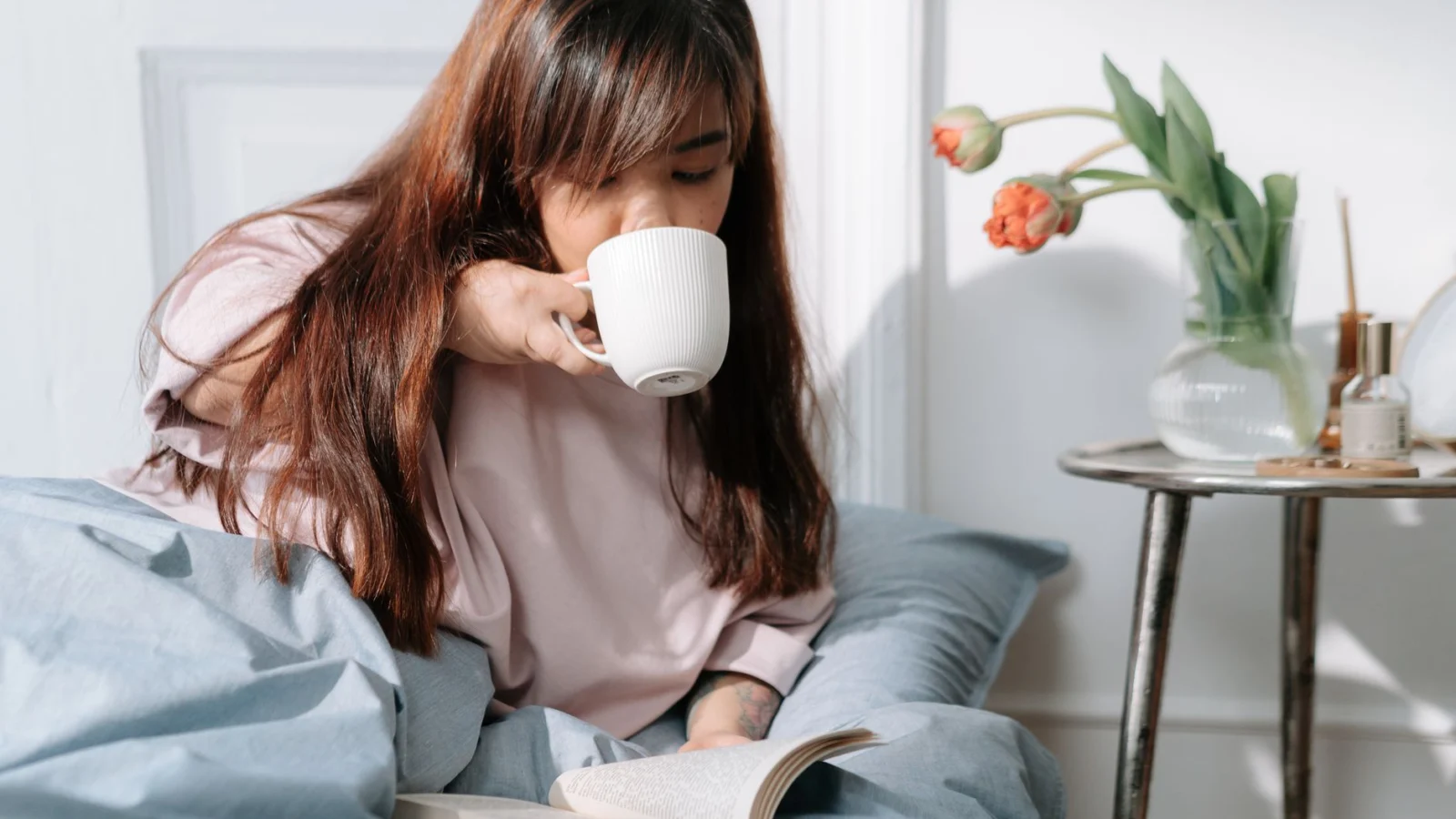
Every human body releases a surge of cortisol in the 30 to 45 minutes after waking. This is called the cortisol awakening response (CAR), and it is normal. It helps you transition from sleep to alert wakefulness. In a healthy, rested person, CAR feels like clear-headed readiness for the day.
The problem is that chronic stress, poor sleep, late-night eating, and evening alcohol all amplify CAR. When cortisol is already elevated at bedtime, the morning surge layers on top of an already-anxious baseline, creating what feels like a panic attack before you have even had water. Research published in Psychoneuroendocrinology shows that the magnitude of the cortisol awakening response is directly influenced by the quality of the preceding night’s sleep and the stress signals sent to the HPA axis during the evening hours.
Translation: if you want to change your mornings, you have to change your evenings. The following nine habits target the exact mechanisms that blow up your morning cortisol, from blood sugar crashes at 3am to blue light suppressing melatonin to a bedroom that is two degrees too warm.
Evening Habit 1: Set a Consistent Wind-Down Time (2 Hours Before Bed)

Your nervous system is not a light switch. It cannot go from inbox zero at 10:58 to deep rest at 11:00. The single most effective of all evening habits to reduce morning anxiety is protecting a two-hour wind-down window before your target bedtime.
What happens in this window matters less than the consistency. The body learns, over about three weeks, that when a specific routine starts, sleep is coming. This triggers a gradual downshift in the sympathetic nervous system and a quieter cortisol curve by morning.
If you want to sleep at 11pm, your wind-down starts at 9pm. No work email, no urgent texts, no aggressive news feeds. This is also the foundation that makes every other habit on this list more effective. Building out a complete morning routine to reduce anxiety works much better when the evening half is locked in first.
Evening Habit 2: Do a 10-Minute Worry Dump on Paper

One of the biggest drivers of morning anxiety is unfinished cognitive processing. When worries do not have a container before bed, the brain rehearses them all night. By morning, the first thought your brain offers is the loudest unresolved loop from the evening.
The fix is a structured worry dump, done 60 to 90 minutes before bed. Take a notebook and write, without editing, every concern that is bouncing in your head. Then next to each item, write one of three responses: action tomorrow, not in my control, or schedule a time to think about this. This is based on cognitive behavioral therapy techniques used for generalized anxiety disorder, and it works because it externalizes the worry so the brain no longer needs to keep rehearsing it.
If open-ended journaling feels intimidating, a prompt list works just as well. These anxiety journal prompts for women are structured specifically to discharge evening rumination without opening new worry loops.
Evening Habit 3: Eat Protein and Fat Before Bed to Prevent 3am Cortisol Spikes

If you wake at 3am with a racing heart and cannot fall back asleep, the cause is often nocturnal hypoglycemia. Blood sugar drops during the long overnight fast, and the body releases cortisol and adrenaline to push glucose back up. You wake up feeling like something is terribly wrong, because your body has just flooded itself with stress hormones.
The fix is a small evening snack with protein and healthy fat, eaten about 60 to 90 minutes before bed. Think: a tablespoon of almond butter, a small handful of walnuts, or half an avocado with sea salt. Carbs alone will spike and crash. Protein plus fat gives a slow, stable fuel release through the night.
This habit also supports hormone regulation, which is why it overlaps with a broader approach to daily habits to balance hormones naturally. Blood sugar stability is the common denominator for both cortisol and anxiety.
Evening Habit 4: Dim the Lights and Stop Blue Light 90 Minutes Before Sleep
Your brain reads bright white and blue light as daytime. Looking at a phone, laptop, or bright overhead light after 9pm suppresses melatonin by up to 50 percent, according to Mayo Clinic sleep research. Low melatonin means the cortisol curve never flattens properly, so the morning spike hits harder.
Ninety minutes before bed, switch to lamps instead of overhead lights. Where screens are unavoidable, night mode and blue-light-blocking glasses are what the studies used. Better still, physically put the phone in another room after 9:30. The anxiety you feel when you cannot check it is the same sympathetic activation that will give you morning anxiety tomorrow.
Evening Habit 5: Magnesium Glycinate, 30 to 60 Minutes Before Bed
Magnesium glycinate is the form of magnesium most studied for anxiety and sleep because glycine itself is a calming neurotransmitter. Taken 30 to 60 minutes before sleep, it supports GABA activity, lowers the stress response, and deepens slow-wave sleep, which is the sleep stage most linked to cortisol regulation.
Typical doses studied for anxiety fall in the 200 to 400 mg range. Start low and see how your body responds. Unlike melatonin, magnesium glycinate does not force sleep, it removes a common blocker of it. Women in particular often run low on magnesium due to menstrual cycles and higher stress loads, which is why it shows up as a foundation habit in most evening routines.
For dosing, timing, and product comparisons, see the full guide on best magnesium glycinate for sleep and anxiety.
Evening Habit 6: Practice Yoga Nidra or a 15-Minute Body Scan
Yoga nidra is a form of guided relaxation that induces a theta-wave brain state somewhere between deep sleep and waking. A 2022 study in the International Journal of Yoga found that 20 minutes of yoga nidra lowered cortisol levels more effectively than lying still with eyes closed, and reduced anxiety scores in subjects with chronic stress after four weeks of daily practice.
The key is that yoga nidra does not require skill, flexibility, or effort. You lie down, follow a guided audio, and let the body discharge tension. Apps like Insight Timer, Calm, and Yoga Nidra Network have free options. Fifteen minutes in bed, lights off, headphones in, is all it takes.
If yoga nidra feels too unfamiliar, a simple body scan works similarly. Starting at your feet, mentally check in with each body part and let it soften. This is the mechanism behind why grounding techniques for anxiety and panic attacks reduce morning symptoms when done the night before.
Evening Habit 7: Keep Your Bedroom at 65 to 68 Degrees
Core body temperature needs to drop by about one degree Fahrenheit for deep sleep to begin. A warm bedroom keeps your nervous system in a low-grade activated state all night, which elevates cortisol and increases the odds of waking anxious. The Sleep Foundation recommends 65 to 68 degrees Fahrenheit (18 to 20 Celsius) for most adults.
This is a simple, high-impact habit. Turn the thermostat down or use a fan. Sleep under fewer covers. If your partner runs hot, try separate blankets. A cool bedroom is one of the fastest ways to reduce not just morning anxiety but overall sleep fragmentation.
Evening Habit 8: Pre-Plan Tomorrow Morning to Kill Decision Fatigue
A significant piece of morning anxiety comes from the brain scanning ahead for everything it has to decide in the first two hours after waking. What to wear, what to eat, what to tackle first, whether to skip the workout. Each open loop is a small stressor, and the brain often starts pre-loading them at 4am.
Spend five minutes before bed writing tomorrow’s first three tasks, laying out your clothes, and prepping breakfast. This sounds almost too basic to matter, but removing 15 small decisions from your morning is one of the highest-impact evening habits to reduce morning anxiety. You wake up with nothing to figure out, and the nervous system stays neutral.
If overthinking at night is a recurring problem that keeps you awake in the first place, work through how to stop overthinking at night before layering on the planning habit.
Evening Habit 9: Box Breathing or 4-7-8 Breathing Right Before Sleep
Slow, extended exhales stimulate the vagus nerve, which shifts the nervous system into parasympathetic (rest and digest) mode. Two techniques are reliably studied for reducing pre-sleep anxiety:
Box breathing: Inhale 4 seconds, hold 4 seconds, exhale 4 seconds, hold 4 seconds. Repeat for 4 to 8 rounds. This is the technique taught to Navy SEALs for stress regulation.
4-7-8 breathing: Inhale through the nose for 4 seconds, hold for 7, exhale through the mouth for 8. Repeat 4 times. The long exhale is where the calming shift happens.
Done in bed, lights already out, both techniques reliably slow heart rate and drop cortisol within 90 seconds. Pair with one of the other habits on this list and you will notice a different-feeling morning within about two weeks. For a broader look at nervous system regulation that supports these breathing patterns, see how to regulate nervous system anxiety.
How Long Until These Habits Reduce Morning Anxiety?
Most people notice a meaningful drop in morning anxiety intensity within 10 to 21 days of consistently running three to five of these evening habits. The first week is often the hardest because the body is still metabolizing chronic stress. By the third week, the cortisol awakening response starts re-calibrating.
Do not try to implement all nine at once. Start with the three highest-impact ones for your specific pattern: if you wake at 3am, start with the protein-fat evening snack. If you lie awake ruminating, start with the worry dump and box breathing. If you are wired and tired, start with magnesium glycinate and the bedroom temperature fix.
Consistency beats intensity. A 15-minute evening routine done nightly will do more than a perfect 90-minute ritual done twice a week.
The evening habits here are half the answer; the page on how to fall asleep faster gives the other half, the bedtime, the light and the caffeine timing.
Frequently Asked Questions
Why do I wake up with anxiety at 3am specifically?
A 3am wake-up with anxiety is almost always linked to a nocturnal cortisol spike, often triggered by a drop in blood sugar after the long overnight fast. Late alcohol, skipped dinners, or high-sugar evening snacks all worsen this pattern. A small protein and fat snack 60 to 90 minutes before bed is the single best fix for the 3am wake-up.
Can evening habits really reduce anxiety the next morning?
Yes. The cortisol awakening response is heavily shaped by the previous night’s sleep quality, evening stress signals, and nighttime blood sugar stability. Studies on sleep-anxiety cycles show that improving evening routines produces measurable reductions in morning cortisol within two to three weeks.
What foods should I avoid in the evening if I have morning anxiety?
Avoid alcohol within three hours of bed, caffeine after 2pm, high-sugar desserts, and large spicy or fatty meals within two hours of sleep. All of these disrupt the cortisol and insulin balance that regulates overnight nervous system activity.
Should I take melatonin to reduce morning anxiety?
Melatonin helps sleep onset but does not directly address the cortisol awakening response. For morning anxiety specifically, magnesium glycinate and behavioral habits (wind-down, box breathing, worry dump) are more effective. Melatonin may be useful short-term, but it is not a substitute for the foundational evening habits listed here.
What if my morning anxiety does not improve with these habits?
If you have consistently applied these habits for four to six weeks without improvement, or if anxiety is interfering with daily functioning, speak to a mental health professional. Persistent morning anxiety can be a symptom of generalized anxiety disorder, an anxious depression, perimenopause-related hormone shifts, or an overactive HPA axis that may need clinical support.
The Bottom Line
Morning anxiety is a physical response to a nervous system that never fully powered down the night before. The nine evening habits to reduce morning anxiety in this guide each target a specific lever: the cortisol awakening response, nocturnal blood sugar, melatonin suppression, body temperature, vagal tone, and unfinished cognitive loops. You do not need all of them. Pick three, run them for 21 days, and pay attention to which ones move the needle for you.
Calmer mornings are not about waking up differently. They are about going to bed differently.
Medical disclaimer: This article is for educational purposes and does not constitute medical advice. Morning anxiety that persists, worsens, or interferes with daily life should be evaluated by a qualified mental health professional. Always consult your healthcare provider before starting new supplements, especially if you take medication or have an existing health condition.
Related Articles
- 5 Evening Habits to Reduce Menopause Hot Flashes Naturally
- Daily Habits to Reduce Cortisol Naturally: 9 Science-Backed Ways for Women
- Morning Routine to Reduce Anxiety: 8 Science-Backed Steps
Sources
- NCBI, NIH. Design of Microscale Magnetic Tumbling Robots for Locomotion in Multiple Environments and Complex Terrains.
- Mayo Clinic. Mayo Clinic sleep research.
- Sleep Foundation. The Best Temperature for Sleep.