


If you are researching the early signs of perimenopause in 30s, you are 34 (or 36 or 38) and you feel like your body has become a stranger. Your cycle, which was once a reliable 28 days, is now 24 or 26. Your premenstrual week, which used to be an inconvenience, has turned into a full-blown ten days of anxiety, insomnia, and rage. You wake at 3am without a cause and lie awake until 5. You have new migraines. The weight you used to carry on your hips is redistributing to your waist. Your skin is drier. Your hair is thinning at the temples.
You are tired in a way you cannot explain, and when you ask your doctor if it could be hormonal, you are told you are too young for perimenopause.
You are not too young. The early signs of perimenopause in 30s are some of the most consistently dismissed symptoms in women’s health, and the dismissal comes from a widely held but incorrect belief that perimenopause begins at 45. Perimenopause can begin as early as the mid-30s, and for women with any family history of early menopause, thyroid disease, or stress-driven hormone dysfunction, it often does. This guide walks through the nine earliest signs, the hormone tests that would actually catch the transition (most doctors order the wrong ones), the progesterone-first framework that explains the pattern, and why PMS suddenly getting worse is not a coincidence.
Why the Early Signs of Perimenopause in 30s Get Missed

The standard teaching in primary care is that perimenopause begins at 45 and ends at 55 when menses finally stop. The reality is a bell curve. Perimenopause can begin anywhere from 35 to 50, and the average age of onset in the US is 41. Around one in three women will experience the earliest signs of perimenopause in 30s before age 40.
The reason the 30s presentation gets missed is almost always the same: the single test usually ordered is FSH, follicle stimulating hormone. FSH only rises predictably when perimenopause is already well-established. In the early phase, FSH is still normal on most days, and a single blood draw will almost always look fine. The hormones that change first (progesterone in the luteal phase, AMH as an ovarian reserve marker) are rarely tested unless a woman is specifically trying to conceive.
The Progesterone-First Framework
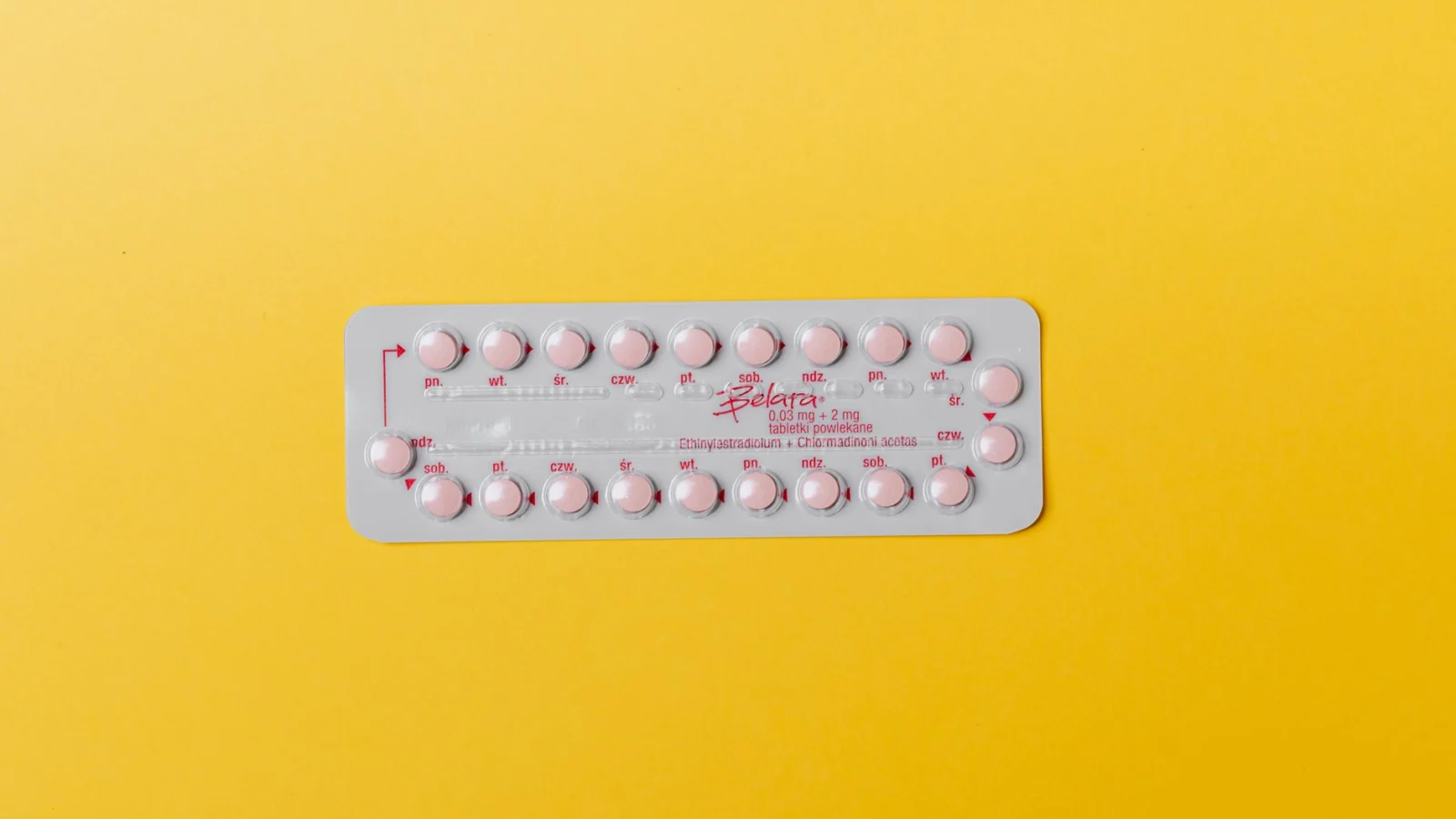
The single most important concept for understanding the early signs of perimenopause in 30s is that progesterone drops first. Estrogen stays relatively normal, sometimes even rising, for several years into the transition. Progesterone, which is made only after a woman ovulates, starts to fall in the mid-to-late 30s as the quality of ovulation declines. That mismatch (normal or rising estrogen with falling progesterone) produces most of the symptoms women describe as new, strange, or cyclical.
This is the same framework covered in detail in our guide to the signs of low progesterone in women. Progesterone falling first while estrogen stays normal creates a relative estrogen dominance, which is why so many women in their 30s develop heavy periods, breast tenderness, new migraines, and premenstrual anxiety at the same time. The symptoms of estrogen dominance in women and the signs of early perimenopause are effectively the same cluster viewed from different angles.
Shortening Cycles and a Shrinking Luteal Phase

The earliest and most reliable sign is cycles getting shorter. A woman whose cycle was 28 to 30 days in her 20s begins seeing 25, 24, sometimes 22-day cycles in her mid-30s. The cycle shortens from the luteal end: the follicular phase stays about the same, but the luteal phase (from ovulation to the next period) shortens from a healthy 12 to 14 days down to 8 to 10.
Shortening cycles are among the most objectively measurable early signs of perimenopause in 30s. This is tracked most easily with a basal body temperature chart or a good cycle-tracking app that records ovulation date separately from period date. A luteal phase under 10 days for three consecutive cycles is one of the most sensitive early signs of perimenopause in 30s and is a strong indication that progesterone production is falling.
PMS That Used to Be Annoying Is Now Debilitating

Worsening PMS is one of the most subjective but telling early signs of perimenopause in 30s. If you are a woman in your 30s who used to have mild PMS and now has a ten-day premenstrual window of anxiety, rage, insomnia, breast tenderness, bloating, and crying spells, you are not losing your mind. Your progesterone is falling and you are losing the natural calming effect of its metabolite, allopregnanolone, on the GABA system in your brain. This transformation of PMS is one of the most common early signs of perimenopause in 30s and one of the most misdiagnosed: many women are put on SSRIs for what is actually a hormone transition.
Waking at 3am and Not Getting Back to Sleep
Progesterone is calming. When it falls, sleep fragmentation begins, most commonly as waking between 2 and 4am and not being able to return to sleep. This is often the same 3am window associated with the signs of high cortisol in women, because the underlying mechanism is shared: progesterone is no longer counter-balancing the natural cortisol rise that begins around 3am as the body prepares for waking. The result is a wired, alert, anxious awakening in the middle of the night. These wake-ups are among the most consistent early signs of perimenopause in 30s and are often the symptom that finally pushes women to seek help.
New Migraines, Especially Menstrual Migraines
New headache patterns are some of the most specific early signs of perimenopause in 30s. A woman who never had migraines suddenly develops them in her mid-30s, and they tend to cluster around ovulation and right before her period. This pattern is driven by estrogen fluctuations becoming more erratic as ovulation quality declines. The estrogen spikes and crashes that happen during a perimenopausal cycle are sharper than those in a younger cycle, and sharp estrogen drops are a well-documented migraine trigger. New migraines in the 30s are among the most specific early signs of perimenopause in 30s and almost always have a clear cyclical pattern if tracked across three months.
Weight Redistribution to the Waist
Changes in fat distribution are among the most metabolic early signs of perimenopause in 30s. Fat redistribution in the 30s tells you more about hormones than the scale does. Women who gain three to five pounds around the waist while their hips and thighs stay the same are experiencing a classic estrogen-progesterone mismatch combined with rising cortisol and mild insulin resistance. This pattern ties directly into the early signs of insulin resistance in women, which begins in the mid-30s and is itself driven partly by falling progesterone and rising relative estrogen.
The belly-specific weight gain is one of the most frustrating early signs of perimenopause in 30s because it does not respond to the same caloric approaches that worked at 25.
Skin and Hair Changes
Estrogen maintains collagen, hair thickness, and skin hydration. As estrogen becomes erratic (not lower overall, but more variable), women notice skin that used to be plump looking drier, new fine lines around the eyes and mouth, hair thinning at the temples and part line, and nails that break more easily. These are some of the most visible early signs of perimenopause in 30s and they are typically dismissed as aging, though the timeline (starting at 35 to 38) is earlier and sharper than general aging would predict.
Brain Fog and Word-Finding Problems
Estrogen is also a brain hormone. It supports acetylcholine, the neurotransmitter most tied to memory and focus. As estrogen becomes erratic, women in their 30s begin experiencing word-finding problems mid-sentence, slower recall, and a reduced ability to multitask. These cognitive shifts are among the least talked-about early signs of perimenopause in 30s and are frequently misdiagnosed as ADHD, depression, or stress.
Anxiety Without a Trigger and Heart Palpitations
Erratic estrogen affects the autonomic nervous system. Women notice new anxiety that arrives without a clear cause, heart palpitations that are benign but frightening, and a general sense of being wound tighter than they used to be. This is not generalized anxiety disorder. It is hormone-driven, often intensifying in the luteal phase, and almost always resolves as the transition stabilizes or with proper hormone support.
The Tests That Actually Catch Early Perimenopause
The wrong test is a single random FSH. The right panel includes: AMH (anti-Müllerian hormone, a direct measure of remaining ovarian reserve that begins falling in the early 30s), day-21 progesterone (tests whether ovulation is producing enough progesterone), estradiol measured on days 3 and 21, FSH and LH on day 3, and thyroid including TPO antibodies because thyroid dysfunction mimics perimenopause exactly. According to guidance from the NIH National Institute on Aging, perimenopause is a clinical diagnosis supported by symptom pattern and trend data rather than any single lab value, which is why one blood draw is almost never enough.
A three-month cycle tracking log showing shortening cycles, short luteal phases, and worsening premenstrual symptoms is often more diagnostically useful than any single blood test. Mayo Clinic’s overview of perimenopause specifically notes the unreliability of single hormone snapshots during the transition.
The Four Levers That Help in Early Perimenopause
Four interventions carry the most evidence in the early phase. Support progesterone through adequate eating (under-eating suppresses ovulation), sleep protection, vitamin C, B6, magnesium, and zinc. Clear estrogen through the gut and liver with cruciferous vegetables, fiber, and reduced xenoestrogen exposure (plastics, conventional dairy). Manage cortisol aggressively, because cortisol steals pregnenolone from progesterone production. In select cases, use bioidentical progesterone under clinician guidance; progesterone cream or oral micronized progesterone in the luteal phase alone is often enough to restore sleep, mood, and cycle length without needing estrogen.
Most women notice meaningful change within two to three cycles. The earlier these interventions are started (during the 30s rather than waiting until 45), the more effectively the transition can be smoothed.
The first sign is usually the cycle itself, periods that come closer together or further apart; the menstrual cycle phases page shows what a regular cycle looks like and what changes before menopause.
Frequently Asked Questions
Can perimenopause start in your 30s?
Yes. Perimenopause can begin as early as the mid-30s and roughly one in three women experience some early signs before age 40. Family history of early menopause, thyroid autoimmunity, smoking, chronic stress, and prior chemotherapy all lower the onset age.
What is the first sign of perimenopause?
For most women, shortening menstrual cycles are the first objective sign, typically cycles dropping from 28-30 days to 24-26 days. The luteal phase shortens first, often to under 10 days. Subjectively, worsening PMS and new sleep fragmentation around 3am are the most common first symptoms women notice.
Is FSH a reliable test for early perimenopause?
Not on its own. FSH rises predictably only when perimenopause is well-established. In the early phase, FSH can look normal on one draw and elevated on the next. AMH, day-21 progesterone, and a three-cycle symptom log are more useful diagnostically than a single FSH.
Why does PMS get worse during perimenopause?
Progesterone falls before estrogen in early perimenopause. Progesterone’s metabolite, allopregnanolone, calms the GABA system in the brain. As it drops, the nervous system loses its natural buffer, which is why PMS intensifies into a ten-day window of anxiety, insomnia, and irritability that was not there before.
Can you treat perimenopause symptoms in your 30s?
Yes, and earlier tends to be easier. Food, sleep, vitamin C, B6, magnesium and zinc all support progesterone; gut and liver function affect how efficiently estrogen clears; and cortisol sits underneath both. Prescribed luteal-phase progesterone is a separate question for a clinician. Together these can meaningfully reduce symptoms within two to three cycles.
Conclusion
If you are a woman in your 30s with shortening cycles, worsening PMS, new 3am wake-ups, new migraines, belly-specific weight gain, and a sense that your body is changing in ways your doctor dismisses, you are almost certainly in the early phase of the menopause transition. The early signs of perimenopause in 30s are specific, recognizable, and testable, but only if the right tests are ordered and the right framework is used. A single FSH will miss this. A three-month symptom log combined with AMH, day-21 progesterone, estradiol, and thyroid antibodies will almost always catch it.
Perimenopause in the 30s is not a failure of the body. It is a normal variation of a normal transition, and it responds well to the right interventions when those interventions start early. The women who thrive through perimenopause are usually the women who recognized the early signs and acted on them years before the conventional wisdom said they should.
This article is for educational purposes only and is not medical advice. Hormonal changes in the 30s can have many causes, including thyroid dysfunction, pituitary disorders, and chronic stress. Always consult a qualified physician before starting any hormone therapy, supplement, or major intervention. If you suspect early perimenopause, request a full hormone panel and a three-month symptom log rather than relying on a single blood draw.
Related Articles
- Early Signs of Hashimotos in Women: 9 Symptoms Doctors Miss for Years
- Early Signs of Insulin Resistance in Women: 9 Symptoms Most Doctors Miss
- Signs of Leptin Resistance in Women: 9 Symptoms Doctors Confuse With Willpower
Sources
- NIH National Institute on Aging. What Is Menopause? | National Institute on Aging.
- Mayo Clinic. perimenopause.