

Progressive overload for women beginners is the single most important principle separating gym programs that produce lasting results from those that plateau after four to six weeks. It means systematically increasing the training stimulus over time, and without it, the body adapts to any fixed routine and stops changing regardless of how consistently you show up.
This guide explains exactly how progressive overload works for women, why the standard advice to “add weight every week” is incomplete, and how to apply it practically in the first twelve weeks of training without risking injury or burning out.
What Progressive Overload for Women Beginners Actually Means
Progressive overload is not just “lift more weight than last time.” It is any measurable increase in the training stimulus that forces the body to adapt beyond its current capacity. For beginners, this can happen in three distinct ways:
- Load progression: increasing the weight used for an exercise
- Volume progression: adding more reps or sets at the same weight
- Density progression: doing the same work in less time (shorter rest periods)
Beginners, particularly women in the first four to eight weeks of training, often progress faster through volume and density than load because of how the nervous system adapts. Strength gains in this phase are primarily neurological, not structural. You are not yet building significantly more muscle tissue; you are teaching your nervous system to recruit existing muscle fibers more efficiently. This phase is called the neuromuscular adaptation phase and it produces rapid strength improvements even before any visible body composition change.
Understanding this distinction matters because many women applying progressive overload for women beginners see their weights plateau and assume something is wrong. In reality, the plateau often reflects that load progression has temporarily outpaced neuromuscular adaptation. Switching to rep or set progression during these periods maintains the training stimulus while the nervous system catches up.
The Double Progression Model for Women Beginners
The double progression model is the most effective and beginner-appropriate approach to progressive overload for women who are new to resistance training. It works in two stages:
Stage 1 (Rep Progression): Start each exercise at the lower end of a rep range, for example 8 reps. Each week, add one to two reps until you reach the top of the range (for example, 12 reps). Maintain the same weight throughout this phase.
Stage 2 (Load Progression): Once you have consistently completed all reps across all sets with good form, increase the weight by the smallest available increment (typically 2.5 kg for dumbbells, 5 kg for barbells). Return to the lower end of the rep range at the new weight and repeat the process.
Example applied to goblet squats:
- Week 1: 3 sets x 8 reps at 12 kg
- Week 2: 3 sets x 10 reps at 12 kg
- Week 3: 3 sets x 12 reps at 12 kg (all clean)
- Week 4: 3 sets x 8 reps at 14 kg (new weight, back to bottom of range)
This approach ensures load increases only occur when the body is genuinely ready for them, which minimizes injury risk and prevents the ego-driven weight jumps that derail many women beginners. It is the foundation of effective progressive overload for women beginners because it respects the neuromuscular adaptation timeline.
How to Track Progressive Overload in the Gym
Progressive overload without tracking is guesswork. The single most important habit for women beginners to build alongside their training is recording what they lift every session.
A minimal effective tracking system:
- Exercise name
- Weight used (in kg)
- Sets and reps completed (e.g., 3 x 10)
- Date of the session
A phone notes app, a small notebook kept in your gym bag, or a simple spreadsheet all work. The format does not matter. The habit does.
Review your previous session’s numbers before each workout. If you completed all target reps cleanly last session, apply stage 2 progression (increase weight) or stage 1 progression (add a rep) before starting today. This pre-session review takes sixty seconds and prevents the common plateau trap of doing the same weights indefinitely because you are not comparing them to anything.
The full progressive structure for building strength while losing fat is laid out in the gym workout plan for weight loss for women, which shows exactly how to structure overload across an 8-week program.
Progressive Overload for Women Over 40 and in Perimenopause
The rate of adaptation to progressive overload changes with age, particularly around and after perimenopause, for hormonal reasons that are important to understand rather than fear.
Estrogen has anabolic effects on muscle tissue. It enhances satellite cell activity (the stem cells responsible for muscle repair and growth) and reduces inflammatory markers that slow recovery. As estrogen declines in perimenopause and beyond, the anabolic response to a given training stimulus diminishes, a phenomenon called anabolic resistance. This does not mean strength training becomes ineffective; it means the stimulus needs to be larger or more frequent to produce the same rate of adaptation.
For women over 40 applying progressive overload:
- Prioritize load and volume progression over density progression (more rest, not less)
- Consider two working sets minimum per exercise rather than one when volume is limited
- Keep protein at the top of the ISSN position stand on protein‘s range, around 2.0 g/kg, because the muscle responds less readily to it after menopause
- Track recovery quality, not just training volume; fatigue accumulation is a signal to deload, not push through
The specific adjustments for strength training after 40 are covered in our guide to strength training for women over 40, including the hormonal context and program modifications that account for reduced recovery capacity.
Common Mistakes with Progressive Overload for Women Beginners
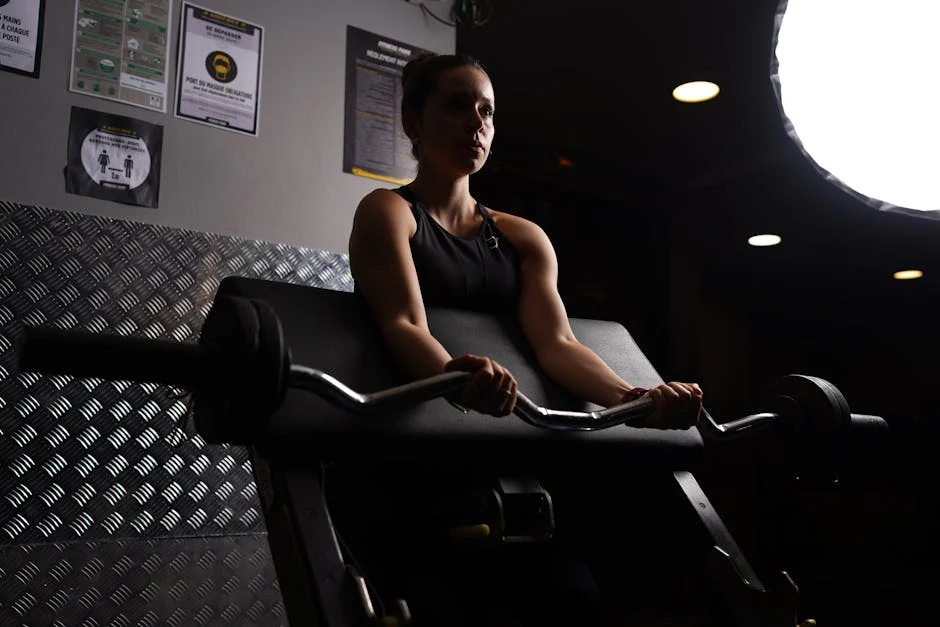
Increasing weight too fast
Jumping weight increments before the current load is mastered is the primary cause of technique breakdown and overuse injury in beginners. The double progression model prevents this by anchoring load increases to rep completion, not calendar dates.
Avoiding weight increases out of fear of “bulking”
Women do not have the testosterone levels required to build the large, visible muscle mass associated with bulking. Progressive overload in women produces a leaner, more defined physique and a higher resting metabolic rate. Staying at a comfortable weight indefinitely removes the progressive stimulus and guarantees a plateau in both strength and body composition.
Changing exercises too frequently
Rotating through different exercises every session or every week prevents the body from adapting to any single movement pattern. Progressive overload requires consistency with the same exercises long enough to track meaningful improvement. Stick with the same five to seven exercises for at least eight to twelve weeks before swapping.
Measuring progress by the scale only
In the first six weeks of resistance training, scale weight often stays flat or increases slightly as muscle tissue develops and glycogen storage increases in newly trained muscles. Women who judge progress by scale weight alone during this period frequently quit the program exactly when it is working. Tracking weights lifted and reps completed is a more honest measure of whether progressive overload for women beginners is occurring. The CDC physical activity guidelines recommend tracking multiple progress metrics beyond body weight, a principle that applies directly to resistance training outcomes.
Sample Progressive Overload for Women Beginners Schedule
This template applies the double progression model across a three-day full-body program. Adjust starting weights to ones where you can complete all target reps with good form but would fail within two to three reps of the target.
Week 1-2 (Baseline): 3 sets x 8 reps on all compound lifts at starting weight.
Week 3: 3 sets x 10 reps at same weights if week 2 felt manageable.
Week 4: 3 sets x 12 reps at same weights if week 3 felt manageable.
Week 5: Increase weight by smallest increment. Return to 3 sets x 8 reps. Add one extra set to each primary compound movement (4 sets instead of 3).
Week 6-8: Continue double progression at new weight. Add a rep per week where possible.
This mirrors the Phase 1 to Phase 2 structure used in the 8-week gym workout plan for weight loss for women and produces predictable strength and body composition improvements over the full program duration.
For women focused specifically on building muscle using this framework, the detailed muscle-building protocol is in our guide on how to build muscle as a woman, which covers training volume, protein timing, and the hormonal cycle layer in full.
Progressive overload is the whole method, and the page on how to start working out shows the four beginner weeks it starts in and the tools that measure effort.
Frequently Asked Questions
How much weight should a woman beginner add each week?
The smallest available increment is the correct answer for most exercises. For dumbbells, this is typically 2 kg; for barbells, 2.5 to 5 kg. Weight increases should only occur after completing all target reps across all sets with clean technique, not on a fixed weekly schedule. Some weeks, volume progression (adding a rep) is more appropriate than load progression, particularly during high-stress periods or in the late luteal phase of the menstrual cycle when recovery is slower.
What is a deload week and do women beginners need one?
A deload week is a planned cut in training volume or intensity to let accumulated fatigue clear before the next progression phase; in a survey of competitive lifters the typical deload lasted about six days and came round every five to six weeks. Beginners generally do not need formal deload weeks in the first eight weeks because their training loads are lower than experienced lifters. Signs that an informal deload is needed include consistently failing to reach last session’s rep counts, persistent joint soreness, or significantly disrupted sleep.
Can you apply progressive overload to bodyweight exercises?
Yes. Bodyweight progressive overload uses the same principles with different tools: increasing reps (more push-ups per set), using harder variations (incline push-ups to flat to decline), reducing rest periods, adding tempo (slower eccentric phase), or adding pauses at the most demanding position. Bodyweight training has a practical ceiling at higher fitness levels, which is why transitioning to weighted resistance training eventually allows continuous long-term progression. NIH research on resistance training confirms that progressive overload is the primary driver of long-term strength and body composition change in women.
How do I know if I am applying progressive overload correctly?
You are applying it correctly if your training log shows improvement over any four-week period, either more weight for the same reps, more reps at the same weight, or the same work completed in less total time. If your numbers are identical to four weeks ago on the same exercises, progressive overload has not occurred and you need to identify why: insufficient recovery, inadequate protein intake, or not actively applying the double progression protocol.
Conclusion
Progressive overload for women beginners is the mechanism by which consistent gym training produces lasting change instead of a brief adaptation followed by a permanent plateau. The double progression model, tracking every session, and anchoring weight increases to rep completion rather than calendar dates gives beginners a structured system that produces measurable improvement across the first twelve weeks and beyond.
The fear of adding weight, combined with a lack of tracking, is the most common reason otherwise committed gym-goers see no results. The body adapts to exactly what you demand of it. Demand slightly more each week, record what you do, and the adaptation is inevitable.
Medical disclaimer: This article is for informational purposes only and does not constitute medical advice. Consult a qualified healthcare provider before beginning any new exercise program, particularly if you have existing health conditions.
Related Articles
- Best Home Workout Plan for Women Beginners: 4-Week Starter Guide
- Best Workout Split for Women Beginners: Full Body to PPL Explained
- Strength Training for Women Over 40: The Complete Beginner’s Guide