


The best gym exercises for belly fat women are not crunches or ab machines. They are compound resistance movements that trigger systemic fat loss by elevating your resting metabolic rate, and they work because of how female fat storage actually operates hormonally rather than because they target the abdomen directly.
If your belly fat loss has stalled for a few weeks, it helps to know how long a weight loss plateau can last and what actually breaks one before you change your training.
Spot reduction is physiologically impossible. You cannot burn belly fat by training your abs. What you can do is create conditions that make belly fat storage less favorable at the hormonal level, and these exercises do exactly that. This guide explains the mechanism and gives you a ready-to-use gym protocol.
The 7 Exercises at a Glance
Each one is a compound movement that recruits large muscle groups, which is what drives the metabolic effect. None of them targets the abdomen, because nothing can.
- Barbell or goblet squat
- Romanian deadlift
- Hip thrust
- Dumbbell RDL to row superset
- Weighted walking lunges
- Cable pull-through or kettlebell swing
- Incline dumbbell press
Why Women Store Belly Fat Differently Than Men
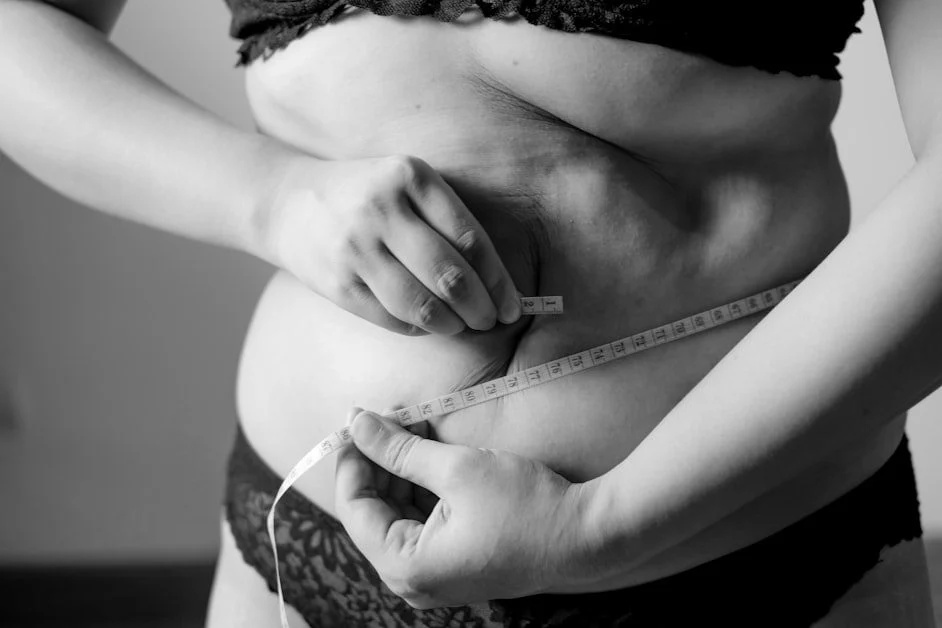
Female fat distribution is driven primarily by estrogen, cortisol, and insulin. In the reproductive years, estrogen directs fat storage toward the hips and thighs (gluteofemoral fat), which is metabolically protective. When estrogen declines in perimenopause or in response to chronic stress, the ratio shifts toward visceral belly fat (fat stored around the organs), which is metabolically active and inflammatory.
Cortisol is the primary driver of visceral abdominal fat accumulation in women. The enzyme lipoprotein lipase (LPL) is upregulated in visceral adipose tissue when cortisol is chronically elevated, pulling dietary fat directly into abdominal storage. This means that high-stress lifestyles combined with low sleep and inadequate recovery directly cause belly fat gain regardless of calorie intake.
The exercises below work because they lower the cortisol-to-anabolic hormone ratio over time, improve insulin sensitivity, and build metabolically active muscle tissue that shifts the hormonal environment away from belly fat storage.
Understanding how fat loss works for women in general is covered in depth in our guide to cardio vs weight training for women weight loss, which explains why the metabolic rate argument favors resistance training over cardio for sustained results.
The 7 Best Gym Exercises for Belly Fat Women Should Prioritize
These exercises are ranked by their metabolic output and EPOC (excess post-exercise oxygen consumption) response, not by how much they engage the abdominal muscles directly.
1. Barbell or Goblet Squat
The squat is the single highest-output exercise for metabolic rate elevation. Engaging the quadriceps, hamstrings, glutes, core, and lower back simultaneously produces the largest acute hormonal response of any single movement. Research published in the Journal of Strength and Conditioning Research (NIH) shows compound lower-body exercises produce significantly greater growth hormone and testosterone responses than isolation exercises, hormones that directly counter cortisol’s fat-storing effects.
Protocol: 4 sets of 8-10 reps. Use a weight that makes the last two reps genuinely challenging. Rest 90 seconds.
2. Romanian Deadlift
The Romanian deadlift (RDL) targets the posterior chain, the group of muscles along the back of the body including hamstrings, glutes, and lower back. This muscle group is the largest by mass in the human body, which means training it burns more calories per session and produces the highest resting metabolic rate increase per kilogram of muscle gained. RDLs also improve insulin sensitivity in the muscles of the lower body, reducing the insulin spikes that drive abdominal fat storage.
Protocol: 3-4 sets of 10-12 reps with controlled eccentric (lowering) phase. Feel the hamstring stretch at the bottom.
3. Hip Thrust
Hip thrusts are the most effective isolation exercise for the gluteus maximus, the largest single muscle in the body. Building the glutes does not directly burn belly fat, but larger glute muscle mass increases total resting calorie expenditure and estrogen receptor sensitivity in the pelvis and thighs, improving the hormonal distribution of fat storage away from the visceral compartment over time.
Protocol: 3 sets of 12-15 reps. Add a barbell across the hips as you progress beyond bodyweight.
4. Dumbbell Romanian Deadlift to Row (Compound Superset)
Combining a hinge movement with a row superset forces the entire posterior chain to work alongside the upper back and biceps simultaneously. This dramatically increases total oxygen consumption during and after the set, producing an EPOC effect that elevates fat burning for up to 36 hours post-exercise. Superset training also reduces workout time, meaning cortisol exposure from long gym sessions is minimized.
Protocol: 3 sets of 10 RDL reps immediately followed by 10 dumbbell rows per arm. Rest 90 seconds between supersets.
5. Weighted Walking Lunges
Lunges add a unilateral (single-leg) stability demand to lower-body training that recruits additional core musculature, particularly the obliques and transverse abdominis, without performing direct ab exercises. The instability forces the deep core to fire continuously throughout each rep. Walking lunges also have high caloric cost because of the constant motion and the large volume of muscle tissue engaged.
Protocol: 3 sets of 12 per leg with dumbbells. Keep the torso upright and step long enough that the knee stays behind the toe.
6. Cable Pull-Through or Kettlebell Swing
Both exercises train the hip hinge explosively, producing a powerful glute and hamstring contraction that drives an acute surge in growth hormone. Kettlebell swings in particular are shown to produce EPOC responses similar to HIIT despite being a resistance movement. If your gym has kettlebells, 20 swings at moderate weight between resistance sets is one of the most time-efficient fat-burning additions available.
Protocol: 3 sets of 15-20 swings or pull-throughs. Hinge at the hip, not the lower back.
7. Incline Dumbbell Press
Upper body pressing rounds out the metabolic training stimulus. The incline press engages the chest, front deltoids, and triceps, adding upper body muscle mass that contributes to resting metabolic rate increases and produces a balanced anabolic hormone response alongside lower-body training. Full-body programming consistently outperforms lower-body-only programming for total fat loss in women, even when the goal is specifically belly fat reduction.
Protocol: 3 sets of 10-12 reps. Control the descent over 2-3 seconds.
How to Structure the Best Gym Exercises for Belly Fat Women Into a Weekly Plan
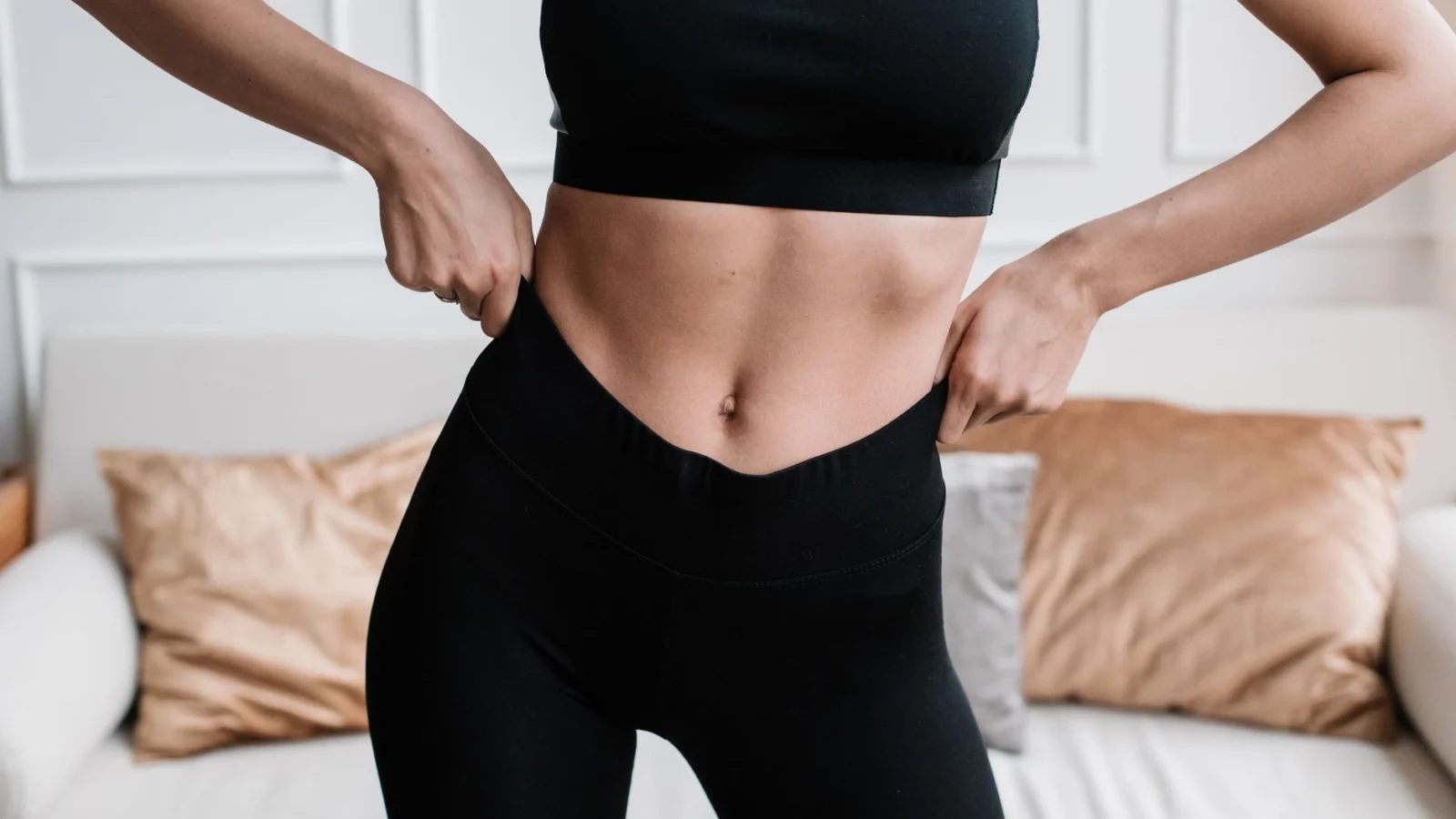
The most effective belly fat reduction protocol for women combines the exercises above in a three-day-per-week full-body structure rather than a body-part split. This is because:
- Each session produces an EPOC response, so three sessions spread across the week means the metabolic elevation lasts the full seven days with minimal gaps
- Full-body sessions produce a larger hormonal response than body-part splits using the same total weekly volume
- Recovery between sessions allows cortisol to normalize completely, preventing the chronic elevation that drives belly fat storage
Sample weekly structure:
- Monday: Goblet squat + RDL + hip thrust + incline press + walking lunges
- Wednesday: Romanian deadlift to row (superset) + kettlebell swings + hip thrust + goblet squat
- Friday: Walking lunges + cable pull-through + incline press + hip thrust + goblet squat
- Tuesday, Thursday, Saturday: LISS walking 30-40 minutes (optional)
The 8-week plan below follows the same structure, with exact sets, reps and weekly overload targets.
The 8-Week Gym Workout Plan for Weight Loss for Women
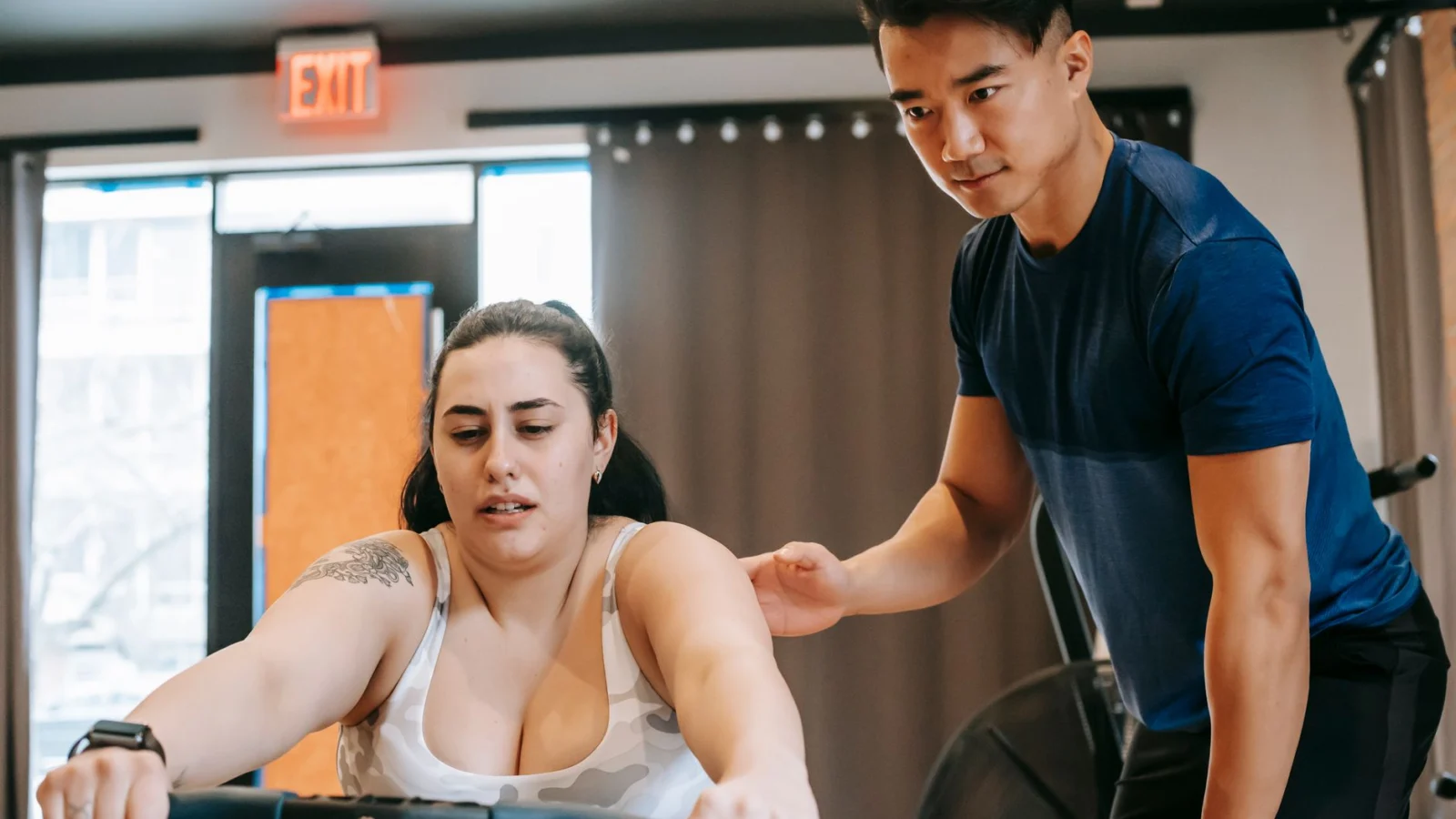
This plan runs three strength sessions per week on non-consecutive days. Cardio is optional and additive, not the foundation. Each phase builds on the previous one through progressive overload.
Phase 1: Weeks 1-4 (Foundation)
Three full-body sessions per week. 3 sets of 12 reps per exercise. Rest 60 seconds between sets. Focus entirely on movement quality.
Session A (Monday):
- Goblet squat – 3 x 12
- Dumbbell Romanian deadlift – 3 x 12
- Seated cable row – 3 x 12
- Dumbbell shoulder press – 3 x 12
- Glute bridge – 3 x 15
- Plank – 3 x 30 sec
Session B (Wednesday):
- Leg press machine – 3 x 12
- Dumbbell incline press – 3 x 12
- Lat pulldown – 3 x 12
- Walking lunges – 3 x 10 per leg
- Hip thrust – 3 x 15
- Dead bug – 3 x 8 per side
Session C (Friday):
- Bulgarian split squat – 3 x 10 per leg
- Dumbbell row – 3 x 12
- Cable chest fly – 3 x 12
- Step-ups (weighted) – 3 x 10 per leg
- Tricep pushdown – 3 x 12
- Side plank – 3 x 20 sec per side
Phase 2: Weeks 5-8 (Progressive Overload)
Same three sessions, same exercise selection. Increase weight on any exercise where you completed all reps cleanly in week 4. Add one set to each primary compound movement (4 sets instead of 3). Reduce rest periods to 45-60 seconds on isolation exercises.
This simple progression, adding load or sets without changing exercises, is what drives continued fat loss results in weeks five through eight when motivation typically drops and progress can stall if the stimulus does not increase.
The Role of HIIT vs Steady-State Cardio for Belly Fat
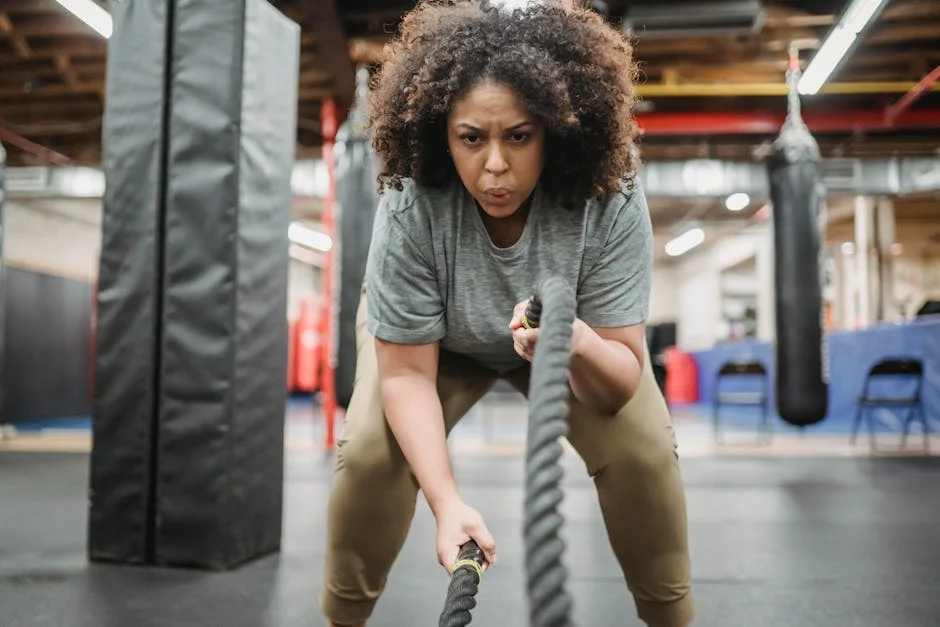
HIIT (high-intensity interval training) produces a significant EPOC response and elevates growth hormone acutely, both of which support belly fat reduction. However, HIIT also significantly raises cortisol, which is the primary driver of visceral abdominal fat storage in women.
In the luteal phase (days 15-28 of the menstrual cycle), cortisol is already elevated relative to the follicular phase. Adding HIIT sessions on top of resistance training during this period can push cortisol high enough to impair fat loss from the abdomen specifically, despite the overall calorie expenditure. The practical solution is to schedule HIIT in the follicular phase (days 1-14) when the body’s cortisol-clearance capacity is higher, and replace HIIT with LISS walking in the late luteal phase.
For women who want a structured HIIT protocol alongside this gym plan, our HIIT workout plan for women over 40 includes the cycle-phase timing guide and the specific work-to-rest ratios that minimize cortisol response while maximizing fat oxidation.
Nutrition Factors That Determine Whether These Exercises Work
Exercise creates the hormonal conditions for belly fat reduction. Nutrition determines whether those conditions are realized. The three dietary factors with the highest direct impact on visceral abdominal fat in women are:
Protein intake at 1.6-2.0g per kilogram of bodyweight daily. Adequate protein protects muscle during a calorie deficit and has the highest thermic effect of any macronutrient, 20 to 30 percent of its calories spent on digesting it by the standard review of diet-induced thermogenesis, against 5 to 10 for carbohydrate and almost none for fat.
Minimizing fructose and ultra-processed carbohydrates. Fructose is metabolized primarily in the liver and, at high intakes, drives de novo lipogenesis (liver-to-fat conversion) and elevates blood triglycerides. High triglycerides physically block the blood-brain-barrier transport of leptin, the satiety hormone, creating a hunger signaling disruption that makes overconsumption more likely. Belly fat around the viscera is particularly responsive to fructose restriction.
Blood sugar stability throughout the day. Insulin spikes from high-glycemic meals activate LPL in visceral adipose tissue, directing fat storage to the abdomen. Eating protein and fiber at every meal flattens the post-meal glucose response and keeps insulin in a range where fat mobilization is possible.
How Your Hormonal Cycle Affects Fat Loss at the Gym
This is the variable no generic gym workout plan for weight loss addresses. Your fat-burning efficiency, strength output, and recovery all shift across your menstrual cycle in predictable patterns.
In the follicular phase (days 1-14), estrogen is rising. Fat oxidation is higher during aerobic exercise in this phase because estrogen enhances lipase activity, the enzyme that releases fat from fat cells for use as fuel. This is your most efficient fat-burning window for cardio.
In the luteal phase (days 15-28), progesterone rises and shifts your body toward using carbohydrates as the preferred fuel source during exercise. Cravings increase as progesterone raises energy expenditure, by 8 to 16 percent in the luteal phase in calorimetry measurements, roughly 150 to 300 calories a day, and as the GABA-related shift late in the phase drives carbohydrate cravings. This is not willpower failure. It is biology. Increasing protein intake in the late luteal phase reduces cravings by stabilizing blood sugar more effectively than carbohydrate-heavy eating.
Practical application: schedule your HIIT sessions in the follicular phase when recovery is fastest and fat oxidation is highest. In the late luteal phase, swap HIIT for LISS and focus on strength maintenance rather than new personal records.
How Long Until You See Results From Gym Training for Belly Fat
The timeline for visible belly fat reduction from resistance training follows a predictable pattern for most women:
- Weeks 1-3: Strength increases due to neuromuscular adaptation. No visible change. This is not stagnation – this is the system calibrating.
- Weeks 4-6: Subcutaneous fat (under-skin fat) begins decreasing. Clothes fit differently at the waist and hips before the scale moves.
- Weeks 7-10: Visible abdominal definition begins appearing as subcutaneous fat thins and the underlying musculature becomes more apparent.
- Weeks 10-16: Visceral fat reduction becomes measurable via waist circumference. This is the component most associated with metabolic health improvements.
The CDC recommends tracking progress over months using multiple metrics, not just scale weight. For women doing resistance training, waist circumference measured every two weeks is the most honest indicator of belly fat reduction progress.
For a complete approach to building the training consistency that makes these timelines realistic, the guide on how to build muscle as a woman covers the progressive overload principles and recovery strategies that produce long-term results rather than short-term fluctuations.
Strong glutes drive most of the compound lifts that burn belly fat, so this pairs well with our full glute workout at the gym for women.
A tape measure is the right way to track this work, not the scale: how much you should weigh is a range, and the waist and body fat tools on that page show whether the fat around the middle is actually moving.
Tracking Progress Beyond the Scale
The scale is the least informative measure of progress for women doing resistance training. In the first four to six weeks, it is common for scale weight to remain flat or even increase slightly as muscle tissue develops and glycogen storage increases in newly trained muscles. This is progress, not failure.
Better progress markers for a gym workout plan for weight loss for women:
- Strength: are you lifting more weight or completing more reps than last week?
- Measurements: waist, hip, and thigh circumference measured every two weeks
- How clothes fit across the hip and waist
- Energy levels and gym performance week over week
- Sleep quality and recovery speed between sessions
The CDC recommends measuring weight loss progress over weeks and months, not days, and using multiple metrics alongside scale weight. This is especially important for women whose scale weight fluctuates by up to 2 to 3 kg across the menstrual cycle due to fluid retention in the luteal phase.
For more on building the habits that make gym consistency possible, read our guide on gym motivation tips for women beginners.
To make each gym session count, it helps to build your plan around the exercises that burn the most calories.
Track this plan by waist and body fat rather than weight alone, since muscle gained can hide fat lost on the scale; the page on how much you should weigh has the tools and the ranges for both.
Frequently Asked Questions
Which gym machine is best for losing belly fat?
No single machine targets belly fat. The most effective gym equipment for overall fat loss, including abdominal fat, are free weights for compound movements (barbell, dumbbells, cable machine). The leg press, cable row, lat pulldown, and cable pull-through produce the largest systemic hormonal responses compared to isolated ab machines like the crunch machine or ab roller, which have minimal metabolic impact.
How many times a week should women train to lose belly fat?
Three resistance training sessions per week on non-consecutive days (Monday, Wednesday, Friday) is the minimum effective dose for producing the hormonal environment needed to reduce visceral belly fat in women. Adding two to three moderate-intensity walks on rest days accelerates results without the cortisol-elevating effect of daily intense training.
Do planks help lose belly fat?
Planks strengthen the transverse abdominis (the deep core muscle that acts as a natural corset) and improve postural muscle endurance, but they do not directly burn belly fat. They are valuable as part of a training plan for core stability and injury prevention, not as a fat-loss tool. Compound exercises like squats and deadlifts burn significantly more calories and produce more fat-reducing hormonal responses than core isolation exercises.
Can women lose belly fat without cardio?
Yes. Resistance training alone produces sufficient calorie expenditure and metabolic rate elevation to drive belly fat reduction when combined with a modest calorie deficit. Cardio accelerates results but is not required. Women who find cardio elevates their cortisol or impairs strength session recovery often see better belly fat reduction results from resistance training alone plus LISS walking on rest days.
Why is my belly fat not going away even though I exercise?
In women, the most common reasons for persistent belly fat despite regular exercise are: chronically elevated cortisol (from under-recovery, poor sleep, or life stress), insulin resistance driven by blood sugar instability, progesterone deficiency in the luteal phase amplifying cortisol’s fat-storage effects, and doing primarily cardio without resistance training (which loses muscle alongside fat, lowering resting metabolic rate). Addressing the hormonal environment is more effective than adding more exercise volume.
How many days a week should a woman go to the gym to lose weight?
Three strength sessions per week is the most effective starting point for a gym workout plan for weight loss for women. This frequency builds muscle mass, elevates resting metabolism, and allows adequate recovery. Adding two to three light cardio sessions (walking) on rest days accelerates fat loss without impairing strength training recovery.
What gym exercises burn the most fat for women?
Compound resistance exercises burn the most fat for women over time because they build the most muscle mass. Squats, deadlifts, hip thrusts, rows, and presses all engage multiple large muscle groups simultaneously, producing the highest hormonal and metabolic response per session. Single-muscle isolation exercises like bicep curls burn fewer calories and contribute less to resting metabolic rate than compound movements.
Should women do weights or cardio first for weight loss?
Weights first. Performing resistance training before cardio ensures your strength session happens with full glycogen stores and maximal nervous system readiness. Running before lifting depletes glycogen and pre-fatigues the muscles you need for compound movements, reducing both the quality and safety of your strength work. If doing both in one session, lift first and do a short cardio finisher afterward.
Conclusion
The best gym exercises for belly fat for women are compound resistance movements, squats, Romanian deadlifts, hip thrusts, lunges, and upper body presses, structured into three full-body sessions per week. They work not by targeting the abdomen but by creating the systemic hormonal conditions that shift fat storage away from the visceral compartment over weeks of consistent progressive training.
Cortisol management through adequate recovery, stable blood sugar through high-protein nutrition, and strategic cardio timing aligned with your hormonal cycle amplify the results these exercises produce. The belly fat timeline is weeks six to twelve for visible changes, not days, and the scale will lag behind the real progress measurable in waist circumference and clothes fit.
Medical disclaimer: This article is for informational purposes only and does not constitute medical advice. Consult a qualified healthcare provider before beginning any new exercise program, particularly if you have existing health conditions.
Related Articles
- Beginner Gym Routine for Women: The 4-Week Plan That Actually Works
- Gym Motivation Tips for Women Beginners: 10 That Actually Work
- How to Use Gym Machines for Women: The Complete Beginner Guide
- Best Home Workout Plan for Women Beginners: 4-Week Starter Guide
Sources
- CDC. CDC recommends.
- NCBI, NIH. Effects of Resistance Exercise on Bone Health.


