

Full body strength training for women means working every major muscle group in one workout, two or three times a week, rather than splitting the body across separate gym days. For most women, and especially women over 40, it is the version of lifting that fits a real week and still delivers what matters: more muscle, stronger bones and easier daily movement. This guide covers the training frequency, the sets and reps, and the progression that published research actually supports, plus what shifts after menopause and where the evidence stops.
What full body strength training for women actually means
A full body session trains your legs, back, chest, shoulders, arms and core in one sitting. A split routine divides those muscles across different days, so you might train legs on Monday and upper body on Wednesday. Splits are useful once you train four to six days a week, but they leave each muscle worked only once or twice weekly if your schedule slips.
Full body strength training for women solves that problem. Because every session touches every major muscle group, two or three workouts a week mean each muscle gets trained two or three times a week. That weekly frequency, not the choice of split, is what drives most of your results. If you can only commit to two or three gym days, a full body plan is almost always the better choice.
How often to train, and how long each session
The Physical Activity Guidelines for Americans recommend that adults do muscle-strengthening activities that work all major muscle groups on two or more days a week. That is the floor, not the target. For building muscle and strength, two to three sessions on non-consecutive days works well for beginners and busy lifters alike.
Sessions do not need to be long. In the LIFTMOR trial, postmenopausal women trained for just 30 minutes twice a week and still improved their bone density and strength. Most women do well with 45 to 60 minutes, but 30 focused minutes beats a 90-minute session you skip. If motivation is the sticking point, read our guide on what to do when you are too tired to work out, and pick the time of day you are most likely to show up.
The full body routine: exercises, sets and reps
Build each session around movement patterns rather than a long list of isolation exercises. Cover these five in every workout:
- Squat pattern such as a goblet squat or leg press
- Hinge pattern such as a Romanian deadlift or hip thrust
- Push such as a dumbbell bench press or overhead press
- Pull such as a seated row or lat pulldown
- Core and carry such as a plank or farmer carry
For general strength and muscle, do two to three sets of 8 to 12 reps per exercise, stopping one or two reps short of failure. If your goal leans toward raw strength and bone, heavier and lower works: the LIFTMOR protocol used five sets of five reps at more than 85 percent of a one-rep max, under supervision. Coming back after time off? Start lighter and read our notes on getting back into the gym before you load the bar.
A sample two-day plan
| Pattern | Day A | Day B | Sets and reps |
|---|---|---|---|
| Squat | Goblet squat | Leg press | 3 x 10 |
| Hinge | Romanian deadlift | Hip thrust | 3 x 10 |
| Push | Dumbbell bench press | Overhead press | 3 x 10 |
| Pull | Seated row | Lat pulldown | 3 x 10 |
| Core | Plank, 3 holds | Farmer carry, 3 rounds | to form failure |
Run the two days on separate parts of the week, for example Monday and Thursday. Add a third session once two feels easy.
Rest about 60 to 90 seconds between sets of the smaller lifts and up to two or three minutes after heavy squats and deadlifts. Longer rest on the big lifts lets you move more weight on the next set, which is the point. Move through each rep with control rather than speed, and lower the weight as deliberately as you lift it, because the lowering phase builds plenty of the muscle.
Progressive overload: the part most women skip
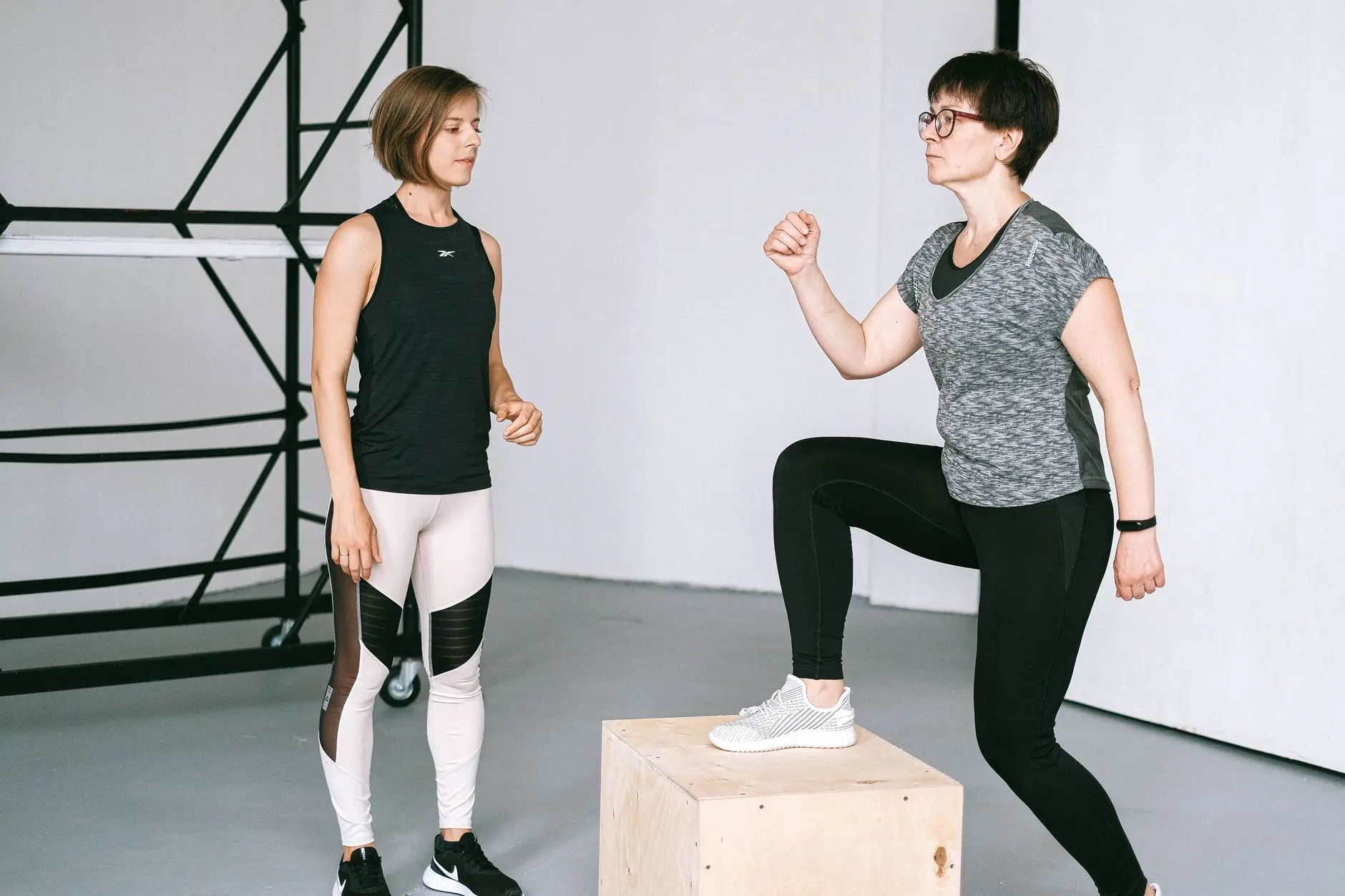
Lifting the same weight for the same reps month after month stops working quickly. Progressive overload means asking your muscles to do slightly more over time. The simplest method: when you can hit the top of your rep range on every set with clean form, add a small amount of weight, usually 2.5 to 5 pounds, and build back up from there.
This matters more for women than most routines admit. Load is the signal that tells muscle to grow and bone to hold its density. A workout that never gets harder gives your body no reason to change. Track your sets and weights in a notebook or app so you can see the numbers climb and know when to add more.
A simple example: say you can press a pair of 15-pound dumbbells for three sets of 8. Work up over two or three weeks until you reach three sets of 12 with those weights. Then move to 20-pound dumbbells, drop back to three sets of 8, and climb again. That slow loop, adding reps and then adding weight, is most of what long-term progress looks like.
Strength training after 40 and through menopause
Estrogen helps protect muscle and bone, and as it falls through perimenopause and after menopause, women lose both faster. Strength training is the most direct way to push back, and the effect on bone is measurable. In the LIFTMOR trial, postmenopausal women with low bone mass who did supervised high-intensity lifting raised their lumbar spine bone density by 2.9 percent over eight months, while the control group lost 1.2 percent. Only one minor injury occurred across the whole training group.
Read that result honestly. It came from a supervised program of heavy five-by-five lifting at more than 85 percent of a one-rep max, not from light dumbbells at home, and the women were screened for health first. It shows what is possible, not a promise for every routine. If you are in this age group, our plans for weight training after 40, strength training over 50 and strength training over 60 scale the same principles to where you are starting.
Cardio and walking are good for the heart and for weight, but they do little for bone and muscle on their own. Resistance training is the part that loads the skeleton and forces muscle to hold on. That is why a full body plan, rather than more steps, is the better use of limited time once estrogen starts to fall.
Protein and recovery
Muscle is built between sessions, not during them, and protein is the raw material. A large 2018 review found that adding protein kept improving muscle and strength gains up to a total intake of about 1.6 grams per kilogram of body weight per day, with no extra benefit beyond that. For a 70-kilogram woman that is roughly 112 grams a day, spread across meals. You can estimate your own target with our protein intake calculator.
Recovery is the other half of the work. Leave at least 48 hours before training the same muscles hard again, which is one reason the two or three day schedule suits most women so well. Sleep is where most of the repair happens, so guard it as carefully as the training itself.
Full body workouts at home versus the gym
You do not need a gym to start. A pair of adjustable dumbbells and a bench or sturdy chair cover every movement pattern above. The trade-off is load: once your home dumbbells feel light for ten reps, progress gets harder without heavier weights. The gym wins on long-term progression because the weights keep going up, but a home routine you actually do beats a membership you never use.
Whichever you pick, warm up for five minutes first with easy movement and a lighter set of your first exercise. Cold muscles and heavy load are a poor mix, and that matters more as joints age.
Your first month of full body strength training for women
The first two weeks will feel like learning, not lifting. Expect some muscle soreness a day or two after each session, which eases as your body adapts. Keep the weights modest while you groove the movements, and write down what you lift so week three is heavier than week one.
By the end of the month, everyday tasks like carrying shopping or climbing stairs usually feel easier, even before the mirror shows much. That early win is your nervous system getting better at recruiting muscle. The visible changes come later, so judge your progress by the numbers in your log, not the reflection.
What the evidence does not promise
Strength research reports averages, and individuals vary. Beginners often see fast early gains, while women who already train progress more slowly. Many of the strongest studies, including LIFTMOR, used supervised programs that are harder to copy alone. None of this means the work fails. It means results come from months of steady, progressive effort rather than any single routine. The best plan is the one you can keep, which is exactly what full body strength training for women is built to be.
Frequently asked questions
How many days a week should women do full body strength training?
Two to three non-consecutive days a week suits most women. The Physical Activity Guidelines for Americans set the minimum at two days of muscle-strengthening work that covers all major muscle groups. A third session adds more weekly stimulus once two feels manageable. Leave at least 48 hours between hard sessions for the same muscles so they can recover.
Can beginners start with full body workouts?
Yes, and it is often the best place to start. A full body session practises every basic movement pattern each time you train, so your skill improves faster than it would on a split routine. Begin with two sessions a week, two to three sets of 8 to 12 reps per exercise, and a weight light enough that your form stays clean.
Will full body strength training make women bulky?
No. Women produce far less testosterone than men, so building large amounts of muscle takes years of dedicated training and eating. For the typical woman, strength training builds a firmer, stronger body and protects bone rather than adding bulk. The usual visible result is more shape and tone, not size.
Can you do full body strength training at home with dumbbells?
Yes. A set of adjustable dumbbells and a bench or chair cover squats, hinges, presses, rows and core work. The main limit is load, since progress stalls once the weights feel light. Buy dumbbells that go heavier than you need now, so you have room to add weight over the months.
How long before full body strength training shows results?
Most women feel stronger within two to four weeks as the nervous system adapts, before any visible change appears. Noticeable muscle and shape changes usually take eight to twelve weeks of consistent, progressive training. Bone changes are slower still: the LIFTMOR trial measured its gains over eight months.
Sources
- Physical Activity Guidelines for Americans, 2nd edition. U.S. Department of Health and Human Services, 2018
- A systematic review, meta-analysis and meta-regression of the effect of protein supplementation on resistance training-induced gains in muscle mass and strength in healthy adults. British Journal of Sports Medicine, 2018
- High-Intensity Resistance and Impact Training Improves Bone Mineral Density and Physical Function in Postmenopausal Women With Osteopenia and Osteoporosis: The LIFTMOR Randomized Controlled Trial. Journal of Bone and Mineral Research, 2018
This article is general health information for adults and not medical advice. It does not know your history, your medication or your results. For a decision about your own health, talk to a doctor or another qualified clinician who does.