

If you are looking into treadmill workouts for weight loss walking, you have probably seen the same promises everywhere: a magic incline number, a fat-burning zone, a thirty-day transformation. Most of it skips the part that decides whether walking changes your body, which is how much you do, how often, and what you pair it with. This guide stays with the numbers. You will get the calorie figures walking delivers, the daily step target the research supports, and the reason walking alone stops being enough somewhere around your forties. No hype, and no pretending a treadmill can undo a bad week of eating.
What walking burns, and what it does not
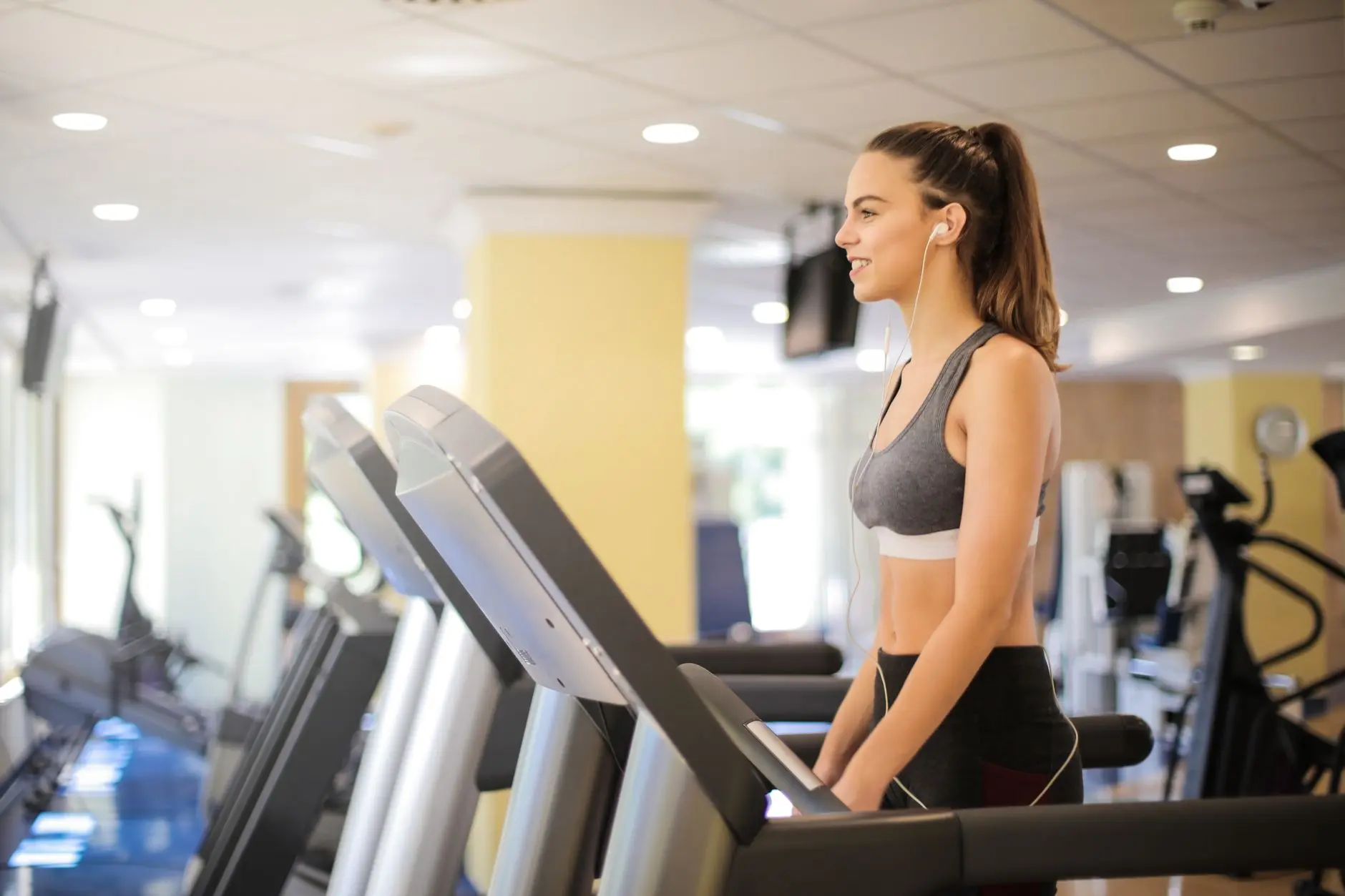
Start with the number nobody selling a program wants to lead with. According to Harvard Health, thirty minutes of walking at 3.5 miles per hour burns about 107 calories for a 125-pound woman, 133 for a 155-pound woman, and 159 for a 185-pound woman. Push the pace to 4 miles per hour and those figures rise to roughly 135, 175, and 189. That burn is real, but it is less than most people assume, and it is easily wiped out by one flavored coffee or a handful of nuts eaten without thinking.
The honest version of treadmill workouts for weight-loss walking starts right here: the treadmill is not where fat is lost, the kitchen is. Walking supports a calorie deficit, it does not create one on its own. Women who track both usually find the same thing, which our breakdown of walking for weight loss before and after shows in plain figures. Treat the walking as the habit that makes a sensible diet easier to hold, not the lever that does the work by itself.
One more honest note: the calorie count on the treadmill console is almost always too high. It does not know your body fat, your fitness, or that you are leaning on the handrails, and leaning on the rails can cut the real effort sharply. If you want a closer estimate of what a session costs you, our steps to calories calculator works from your own weight rather than the machine’s guess.
The step target the research supports
Forget 10,000 steps for a moment; that figure came from a 1960s marketing slogan, not a study. The best current evidence is a 2025 dose-response review in The Lancet Public Health that drew on 57 studies. Compared with 2,000 steps a day, 7,000 steps a day was linked to a 47 percent lower risk of dying from any cause, with most of the gain appearing between about 5,000 and 7,000 steps and the curve flattening after that. The same review found lower risks of heart disease, dementia, and falls at that level.
Two things matter about those numbers. First, 7,000 is a reachable target, and a brisk treadmill walk is an easy way to bank a few thousand of them on a day you cannot get outside. Second, this is longevity and health data, not a fat-loss guarantee. These are observational studies, so they show a strong association rather than proof the steps alone caused the benefit, and the authors say so plainly. The point is that the health payoff of walking is well established even on days the scale does not move, which is exactly when most people quit. If you want a structured way to build the habit instead of guessing, our guide to free walking programs for weight loss lays out a sensible week-by-week progression.
How to structure treadmill workouts for weight loss walking

Good treadmill workouts for weight-loss walking are built around three kinds of session, not one pace repeated forever. Rotating them keeps the work honest and lowers your risk of an overuse niggle in the hips or shins that sidelines you for a fortnight.
The baseline is the official target. The CDC asks adults for 150 minutes a week of moderate activity, and names brisk walking as its example. Moderate means you can talk in short sentences but not comfortably sing. Build from there with three session types:
- Steady brisk walk. Thirty to forty-five minutes at a pace where you could hold a choppy conversation. This is your bread and butter, three or four times a week.
- Incline intervals. Alternate three minutes at a 4 to 6 percent incline with two minutes flat, for about twenty-five minutes. The hills do the work your knees would otherwise take from jogging.
- Easy Zone 2 walk. One longer, gentler walk kept firmly in the lower heart-rate range, where your body leans most on fat for fuel. Our heart rate zone calculator gives you the actual beats-per-minute window for your age.
You have probably seen the 12-3-30 routine, which is a 12 percent incline at 3 miles per hour for 30 minutes. It works because it is simply hard, but for a beginner it is a lot of load on the calves and lower back all at once. Start at a 3 to 5 percent incline and earn the steeper grades over a few weeks. And keep your hands off the rails; holding on lets your legs do less and quietly erases the effort you came for.
Why incline beats speed for most women

If your knees or hips complain when you speed up, incline is the better dial to turn. Walking uphill means lifting your body weight against gravity with every step, so the energy cost climbs steeply while the pounding on your joints stays low. You get more out of the same half hour without breaking into a jog you may not want to do, or should not yet.
Keep the expectations grounded, though. The incline raises the burn, but not to the dramatic figures some blogs quote, and the treadmill’s own calorie readout will still flatter you. Progress the grade slowly, keep your posture tall rather than hunched over the console, and let the effort in your legs and lungs, not the number on the screen, tell you how hard you worked. Some days you will be too drained to push, and that is useful information, not failure; our piece on being too tired to work out covers when to walk easy and when to rest outright.
Why walking is not enough on its own after 40
This is the piece most treadmill workouts for weight-loss walking leave out, and it matters more the older you get. In perimenopause and the years after it, falling estrogen speeds up the loss of both muscle and bone. Walking is weight-bearing, so it helps defend your bones, but it is low-resistance, so it does little to rebuild the muscle that keeps your metabolism up and your body strong. Lean only on walking and you can lose weight while quietly losing muscle along with it, which leaves you lighter but softer and weaker, not the result anyone is after.
The fix is not more walking. It is adding resistance. The same CDC guidance pairs the 150 weekly minutes with muscle-strengthening work on two or more days a week, and after 40 that second half is not optional. Two short strength sessions protect the muscle your walking cannot. If you are new to lifting, start with our guide to weight training for women over 40, or follow the ready-made plan in our strength training routines for women over 50.
Protein does the quiet half of this job, giving the muscle something to rebuild with between sessions. Most women in midlife eat too little of it to hold muscle while losing fat, and under-eating protein is one of the fastest ways to lose the wrong kind of weight. Our protein intake calculator gives you a daily target based on your weight so you are not guessing.
A simple weekly plan you can keep
A week of treadmill workouts for weight-loss walking does not need to be complicated, and the plain version is the one you will repeat. Consistency beats intensity every time here, because the body only rewards what you keep doing, not what you managed once in January.
A workable week looks like this:
- Three steady brisk walks of thirty to forty-five minutes.
- One incline interval session of about twenty-five minutes.
- Two short strength sessions, which can sit on the same days as a shorter walk.
- A daily step aim that climbs toward 7,000 over a few weeks rather than overnight.
Build up, do not leap. If you are coming back from a long break or starting from the couch, halve every number here for the first fortnight and add from there as it gets easier. The women who keep the weight off are not the ones who went hardest in week one; they are the ones still walking in month six. Track the walks somewhere you will see them, whether that is a notebook or your phone, because watching the streak grow is its own quiet motivation. Pick a plan gentle enough that you can picture yourself doing it on a tired evening, and the results take care of themselves.
Frequently asked questions
Do treadmill workouts for weight loss walking really work for women over 40?
They help, but only as one part of the picture. Walking supports a calorie deficit and protects your heart, bones, and mood, and the health benefits are well documented at around 7,000 steps a day. On their own, though, walks will not rebuild the muscle that estrogen loss strips away after 40, and they cannot out-walk a diet that is not in check. Pair the walking with two short strength sessions a week and enough protein, and the results hold.
How long should I walk on the treadmill to lose weight?
Aim for the 150 minutes a week of moderate activity the CDC recommends, which works out to about 30 minutes most days, and build toward roughly 7,000 steps daily. Sessions longer than about 45 to 60 minutes tend to add fatigue without much extra benefit, so it is better to walk most days than to do one long slog and skip the rest. Spreading the effort across the week is what moves the needle.
Is incline walking or faster walking better for fat loss?
For most women over 40, incline is the smarter choice. Walking uphill raises the energy you burn while keeping the impact on your knees and hips low, whereas speeding up toward a jog adds joint stress many midlife bodies would rather avoid. Start at a 3 to 5 percent incline, keep your hands off the handrails, and raise the grade gradually as it gets easier.
Does the 12-3-30 treadmill workout actually burn fat?
It can, because walking at a 12 percent incline for 30 minutes is genuinely demanding, but it is not magic and it is hard on the calves and lower back for beginners. The fat loss comes from the overall calorie deficit across your week, not from that one routine. Treat 12-3-30 as a hard session to work up to rather than a daily requirement, and ignore the inflated calorie figure the treadmill shows at the end.
Sources
- Daily steps and health outcomes in adults: a systematic review and dose-response meta-analysis. The Lancet Public Health, 2025
- Physical Activity Guidelines for Adults. Centers for Disease Control and Prevention, 2024
- Calories burned in 30 minutes for people of three different weights. Harvard Health Publishing, 2024
This article is general health information for adults and not medical advice. It does not know your history, your medication or your results. For a decision about your own health, talk to a doctor or another qualified clinician who does.