
 Lifestyle
 Food & Nutrition
 Fitness

Iron deficiency from heavy periods is one of the most common causes of low iron in women who are not pregnant, and it is also one of the most frequently missed, because the standard blood panel most doctors order does not test the marker that actually catches it. If you soak through a pad or tampon in under two hours, pass clots the size of a quarter, or bleed for more than seven days most months, your body may be losing iron faster than your diet can replace it.
That gap builds quietly for months before it shows up as fatigue, brain fog, or a heart that seems to race for no reason. This guide walks through how iron deficiency from heavy periods actually develops, the specific lab test to ask for, what usually causes the heavy bleeding in the first place, and what treatment looks like once you have an answer.
How Iron Deficiency From Heavy Periods Actually Develops

Iron is not something your body makes. You get it entirely from food, and you store the surplus in a protein called ferritin, which acts as your iron reserve tank. A typical period loses somewhere between 30 and 40 milliliters of blood. Once monthly blood loss climbs above roughly 80 milliliters, the clinical threshold for heavy menstrual bleeding, you start losing iron faster than a normal diet can realistically replace it, even if you eat red meat, beans, and leafy greens regularly.
The math behind iron deficiency from heavy periods is unforgiving because iron absorption is capped. Your gut can only absorb a small percentage of the iron you eat in a given day, regardless of how much is on your plate. A 2023 review in the American Journal of Obstetrics and Gynecology on the relationship between heavy menstrual bleeding and iron deficiency confirmed this is a dose-dependent relationship: the heavier and longer the bleeding, the more predictable the drop in iron stores, and the less likely diet alone closes the gap.
Iron Deficiency vs. Iron Deficiency Anemia: What’s the Difference
These two terms get used interchangeably, but they describe different stages of the same problem. Iron deficiency means your storage tank, your ferritin, is running low. Iron deficiency anemia means the tank has run low enough that your bone marrow can no longer make enough healthy red blood cells, so your hemoglobin drops too.
You can have significant iron deficiency from heavy periods with completely normal hemoglobin. This is called non-anemic iron deficiency, and it causes real symptoms, fatigue, hair shedding, poor concentration, restless legs, even though a standard complete blood count looks fine. According to the Mayo Clinic, iron deficiency anemia develops gradually and symptoms can be so mild at first that they go unnoticed, which is exactly why relying on how you feel, instead of a ferritin number, delays diagnosis for so many women.
Symptoms That Point to Iron Deficiency From Heavy Periods
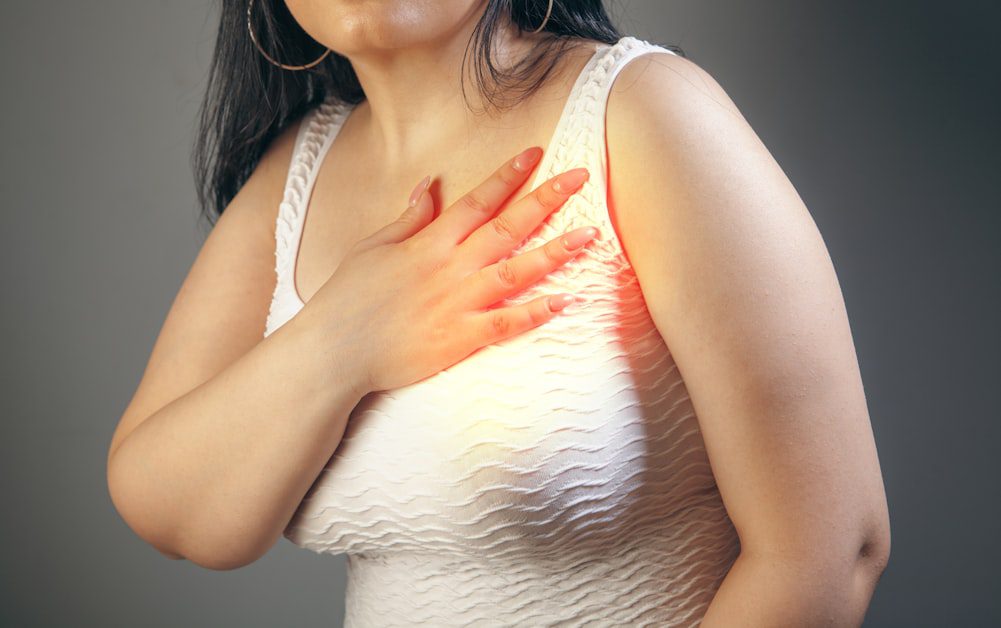
Iron deficiency symptoms overlap with a dozen other things, which is part of why the connection to heavy periods goes unnoticed for so long. The pattern worth paying attention to is symptoms that track with your cycle, worsening in the week after a heavy period and easing slightly as your ferritin partially rebuilds before the next one.
Common signs include persistent fatigue that does not improve with sleep, pale skin or pale inner eyelids, shortness of breath climbing stairs you used to take without noticing, cold hands and feet, brittle nails or nails that curve inward, hair shedding in the shower, restless legs at night, and unusual cravings for ice, described clinically as pagophagia. Heart palpitations and a resting heart rate that runs faster than usual are also common as the heart compensates for less oxygen-carrying capacity in the blood; if that symptom sounds familiar, it is worth reading about how hormonal shifts can also affect heart rate and energy, since the two causes frequently overlap in your late 30s and 40s.
What Actually Counts as a “Heavy” Period, Medically

Plenty of women assume their period is normal simply because it has always been that way, which is part of why iron deficiency from heavy periods goes undiagnosed. Clinically, heavy menstrual bleeding, called menorrhagia, is defined by a specific set of signs rather than a gut feeling. You may be dealing with it if you soak through one or more pads or tampons every hour for several consecutive hours, need to double up on protection to avoid leaking, pass clots larger than a quarter, bleed for longer than seven days, or have to plan your day around access to a bathroom.
If your flow has changed noticeably in volume, duration, or predictability over the past few cycles, tracking the pattern for two to three months makes the conversation with a doctor far more useful than trying to describe it from memory. The period calculator is a simple way to log cycle length and flow days so you walk into that appointment with actual data instead of a rough impression.
Why Hemoglobin Alone Misses It: Ask for Ferritin
Here is where a lot of women get told their labs are “normal” while still feeling terrible. A routine complete blood count checks hemoglobin and hematocrit, which only drop once you have progressed to full anemia. It does not automatically include ferritin, the marker that reflects your actual iron stores and drops long before hemoglobin does.
Diagnosing iron deficiency from heavy periods without anemia is common, particularly since a ferritin level below roughly 30 micrograms per liter is generally accepted as evidence of depleted iron stores in adults, even when hemoglobin sits comfortably inside the normal range. If you have heavy periods and any of the symptoms above, ask specifically for a ferritin test, not just a standard blood count. Many doctors will order it if you request it by name; far fewer order it automatically.
What’s Actually Causing the Heavy Bleeding in the First Place
Treating iron deficiency from heavy periods without addressing why the bleeding is heavy just means you refill the tank and drain it again next month. Common underlying causes include uterine fibroids, which are extremely common and often go undiagnosed since they can be present without pain, adenomyosis, polyps, a copper IUD, undiagnosed thyroid dysfunction, and underlying bleeding disorders such as von Willebrand disease, which is more common in women with heavy periods than most people assume.
Perimenopause is another major driver, and one that catches a lot of women off guard, since periods often become heavier and less predictable years before they become lighter or stop altogether. According to the National Institute of Child Health and Human Development, hormonal fluctuations are a well-documented cause of menstrual irregularities including heavier and more prolonged bleeding. If your cycles have shifted along with other symptoms like mood changes or sleep disruption, it is worth reading about early hormonal shifts in your 30s, since heavier bleeding is one of the more commonly missed early signs.
Treating Both the Bleeding and the Iron Loss
Effective treatment for iron deficiency from heavy periods usually has to work on two fronts at once: refilling iron stores and reducing how much blood you lose each cycle. On the bleeding side, options include tranexamic acid taken during your period to reduce flow, NSAIDs, combined hormonal contraceptives, and the 52 mg levonorgestrel-releasing IUD, which has strong evidence for reducing menstrual blood loss and is often considered the most effective non-surgical option.
On the iron side, oral iron supplementation is typically the first step, though it is not always well tolerated, since it commonly causes constipation and stomach upset at higher doses. For women with more significant deficiency, ongoing heavy losses, or an intolerance to oral iron, intravenous iron is increasingly used because it corrects stores faster and skips the gut absorption bottleneck entirely. Neither approach works well in isolation if the underlying cause of the heavy bleeding is never addressed.
Iron Supplements That Actually Work
Not all iron supplements are absorbed equally, and taking the wrong one, or taking it the wrong way, means you may be swallowing a pill and getting a fraction of the benefit. Ferrous bisglycinate is generally better tolerated than ferrous sulfate with comparable absorption, which matters if stomach upset has made you stop taking iron in the past. Iron absorbs better on an empty stomach, but if that causes nausea, taking it with a small amount of food is a reasonable tradeoff.
Pairing iron with vitamin C, a glass of orange juice or a squeeze of lemon, meaningfully improves absorption, while coffee, tea, calcium, and dairy taken at the same time blunt it, so spacing those out by a couple of hours helps. If you would rather start by working more iron into your actual meals before adding a supplement, our guide to iron rich foods for heavy periods breaks down which sources absorb best. A general multivitamin is usually not enough on its own to correct existing iron deficiency from heavy periods; for maintenance between labs, see what to look for in a multivitamin formulated with adequate iron.
When to See a Doctor Now, Not Later
Most iron deficiency from heavy periods is manageable once it is identified, but a few signs mean you should not wait for a routine appointment. Seek care sooner if you are soaking through protection every hour for more than two consecutive hours, feel dizzy or lightheaded standing up, notice chest pain or a racing heart at rest, or feel unusually short of breath with normal activity. Those can indicate anemia severe enough to need faster correction, and occasionally point to a bleeding source that needs its own workup separate from the iron issue.
Bring a record of your cycle length, flow days, and symptom pattern to the appointment, and ask directly for a ferritin test alongside a standard blood count. Being specific about what you are asking for measurably speeds up getting an accurate answer.
Frequently Asked Questions
How much blood loss actually causes iron deficiency from heavy periods?
Monthly menstrual blood loss above roughly 80 milliliters is the clinical threshold most associated with iron deficiency from heavy periods, though the exact tipping point varies by individual iron reserves and diet. Many women lose that much without ever measuring it directly, which is why symptom tracking and a ferritin test are more reliable than trying to estimate volume.
Can iron deficiency from heavy periods go away without a supplement?
It is possible with mild deficiency and a genuinely iron-dense diet, but for most women with ongoing heavy periods, food alone struggles to outpace the monthly loss. Supplementation combined with addressing the cause of the heavy bleeding is usually necessary to fully rebuild ferritin stores.
Is it normal for periods to get heavier in your late 30s or 40s?
Heavier, less predictable bleeding is common during perimenopause as hormone levels fluctuate, but it is a common cause of iron deficiency from heavy periods and should not be ignored, especially if it comes with fatigue or other signs of iron loss. It is worth mentioning to a doctor rather than assuming it will resolve on its own.
What ferritin level is considered too low?
A ferritin level under approximately 30 micrograms per liter is generally used as the threshold for iron deficiency in adults, even when hemoglobin is still in the normal range. Some clinicians use a higher cutoff for women with symptoms, so it is worth discussing your specific number rather than a generic reference range.
Does a copper IUD make iron deficiency from heavy periods worse?
Copper IUDs are a well-documented cause of heavier menstrual bleeding in some users, which can compound existing iron loss. If you have a copper IUD and are showing signs of iron deficiency, it is worth discussing alternative options with your doctor rather than assuming the two issues are unrelated.
The Bottom Line on Iron Deficiency From Heavy Periods
Iron deficiency from heavy periods is common enough that if you recognize your own bleeding pattern in the descriptions above, it is worth getting checked rather than waiting to see if the fatigue passes on its own. A standard blood count will not catch early iron deficiency, so ask specifically for a ferritin test. From there, treatment usually means addressing both the iron loss and whatever is driving the heavy bleeding itself, since fixing only one half of the equation tends to bring the problem back within a few months.
Related Articles
- Iron Rich Foods for Heavy Periods: What Actually Absorbs
- Signs of Magnesium Deficiency in Women: 9 Symptoms Doctors Often Miss
- Best Multivitamin for Women Over 40 With Iron: What to Actually Look For
This article is for informational purposes only and is not a substitute for professional medical advice, diagnosis, or treatment. Always seek the advice of your physician or another qualified health provider with any questions you may have regarding a medical condition, including heavy menstrual bleeding or suspected iron deficiency.
Free tools from Just Health Life
BMI CalculatorBlood Pressure CheckerAll 24 calculators →Educational content, not medical advice. See our medical disclaimer and editorial policy.