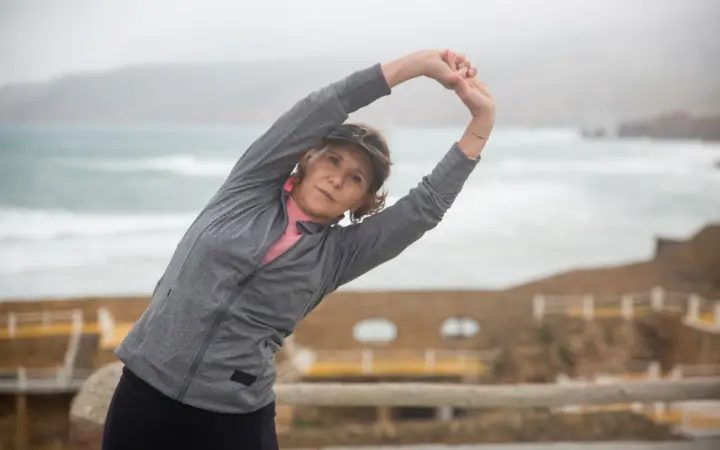


A beginner workout routine for women at the gym is not just a list of exercises. It is a system that accounts for how women’s bodies actually work, what happens when you walk into a gym for the first time and feel every pair of eyes on you, and how your hormonal cycle shifts your strength and recovery from week to week. Most beginner guides ignore all of that. This one does not.
This 4-week plan is built around three gym sessions per week. It uses compound movements, progressive overload, and a hormonal layer that most beginner programs skip entirely. By week four, you will not just feel stronger. You will know exactly what to do the moment you walk through that gym door.
Why Standard Beginner Gym Advice Fails Women
Most beginner gym plans are written for men and lightly rebranded with a pink filter. They ignore two things that matter enormously for women starting out: gymtimidation and the hormonal cycle.
Gymtimidation is not a mindset problem. It is a real physiological stress response. Cortisol spikes in unfamiliar, performance-oriented environments, which directly suppresses the motivation circuits in the brain. When you feel like everyone is watching and judging, that is your nervous system interpreting a new social environment as a threat. The fix is not to push through it. The fix is a plan so clear that your brain stops scanning for danger and starts focusing on the task.
The hormonal layer matters because estrogen and progesterone fluctuate across your cycle in ways that change your strength, recovery speed, and injury risk. Women in the follicular phase (days 1-14, rising estrogen) recover faster, tolerate more volume, and hit strength peaks around ovulation. Women in the luteal phase (days 15-28, rising then dropping progesterone) fatigue faster, run warmer, and face higher injury risk due to hormonal effects on ligament tension. A beginner gym routine for women that ignores this is leaving real performance on the table.
If you want to understand how gym training fits with other forms of exercise, read our breakdown of cardio vs weight training for women before you start.
The 4-Week Beginner Gym Routine for Women
This plan uses three full-body sessions per week on non-consecutive days. Monday, Wednesday, and Friday works well for most schedules. Each session takes 45 to 55 minutes including warm-up and cool-down.
The CDC recommends that adults perform muscle-strengthening activities on two or more days per week targeting all major muscle groups. This plan exceeds that minimum while keeping recovery windows intact.
You will rotate between two workouts across the four weeks. Workout A focuses on lower body compound movements while Workout B shifts emphasis to upper body pulling and pressing. Both are full-body sessions, but the emphasis changes to prevent early adaptation and keep progress consistent.
Workout A: Lower Body Emphasis
Perform 3 sets of 10-12 reps for each exercise. Rest 60-90 seconds between sets.
- Goblet squat (dumbbell) – 3 sets x 10 reps
- Romanian deadlift (dumbbells) – 3 sets x 10 reps
- Seated cable row – 3 sets x 12 reps
- Dumbbell overhead press (seated) – 3 sets x 10 reps
- Glute bridge – 3 sets x 15 reps
- Plank hold – 3 x 30 seconds
Workout B: Upper Body Emphasis
Perform 3 sets of 10-12 reps for each exercise. Rest 60-90 seconds between sets.
- Lat pulldown machine – 3 sets x 12 reps
- Dumbbell incline bench press – 3 sets x 10 reps
- Walking lunges (bodyweight or dumbbells) – 3 sets x 10 reps per leg
- Dumbbell bicep curl – 3 sets x 12 reps
- Hip thrust (bodyweight or barbell) – 3 sets x 15 reps
- Dead bug – 3 sets x 8 reps per side
Week 1 and 2 schedule: A / B / A
Week 3 and 4 schedule: B / A / B
Week 1 and 2: Building the Foundation
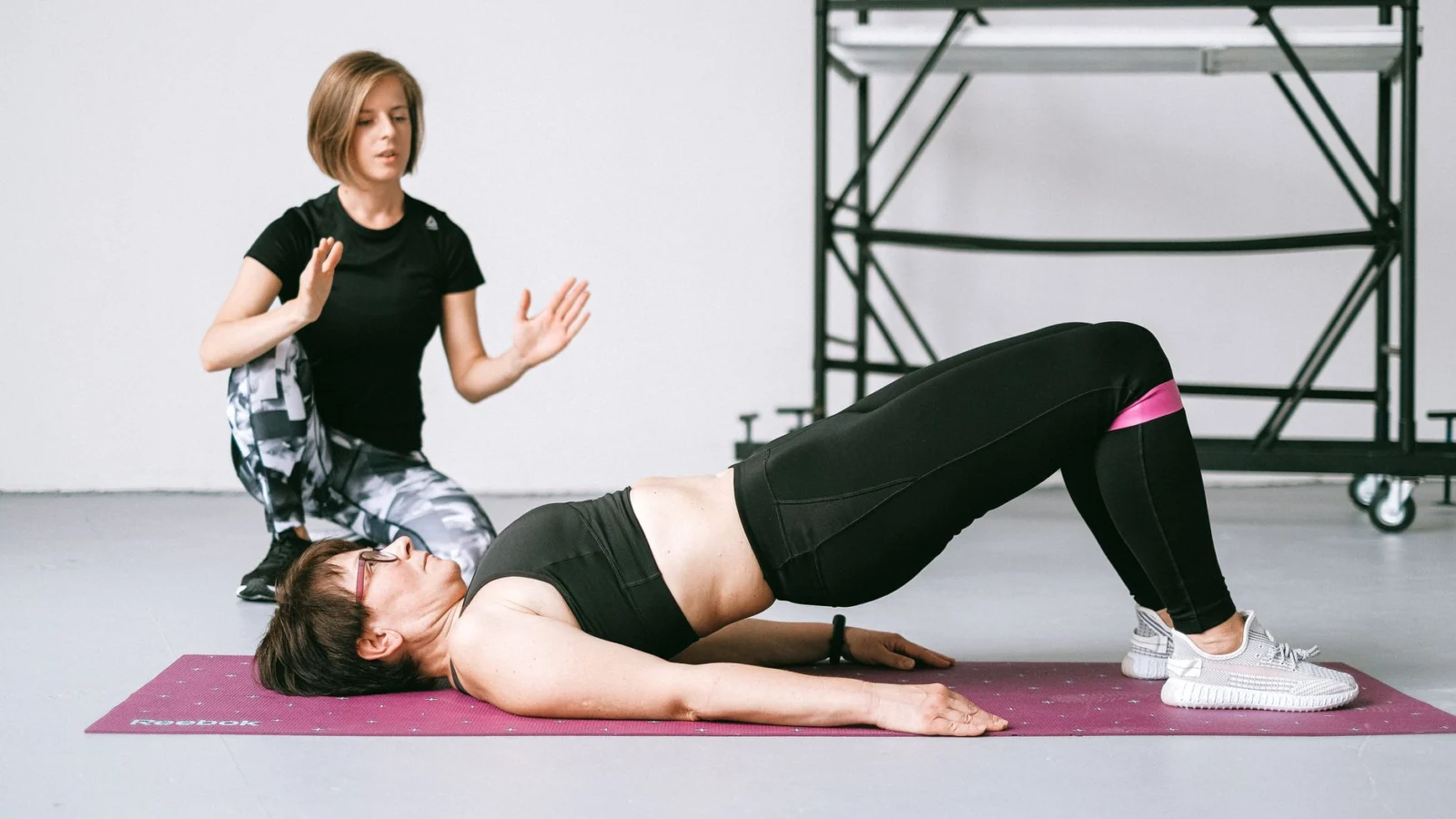
Your only job in weeks one and two is learning the movement patterns. Choose weights that feel like a 6 out of 10 on effort. You should complete every rep with clean form and still have two or three reps left in the tank at the end of each set.
This is not the time to go heavy. Neuromuscular adaptation, the process by which your nervous system learns to recruit muscle fibers efficiently, happens before visible muscle growth. Women who push too hard in week one often end up too sore to train in week two, and that is the worst possible outcome. Consistency across four weeks beats heroic effort in week one every time.
Log every session. Write down the weight, the sets, and the reps for each exercise. This data becomes your roadmap for weeks three and four. Without it, you are guessing, and guessing slows progress.
For a deeper look at how muscle actually grows in women, read how to build muscle as a woman naturally, which covers the hormonal and mechanical factors behind hypertrophy.
Week 3 and 4: Progressive Overload Begins
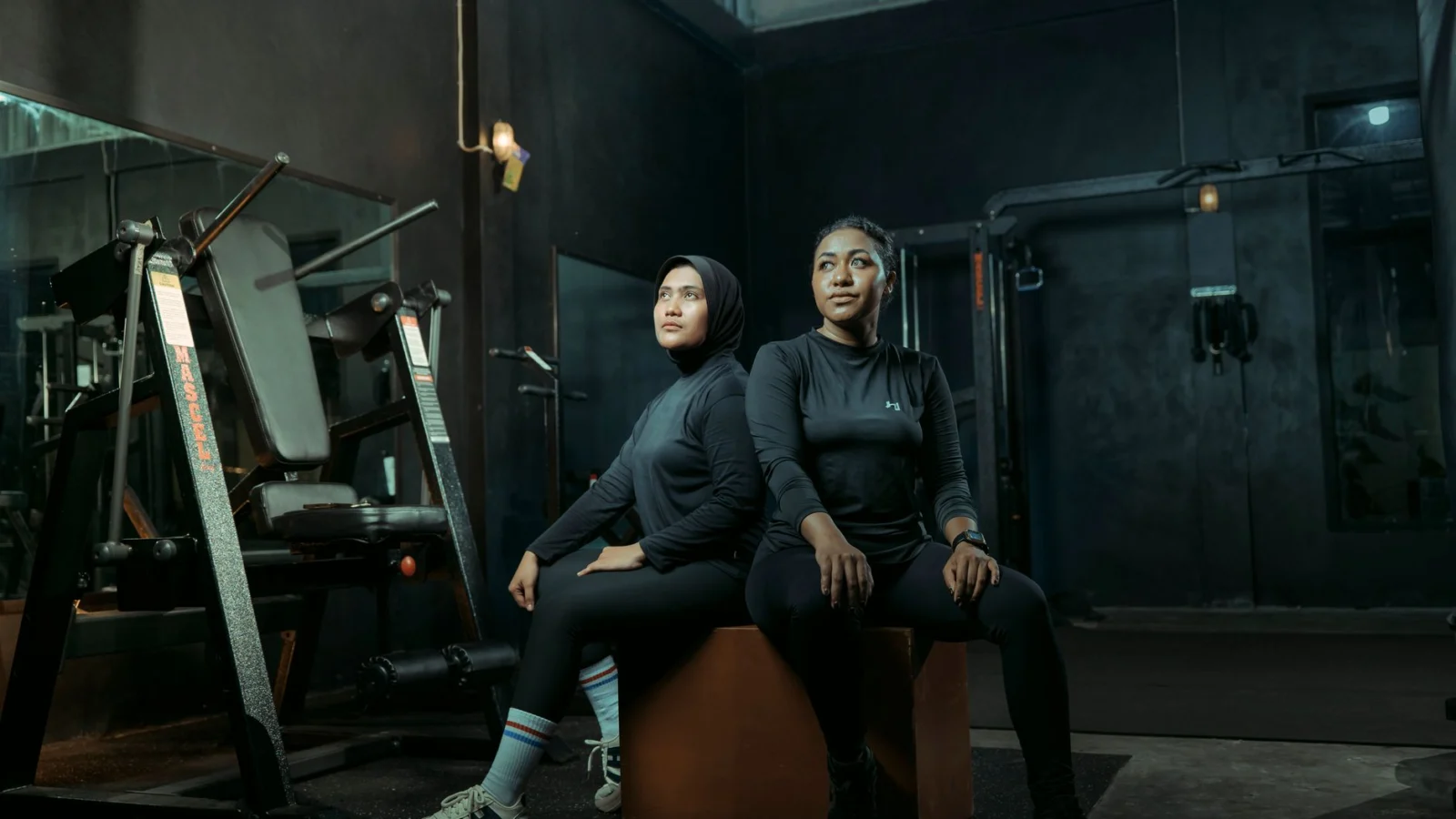
In week three, apply progressive overload. If you completed all reps of an exercise with a 6-out-of-10 effort in week two, increase the weight by the smallest available increment. For dumbbells that is usually 2 kg. For machines, one plate.
Research on resistance training for women confirms that progressive overload, not simply showing up, is the primary driver of strength and body composition changes. Your muscles adapt to a given stimulus within two to three weeks. Weeks three and four are where that adaptation gets pushed forward.
If you cannot increase weight yet, increase reps instead. If you were doing 10 reps, go to 12. Once you can hit 12 reps with good form at a given weight, increase the load. This is the basic progressive overload loop that underpins all strength training.
Do not add more exercises at this stage. The program already has enough volume. Adding more work is a common beginner mistake that leads to excessive fatigue and stalled progress.
Your First Day at the Gym: A Step-by-Step Walkthrough

No beginner gym guide for women covers what to actually do the first time you walk in. Here is a practical walkthrough that removes the guesswork.
Arrive 10 minutes early. Walk around the gym floor before your session starts. Find where the dumbbells are, where the cable machines are, where the lat pulldown is. Knowing the layout removes the mental friction of finding your way around mid-workout when you should be focused on lifting.
Ask a staff member for a quick machine orientation. Most gyms offer this for free. You do not need to pretend you know how to set the seat height on the lat pulldown or adjust the cable attachment. Asking takes two minutes and prevents bad form from day one.
Start with the goblet squat. It is the most beginner-friendly compound movement. Use a very light dumbbell, 4 to 6 kg, for your first set regardless of how strong you feel. Learn the movement pattern before loading it.
Use the mirror for form feedback, not comparison. Watch your knee tracking, your spine position, and your range of motion. That is the only useful information the mirror has for you right now.
Leave after 45 to 50 minutes. Your first session will feel short. That is correct. Leaving while you still feel good builds a positive neurological association with the gym. Sessions that leave you completely exhausted build the opposite association, which is one reason so many beginners quit after two weeks.
For help staying consistent after day one, read our guide on gym motivation tips for women beginners, which covers the psychological side of building the gym habit.
How Your Hormonal Cycle Changes Your Gym Performance
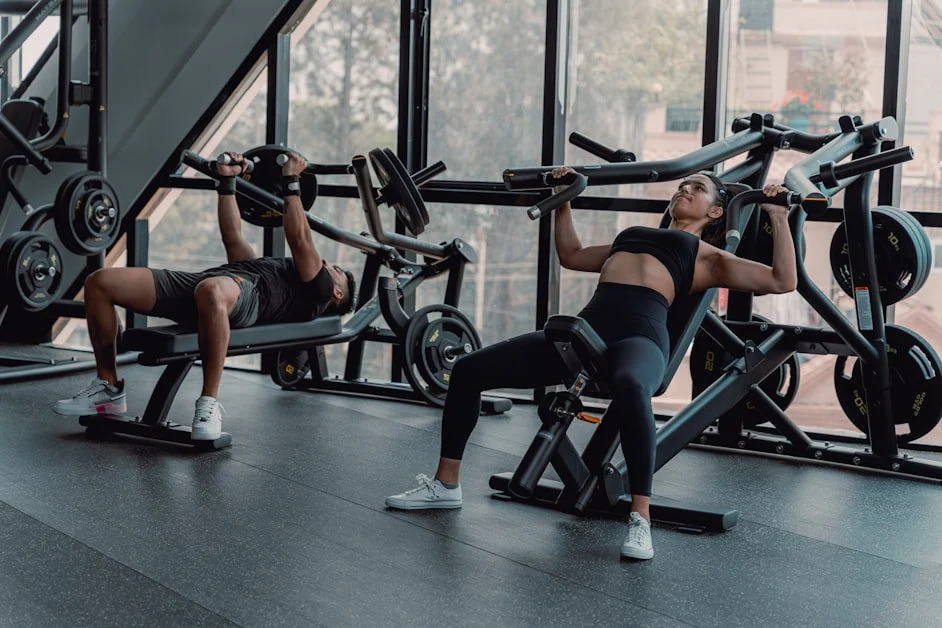
Your menstrual cycle has two halves. The follicular phase (roughly days 1-14, from the first day of your period to ovulation) is dominated by rising estrogen. Estrogen supports muscle protein synthesis, speeds recovery, and improves mood and motivation. This is your high-performance window. Your body tolerates more volume, recovers faster between sessions, and can push closer to its strength ceiling.
The luteal phase (days 15-28, after ovulation until your next period) brings rising and then falling progesterone. Core temperature increases by 0.3 to 0.5 degrees Celsius, which raises perceived exertion at the same workload. Recovery slows. Energy dips in the final week as progesterone drops sharply.
For a beginner, this means two practical things. In your follicular phase weeks, add weight when you can and aim for the top of your rep ranges. In your luteal phase weeks, prioritize form over load, take a little weight off if you feel flat, and do not interpret a weaker session as a failure. It is biology, not effort, driving the difference.
Tracking your cycle alongside your training log gives you data that explains what otherwise feels random and unpredictable. Two months of logs will reveal your personal performance pattern clearly.
Common Beginner Gym Mistakes Women Make
Only doing cardio. Cardio burns calories during exercise. Strength training raises your resting metabolic rate because muscle tissue requires more energy to maintain than fat tissue. For long-term body composition change, resistance training is more efficient. Our article on HIIT workout plans for women over 40 explains how to balance cardio and strength intelligently.
Going too heavy too fast. The goal in week one is motor pattern learning, not maximum load. Lifting too heavy before a movement pattern is automated leads to compensations where other muscles take over from the target muscle. You get the fatigue without the intended adaptation.
Skipping the warm-up. A five-minute dynamic warm-up, including bodyweight squats, leg swings, arm circles, and hip hinges, increases blood flow to muscles, raises core temperature, and primes the nervous system. Cold muscles have slower force production and higher injury rates. This step is not optional.
Not eating enough protein. Resistance training creates micro-tears in muscle fibers. Protein provides the amino acids to repair and rebuild them. A general target for women doing strength training is 1.6 to 2.0 grams of protein per kilogram of bodyweight per day. Without adequate protein, training creates stress without the recovery that makes it productive.
Expecting visible results in two weeks. Strength gains in the first four weeks are primarily neurological. Your nervous system is getting more efficient at recruiting existing muscle fibers. Visible body composition changes typically begin at weeks six to eight with consistent training and adequate nutrition.
This routine is the strength half of the week the page on how to start working out describes; that page adds the aerobic minutes, how to judge effort, and what the guideline asks for.
Frequently Asked Questions
How many days a week should a woman go to the gym as a beginner?
Three days per week on non-consecutive days is the ideal starting point for a beginner gym routine for women. This gives each muscle group 48 to 72 hours of recovery while building the habit of consistent training. Going four or five days in week one dramatically increases the risk of excessive soreness that derails week two entirely.
Will lifting weights make women bulky?
No. Women have roughly one-tenth the testosterone of men, which is the primary hormone driving large-scale muscle hypertrophy. Resistance training at a caloric maintenance level builds strength and improves muscle tone without adding significant mass. The look often described as bulky requires years of deliberate high-calorie surplus eating combined with heavy progressive training. It does not happen accidentally in a general beginner program.
What should a woman eat before a gym workout as a beginner?
A small meal containing carbohydrates and protein 60 to 90 minutes before training works well for most women. A banana with peanut butter, oats with Greek yogurt, or a protein smoothie are practical options. Training completely fasted can work but often reduces performance in the strength rep ranges this program uses. After training, prioritize protein within two hours to support muscle repair.
What if I miss a session?
Skip it and continue from where you left off. Do not try to make up missed sessions by doubling up the next day. One skipped session in a 4-week program has no meaningful impact on results. Consistency across the full four weeks matters far more than perfection in any single week.
How do I know if I am using the right weight?
The right weight allows you to complete all reps with good form while the last two reps of the final set feel genuinely effortful, around a 7 out of 10. If you finish the set and could do five more reps comfortably, go heavier. If your form breaks before the final rep, reduce the load. Adjust by the smallest increment available and retest next session.
Conclusion
A beginner gym routine for women works best when it is simple enough to execute consistently, specific enough to produce measurable progress, and designed with how women’s bodies actually function in mind. Three days per week, compound movements, progressive overload, and a basic awareness of your hormonal cycle give you everything you need to build real strength in four weeks.
The gym will feel unfamiliar for the first two sessions and familiar by the third. That is the tipping point. Get past it with a clear plan, log your weights from day one, and track your cycle alongside your training. By week four, you will not recognize how far you have come from that first uncertain walk through the door.
Medical disclaimer: This article is for informational purposes only and does not constitute medical advice. Consult a qualified healthcare provider before beginning any new exercise program, particularly if you have existing injuries, cardiovascular conditions, or other health concerns.
Related Articles
- Best Gym Exercises for Belly Fat Women: What Actually Works
- Gym Workout Plan for Weight Loss for Women: The 8-Week Guide
- Gym Motivation Tips for Women Beginners: 10 That Actually Work