


The best gym motivation tips for women beginners address something most advice skips entirely: your motivation is not broken, and your willpower is not weak. What is actually happening is neurological. Dopamine, the neurotransmitter that drives anticipation and reward, fluctuates across your menstrual cycle, your stress load, and your sleep quality. When those systems are off, willpower cannot compensate. These ten strategies work at the level of biology and identity, not just behavioral tricks.
Understanding why gym motivation feels inconsistent, especially for women, changes how you approach the entire problem. You stop blaming yourself and start designing a smarter system.
Why Gym Motivation Tips for Women Beginners Must Address Biology First

Most gym motivation content is written with a male hormonal default. Men’s testosterone cycles roughly every 24 hours. Women’s estrogen and progesterone cycle across 28 or more days, pulling dopamine and serotonin with them.
During the follicular phase (days 1 to 14), estrogen rises and so does dopamine sensitivity. This is when motivation to go to the gym feels effortless. During the luteal phase (days 15 to 28), progesterone rises then crashes, pulling GABA-A function down and cortisol up. This is precisely when motivation tanks and skipping feels irresistible.
Research published in the Journal of Physiology confirms that hormonal fluctuations across the menstrual cycle measurably affect muscle recovery, cardiovascular endurance, and perceived exertion. The CDC physical activity guidelines confirm that regular movement improves mood, energy, and sleep quality regardless of intensity level, which means even low-effort luteal phase workouts deliver real physiological benefit. Understanding this is not an excuse. It is a strategy.
1. Build a Dopamine Loop, Not a Willpower System

Motivation is anticipatory dopamine. When your brain predicts that going to the gym will feel good, it releases dopamine before you arrive. That anticipatory pull is what gets you off the couch. Willpower fights the brain. Dopamine loops work with it.
To build a dopamine loop: stack a genuine reward immediately after your workout. Not food. Something you genuinely look forward to: a podcast episode you only listen to in the gym, a post-workout ritual like a specific shower product, or a coffee at a particular café. The reward must be immediate and consistent. Delayed rewards like the body you will have in six months are neurologically weak compared to immediate ones.
Track a micro-win every session: one more rep, a new personal weight, 30 more seconds on the plank. Micro-wins release dopamine spikes that reinforce the loop. This is how gym habits become self-sustaining rather than depleting.
2. Cycle-Sync Your Effort, Not Your Attendance
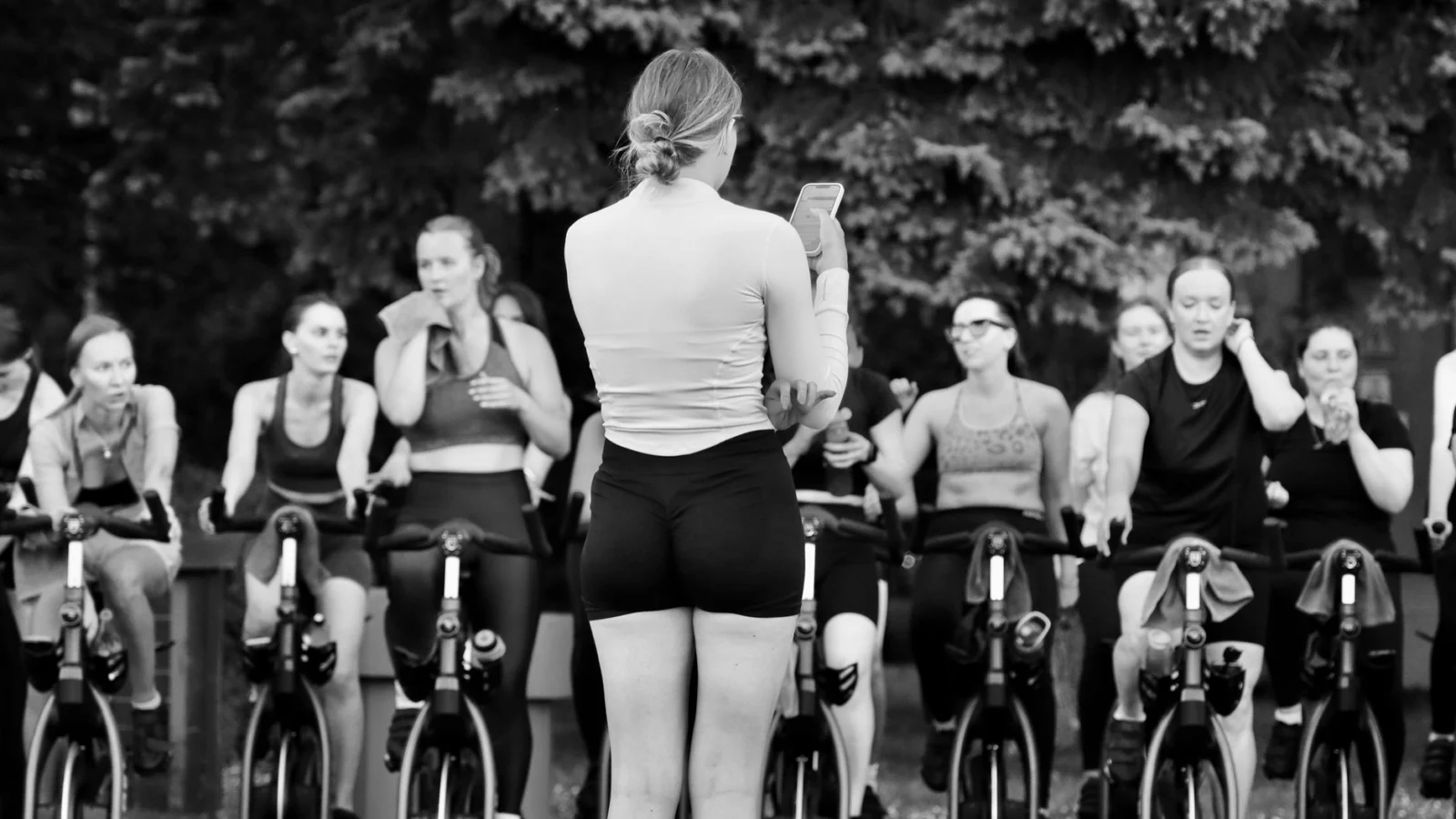
The biggest mistake beginners make is trying to train at identical intensity every day. When energy is high during the follicular phase (days 1 to 14), push harder. When energy is lower during the late luteal phase (days 20 to 28), show up but reduce intensity.
This distinction is critical: your attendance target stays constant. Your intensity target varies.
During the follicular phase, estrogen peaks and brings better muscle recruitment, higher pain tolerance, and faster recovery. This is ideal for strength PRs, HIIT sessions, and trying new movements. During the luteal phase, progesterone peaks and body temperature runs higher, endurance may dip slightly, and ligament laxity increases injury risk marginally. This phase is ideal for steady-state cardio, mobility work, yoga, and moderate weight training.
If you stop going to the gym during your luteal phase, you break the habit. If you go and adjust the workout to match your energy, you maintain the neural habit groove. The gym visit itself is what matters most in the first 90 days.
3. Choose Identity Before Goals

Goals are outcomes. Identity is who you are. “I am trying to get fit” is far weaker than “I am someone who works out.” This is not just motivational language. Research on habit formation shows that identity-based habits persist significantly longer than outcome-based ones.
The reason: when an outcome goal is reached or missed, the motivation evaporates. Identity is always present. Every workout you complete casts a vote for this identity. Missing once is not failure. Missing twice in a row is the real threat.
To shift to identity-based motivation: use present-tense statements in how you talk about exercise. Protect the streak at all costs. If you cannot make your full workout, do 10 minutes. Identity maintenance beats performance optimization every time in the early months.
This principle pairs well with the strategies in our guide to stopping negative self-talk, since the internal narrative you carry into the gym is either building or eroding your gym identity with every rep.
4. Solve Gym Anxiety Before It Keeps You Home
Many women describe feeling anxious in gym environments, and the free weight section most of all. The fear of being watched, particularly in the free weight section, is real and neurologically potent. Social threat activates the same brain regions as physical threat, and the cortisol spike that follows makes the gym feel genuinely aversive, not just uncomfortable.
Practical strategies that actually work: go during off-peak hours, typically 10 am to 12 pm and 2 pm to 4 pm on weekdays, when the free weight section is less crowded. The absence of social threat is environmental design, not cowardice. Use it.
Have a written workout plan. People without plans look uncertain. People with a phone showing a clear workout look purposeful. This changes how you carry yourself and how others perceive you. Master three exercises before adding more. Competence is the fastest route to confidence. Spend two weeks getting smooth at the squat, hip hinge, and row. Headphones serve as a powerful social boundary signal and significantly reduce unsolicited interaction.
5. Use the Minimum Viable Workout as Your Emergency Protocol
On days when energy is genuinely depleted, late luteal phase, poor sleep, high stress, the enemy of the gym habit is all-or-nothing thinking. “I cannot do my full workout, so I will not go” is the most common reason gym habits collapse between weeks four and eight.
The minimum viable workout solves this. Define it once: 15 minutes of movement that counts as a gym visit. A 15-minute walk on the treadmill. Three sets of your favorite compound lift. Stretching plus 10 minutes of light cardio. The minimum viable workout serves one function: it keeps the neural habit groove open. Almost every time you show up for 15 minutes, you will end up doing more.
This approach is especially important for women who also experience signs of burnout, since over-training on already depleted days accelerates burnout rather than building fitness.
6. Reframe Negative Self-Talk at the Gym Door
The internal monologue women carry into the gym often runs on comparison: her legs, their weights, my form, that person’s body. Comparison-based self-talk spikes cortisol and suppresses dopamine, which is the worst neurological state for workout performance and motivation.
Interrupt it at the gym entrance with a single reframe: your only job here is to be one percent better than last week’s version of you. This is not toxic positivity. It is a cognitive technique called narrow goal-setting: replacing an impossibly broad comparison frame with a measurable, achievable micro-target. Narrow goals consistently outperform vague goals in persistence and follow-through.
Pairing this reframe with a morning routine that primes dopamine before you even get to the gym creates a compounding effect on motivation that makes the internal monologue significantly quieter over time.
7. Use Your First Week to Eliminate Friction, Not Set Records
The first week at the gym should not be an intense exercise week. It should be a familiarization week. The goal is to reduce the cognitive friction of every decision: where are the weights, what does this machine do, where do I put my bag.
Every uncertainty costs executive function, a real physiological resource. Executive function depletion makes every subsequent decision harder, including “should I go to the gym today?” Once the gym is neurologically familiar, the cognitive cost of going drops dramatically.
A practical first-week protocol: Day 1, tour the gym and find the weights, machines, lockers, and water stations. Day 2, a light full-body workout lasting 30 minutes with no pressure on performance. Day 3, rest or a 20-minute walk. Day 4, repeat the Day 2 workout. Day 5, rest. This is enough. The goal is familiarity, not fitness in week one.
8. Build a Pre-Gym Ritual That Fires Automatically
Habits fire on cues, not willpower. A consistent pre-gym ritual serves as a powerful habit cue, a behavioral sequence that signals to your nervous system that gym time is coming and begins the dopamine anticipatory release.
Your ritual needs to be consistent and slightly enjoyable: a specific playlist you only listen to while traveling to the gym, a pre-workout drink prepared at the same time each day, putting on gym clothes immediately after work before sitting down. That last one is particularly important. Sitting down after work effectively ends the behavioral momentum for most people.
The ritual can be five to ten minutes. What matters is that the sequence is identical every time. The brain learns “ritual begins = gym follows” and begins releasing anticipatory dopamine before you have made a single conscious decision.
Your dopamine system responds strongly to novelty and routine combined, which is why building your ritual pairs well with understanding how to boost dopamine naturally through daily habits. A gym ritual is one of the highest-impact dopamine anchors you can build.
9. Expect and Plan for the 6-Week Dip
Research on habit formation consistently identifies a motivation dip around weeks four to eight of a new gym routine. This is not failure. It is the neurological transition period where a habit moves from conscious effort to automatic behavior. Novelty dopamine has worn off. Automatic behavior has not formed yet. You are relying entirely on identity and systems during this window.
Knowing the six-week dip is coming is the most powerful tool for surviving it. Write a note to yourself before you start: at week six, motivation will drop. Show up anyway. The dip is temporary. The habit groove, once deep enough, becomes genuinely easier to follow than to break.
Most women who stick through the first 12 weeks do not quit. The early weeks are the only truly hard part. After that, not going starts to feel wrong.
10. Track Non-Scale Wins Weekly
The scale is the worst motivational tool for beginners. Body weight fluctuates 2 to 4 pounds daily with water retention, glycogen loading, and hormonal shifts. Relying on scale feedback kills motivation faster than missed workouts.
Replace it with weekly non-scale win tracking: weights lifted, reps completed per set, energy at 3 pm on workout days compared to rest days, sleep quality on lifting nights, and recovery speed from the same workout compared to four weeks ago. These metrics trend consistently upward for beginners. The scale does not.
Non-scale tracking also keeps the focus on what you are gaining rather than what you are losing, which is a significantly more sustainable motivational frame for long-term gym consistency.
Motivation lasts longer with a week that is small enough to repeat, and the page on how to start working out has that week, built to the guideline in four steps.
Frequently Asked Questions
How often should a beginner woman go to the gym?
Start with three days per week on non-consecutive days, such as Monday, Wednesday, and Friday. This allows 48 hours of recovery between sessions while building the habit frequency. Two days per week is not enough repetition to build a strong habit loop. Four or more days in the first month creates recovery deficits that increase the risk of burnout and dropout.
How long before a woman beginner sees results at the gym?
Strength gains through neural adaptations begin within two to three weeks. Visible muscle changes occur at eight to twelve weeks. Energy and mood improvements, which are often the most motivating early changes, typically appear within two weeks of consistent training. Set initial expectations at the neurological and energy level, not the mirror level.
Is it normal to lose gym motivation after a few weeks?
Yes. The novelty dopamine that drives early enthusiasm fades around weeks four to six. This is a predictable phase in habit formation, not a personal failure. Reducing performance expectations during this window and relying on minimum viable workouts to maintain attendance, rather than pushing harder through low motivation, is the evidence-based approach to surviving it.
What should I do when I feel too tired to work out?
Distinguish between physical tiredness (muscle fatigue, illness, multiple nights of sleep debt) and psychological resistance (do not feel like it, sedentary fatigue). Physical tiredness warrants genuine rest. Psychological resistance almost always improves once you start moving. Most people feel more energetic ten minutes into a session than they did before it. Use the 10-minute rule: commit to 10 minutes only, then decide.
Should a beginner woman hire a personal trainer?
For the first four to six weeks, yes, if it is financially feasible. The primary value is not programming. It is form coaching, gym familiarization, and accountability. Poor movement patterns in the first four weeks become increasingly difficult to unlearn. Even three or four sessions with a trainer to learn the foundational movement patterns (squat, hip hinge, push, pull, carry) pays dividends for years of future training.
Conclusion
The gym motivation tips for women beginners that work long-term are not about wanting it more. They are about designing a system your biology will follow. Cycle-syncing your effort, building dopamine loops instead of willpower systems, choosing identity over outcome goals, and protecting the habit groove with minimum viable workouts: these are neurological strategies, not mindset clichés.
The 90-day window is real. Most women who sustain the habit through the first three months do not quit. Your job in the early weeks is simply to protect the habit groove long enough for the gym identity to take hold. The nervous system does the rest.
This article is for educational purposes only and does not constitute medical or fitness advice. Consult a qualified healthcare professional or certified personal trainer before beginning a new exercise program, especially if you have any medical conditions or injuries.
Related Articles
- Beginner Gym Routine for Women: The 4-Week Plan That Actually Works
- Best Gym Exercises for Belly Fat Women: What Actually Works
- How to Use Gym Machines for Women: The Complete Beginner Guide