


Looking for the best face wash for sensitive oily skin means solving what feels like a contradiction. Oily skin advice says strip the grease. Sensitive skin advice says treat it gently. Follow both and you end up washing with something harsh, then wondering why your face stings and produces more oil than before.
If your main concern is dark marks left behind by irritation, our skincare routine for black skin explains why gentleness matters even more.
The way out is recognising that these two problems are usually connected. This is a guide to choosing rather than a ranked product list, because no one has tested every cleanser on your face, and anyone claiming otherwise is selling something. Learn what belongs in the bottle and you can judge any of them.
Why sensitive and oily happen together
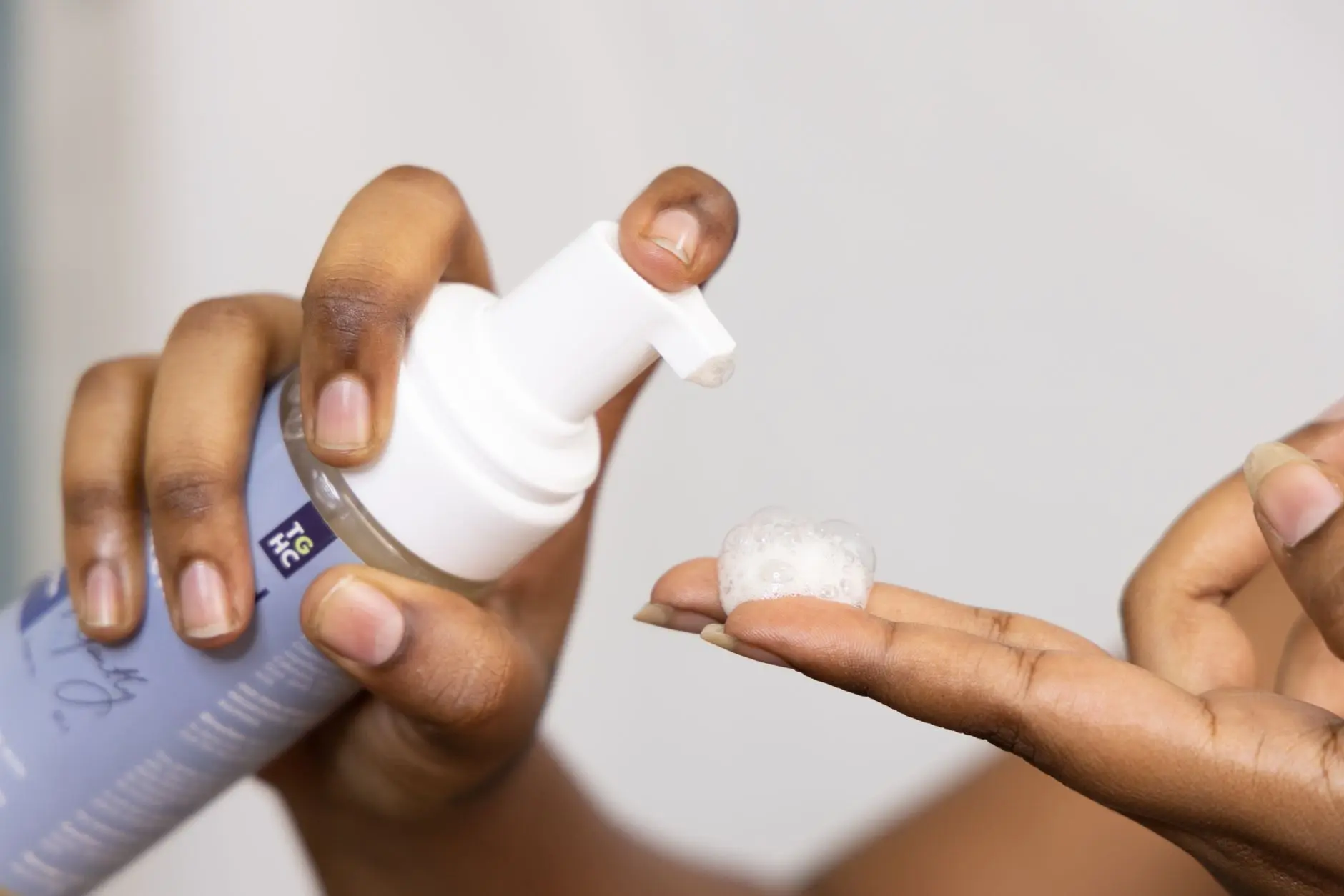
Your skin has a barrier of lipids holding water in and irritants out. Oily skin makes plenty of those lipids, so in principle it should be resilient. What usually breaks that is the treatment rather than the skin.
Oily skin invites aggressive habits: foaming cleansers twice over, alcohol toners, scrubs, and the satisfying tight squeak afterwards. That squeak is the sound of a stripped barrier. Damaged barriers lose water, sting when you apply anything, react to products that never used to bother you, and often respond by producing more oil. The result is skin that is simultaneously greasy and easily upset.
This is why the American Academy of Dermatology warns in its acne skin care guidance that harsh products can dry your skin and make acne appear worse. The fix is usually subtraction, not a stronger product.
What the best face wash for sensitive oily skin has to do

A cleanser has one job: remove sebum, sunscreen, makeup and pollution, then rinse off. It sits on your face for perhaps forty seconds. Nothing in it has time to deliver much benefit, which is why expensive actives in a cleanser are mostly wasted money.
Judge it on what it does not do. After rinsing and patting dry, your skin should feel comfortable and slightly cushioned, not tight, not squeaky, with no stinging when you apply moisturiser. If a cleanser passes that test while removing your sunscreen, it is doing its job. A gentle cleanser plus a good moisturiser will beat an aggressive cleanser plus repair attempts every time, and our guide to choosing a moisturiser covers the other half of that pairing.
The surfactant matters more than the active ingredient

Surfactants are the cleansing agents, and they are the part of the formula that decides whether your barrier survives. Marketing focuses on actives because they are easier to advertise, but the cleansing system is what your skin actually reacts to.
A 2025 study in the Journal of Drugs in Dermatology tested a salicylic acid cleanser built on a gentler polymeric cleansing system against a conventional salicylic acid surfactant cleanser. The gentler formulation preserved barrier integrity better, with lower transepidermal water loss, less dryness and less redness, while still reducing acne lesions from week four. Same active, different cleansing base, different outcome for the barrier. The study was conducted on a specific commercial formulation and reads as industry research, so treat it as an illustration of the principle rather than a product endorsement.
In practice, this means looking for non-foaming or low-foaming gels, creams and milks. Dense, satisfying foam usually indicates harsher surfactants. If your cleanser produces a rich lather and leaves your face tight, that combination is the problem.
What to look for on the label

A short ingredient list built around mild cleansing agents, plus one or two of the following, is the realistic target.
- Niacinamide, which is well tolerated, supports the barrier and is one of the few actives worth having even in a rinse-off product.
- Glycerin or hyaluronic acid, humectants that offset some of the drying effect of cleansing.
- Ceramides, the lipids your barrier is built from, which help a cleanser leave skin comfortable.
- Salicylic acid at around 2 percent, but only if you are also breaking out and only in a formula whose cleansing base is gentle.
- A label saying fragrance-free rather than unscented, since unscented can mean a masking fragrance was added.
Gel and cream textures both work. Skip anything described as deep cleansing, purifying, or clarifying without checking what is actually in it, since those words describe an aspiration rather than a formulation.
Price is a poor guide here. The best face wash for sensitive oily skin is frequently a pharmacy product costing very little, because mild surfactants are cheap and the expensive part of a luxury cleanser is usually the packaging and the actives that rinse straight down the drain.
What to leave on the shelf
The AAD’s acne guidance is direct about this: avoid products that irritate the skin, including astringents, toners and exfoliants. For a face that is both oily and reactive, a few specific things cause most of the trouble.
Denatured alcohol high in the ingredient list gives an instant matte feel and strips lipids while doing it. Physical scrubs with crushed shells or beads create micro-damage on skin already struggling. Cleansing brushes do the same thing more efficiently. Fragrance, including essential oils such as citrus and lavender, is a common cause of cosmetic contact reactions and earns its place in a cleanser only by smelling nice. Strong sulfates like sodium lauryl sulfate are effective degreasers and poor choices for a compromised barrier.
Also skip the oil-control claim as a buying criterion. Sebum production is driven by hormones and genetics, not by what you wash with, and a cleanser that appears to reduce oil is usually just removing it temporarily while provoking more.
How you wash matters as much as what you use
The AAD’s face washing guidance is specific and worth following exactly, because technique undoes good products more often than people realise.
Limit washing to twice a day and after sweating. Use lukewarm water rather than hot. Apply with your fingertips only, since washcloths, mesh sponges and other tools irritate skin. Do not scrub. Pat dry rather than rubbing, and apply moisturiser while skin is still slightly damp.
Two practical notes for oily skin specifically. Washing more than twice daily is the most common mistake, and it reliably makes both the oiliness and the sensitivity worse. And if mornings leave your face tight, rinsing with water alone and saving cleanser for the evening is a legitimate option, since overnight your face accumulates little beyond its own sebum.
Where salicylic acid fits, and where it does not
Salicylic acid is oil-soluble, so it can get into pores, which is why it appears in so many products aimed at oily skin. In a cleanser it has limited contact time, so expect modest results rather than transformation.
It earns a place if you are actively breaking out, in a gentle base, used once daily rather than twice. It does not earn a place if your main complaint is shine without breakouts, if your barrier is currently irritated, or if you are already using a leave-on exfoliant or a retinoid, where adding it multiplies the irritation. If breakouts are the real issue, our guide to the different types of acne and how to treat them is more relevant than any cleanser decision, and for reactive skin our roundup of retinol alternatives for sensitive skin covers the leave-on products that do the real work.
Oily and sensitive skin after 40
Plenty of women reach their forties expecting skin to get drier and find it behaving unpredictably instead, oilier in the centre of the face, more reactive everywhere, and breaking out in a way that feels like a betrayal. Shifting hormone levels through perimenopause change both oil production and how the barrier holds up, though the detail of that relationship is less well mapped than the skincare industry implies.
What follows practically is straightforward. Skin that behaved one way for twenty years can genuinely change, so the best face wash for sensitive oily skin at 25 may not be the right one at 45, and reacting to the change by escalating to something stronger is usually the wrong move. Barrier support tends to matter more at this stage than oil removal does. Our guide to skin longevity habits for women over 40 and the wider skin and ageing guides set out what actually changes outcomes at this stage, which is daily sunscreen, a consistent simple routine and patience, in that order.
Give any change four weeks
Switching cleansers produces no overnight verdict. A damaged barrier takes roughly two to four weeks to recover, so a gentler product can look like it is doing nothing while it is quietly working. This is the part most people get wrong, abandoning the best face wash for sensitive oily skin they ever tried because week one felt uneventful.
It is also worth remembering that a cleanser is a small lever. Sleep, stress and general hydration all show up in how reactive skin feels day to day, and if you have never checked whether your fluid intake is anywhere near sensible, our water intake calculator takes a minute. That will not cure oily skin and nothing you drink will, but persistent under-hydration makes every skin complaint harder to judge.
Change one product at a time and give it four weeks, otherwise you cannot tell what helped or what caused a reaction. If skin is stinging, flaking or red, strip the routine back to a gentle cleanser, a moisturiser and morning sunscreen for a fortnight before adding anything. And if you have persistent breakouts, painful cysts or a rash that will not settle, that is a dermatologist’s job rather than another bottle.
Frequently asked questions
Can a face wash reduce oily skin?
Not really, and this is the most common misunderstanding. Sebum production is driven by hormones and genetics, so a cleanser removes oil that is already there without changing how much your skin makes. Worse, a stripping cleanser can damage the barrier and leave skin producing more oil. Choose a cleanser that leaves skin comfortable rather than one promising oil control.
How often should I wash oily sensitive skin?
Twice a day at most, plus after sweating, which is the American Academy of Dermatology’s guidance. Washing more often is the single most common mistake with oily skin and tends to worsen both the oiliness and the sensitivity. If your face feels tight in the morning, rinsing with water alone and using cleanser only at night is a reasonable approach.
Should a face wash for oily skin foam a lot?
Rich foam usually signals harsher surfactants, which are the part of the formula most likely to damage a sensitive barrier. Low-foaming gels, creams and milk cleansers are generally better tolerated. The test that matters is how your skin feels after rinsing: comfortable is right, tight or squeaky means the cleanser is too strong for you.
Is salicylic acid too harsh for sensitive skin?
It depends far more on the formula than the acid. A 2025 study found that a salicylic acid cleanser built on a gentler cleansing system preserved the skin barrier better than a conventional one at the same strength, while still clearing acne. If you are breaking out, salicylic acid in a mild base once daily is worth trying. If your skin is currently irritated, or you already use a retinoid or leave-on exfoliant, skip it.
How long before a new face wash shows results?
Give it four weeks. A damaged barrier needs roughly two to four weeks to repair, so a gentler cleanser can seem to be doing nothing at first. Change one product at a time, or you will not know what helped and what caused a reaction.
Sources
- Face washing 101. American Academy of Dermatology, 2025
- Acne: Skin care tips dermatologists recommend. American Academy of Dermatology, 2025
- Novel 2% Salicylic Acid Cleanser With Polymeric Cleansing Technology Treats Acne Without Compromising Skin Barrier. Journal of Drugs in Dermatology, 2025
This article is general health information for adults and not medical advice. It does not know your history, your medication or your results. For a decision about your own health, talk to a doctor or another qualified clinician who does.