


Searching for sleep aids for pregnant women turns up two kinds of answers: product lists that ignore the safety data, and advice so generic it was the losing arm in actual clinical trials. Neither helps at three in the morning.
What follows is organised by how good the evidence is. The approaches with the strongest support are not products, most supplements have not been studied properly in pregnancy, and anything you swallow is a conversation with your own doctor rather than something an article should decide for you. One widely repeated piece of position advice also turns out to be stricter than the research requires, which is worth knowing if you have been waking up guilty about it.
Why pregnancy wrecks sleep, and what the risk actually is

Poor sleep in pregnancy is the norm rather than a personal failing. A 2025 systematic review and meta-analysis in Reproductive Sciences pooling 23 studies opens by stating that insomnia affects most pregnant women. The causes stack up: progesterone and later physical discomfort, needing the bathroom, reflux, restless legs, anxiety, and a body that gets harder to position.
That same review is worth reading carefully, because it also tempers the fear around this. The most consistent association it found was with perinatal depression, at roughly double the odds compared with women without insomnia, along with perinatal anxiety and postpartum pain. What it did not find was an association with caesarean delivery or gestational hypertension. Findings for low birth weight were mixed.
So the honest reason to treat pregnancy insomnia is your mental health, which is a serious enough reason on its own. It is not that one bad night endangers your baby. If you are lying awake worrying that the insomnia itself is doing harm, that specific worry is not supported by the data.
Start with what the trials actually support

The best-supported sleep aids for pregnant women are not products at all. The strongest evidence points at cognitive behavioural therapy for insomnia, usually shortened to CBT-I, and at mindfulness-based approaches built for the same purpose. These are structured programmes that change sleep behaviour and the thinking that keeps you awake, not a list of tips.
A 2026 randomised controlled trial in Sleep Advances randomised pregnant women with clinical insomnia to CBT-I, a perinatal mindfulness programme, or sleep hygiene education. Both active treatments produced large reductions in bedtime procrastination and, among women who also had anxiety symptoms, large reductions in anxiety. The mindfulness arm also reduced insomnia-focused rumination compared with sleep hygiene education, while CBT-I did not.
Notice what the comparison group was. Sleep hygiene education, meaning the standard advice about dim lights and no screens, was the condition the real treatments were measured against. That is the single most useful thing to take from this literature: the tips list everyone hands out is the control arm, not the treatment. Digital CBT-I programmes and apps make this accessible without a referral, and it is reasonable to ask your midwife or doctor what is available locally.
The sleep position advice that is overstated
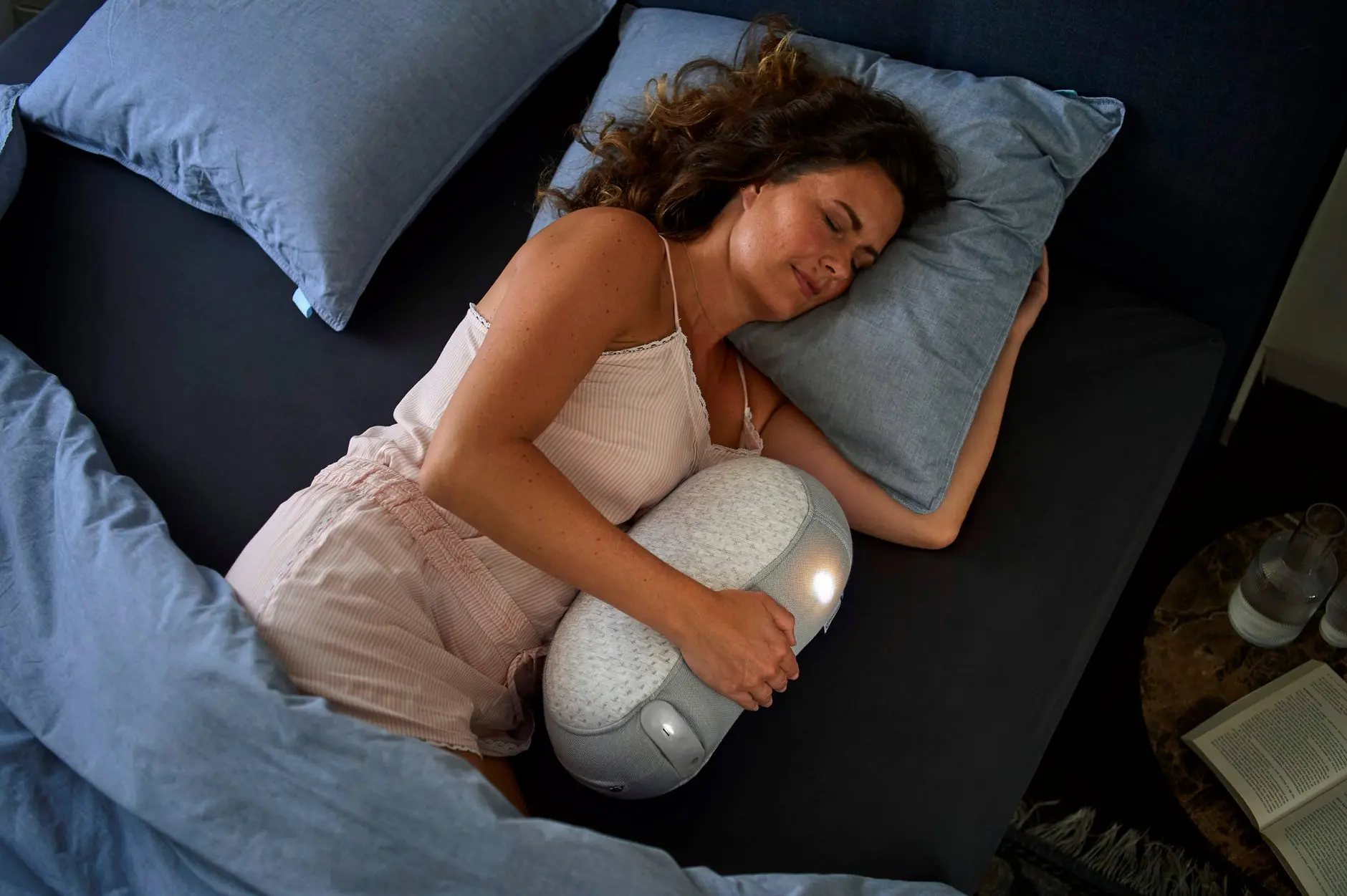
Almost every pregnancy article tells you to sleep on your left side, which leaves a lot of women anxious when they wake up on the right. The research does not support that level of strictness.
An individual participant data meta-analysis published in EClinicalMedicine pooled case-control data covering 851 late stillbirths and 2,257 controls. Going to sleep on your back after 28 weeks was associated with higher odds of late stillbirth compared with the left side, with an adjusted odds ratio of 2.63. Going to sleep on the right side was statistically indistinguishable from the left, with an adjusted odds ratio of 1.04.
So the meaningful instruction is narrower and much easier to live with: from 28 weeks, settle down to sleep on either side rather than flat on your back. Left and right are equivalent on this evidence. The study measured the position you go to sleep in, not where you end up, and you cannot control what your body does while unconscious. If you wake on your back, roll over and go back to sleep without the guilt. A pillow wedged behind you makes rolling back less likely, and a pillow under the bump plus one between the knees does more for hip and back comfort than any supplement will.
Sleep aids for pregnant women: supplements and medication

This is the part where an article should be careful rather than helpful. Most sleep aids for pregnant women sold in shops and online have not been studied well enough in pregnancy for anyone to promise you they are safe.
Melatonin is the most commonly asked about. According to MotherToBaby, a teratogen information service, taking melatonin during pregnancy has not been well studied and it is not known whether it increases the chance of birth defects. Their general position is that supplements are not recommended in pregnancy unless a healthcare provider has prescribed them for a medical condition. That is the appropriate standard to apply to herbal products too, including valerian and chamomile preparations, which are frequently marketed as gentle and simply lack pregnancy safety data.
Over-the-counter antihistamines marketed for sleep, and any prescription sleep medication, are decisions for your own doctor or midwife who knows your history, your stage of pregnancy and everything else you are taking. Some medications do have reasonable track records in pregnancy and your provider may well suggest one. That call belongs in a consultation, not in a blog post, and you should be sceptical of any page that hands you a product name and a dose.
Two things worth saying plainly. Do not start or stop a prescribed medication based on something you read online, including this. And tell your provider what you are already taking, including supplements, because people routinely leave those out.
Treatable causes that get missed
Sometimes the reason for the sleeplessness is a specific condition that responds to treatment, which makes chasing sleep aids for pregnant women the wrong approach entirely.
- Restless legs syndrome is common in pregnancy and often unrecognised. It is that crawling, urge-to-move sensation in the legs that gets worse in the evening and eases when you move. It is linked to iron status, it is treatable, and it is worth raising specifically because a lot of women describe it as normal pregnancy discomfort and never get it assessed.
- Reflux and heartburn tend to worsen when lying down and later in pregnancy. Eating earlier and raising the head of the bed helps, and there are treatments your provider can discuss.
- Snoring that is new or loud, gasping, or heavy daytime sleepiness can point to sleep-disordered breathing, which is more common in pregnancy and does warrant proper assessment rather than a supplement.
- Frequent night waking to urinate is nearly universal, but a burning sensation or urgency needs checking for infection.
Anxiety deserves its own mention, since the meta-analysis tied insomnia most strongly to perinatal mood. If your nights are spent with a racing mind rather than physical discomfort, that is the thing to treat, and our guide to the signs of a dysregulated nervous system covers the pattern.
A wind-down that fits a pregnant body
Standard sleep advice was not written for someone who is uncomfortable, needs the bathroom twice and has a mind full of a coming birth. A few adjustments work better in practice.
Keep a consistent wake time even after a broken night, because the wake time anchors your body clock more effectively than the bedtime does. Our sleep calculator can work backwards from the time you need to get up to a realistic bedtime, which is more useful than aiming at a fixed number of hours you may not get in one block.
If you are awake for more than about twenty minutes and becoming frustrated, get up and do something dull in low light rather than lying there. Staying in bed awake teaches your brain that bed is where you fight with your thoughts, which is exactly the association CBT-I works to break. Body-based relaxation is a better use of that time than scrolling, and the somatic exercises we cover here can be done lying on your side. Naps are fine in pregnancy and you have permission to take them, though keeping them earlier in the day and under about half an hour protects the coming night. If your work pattern is the complicating factor, our night shift sleep schedule guide deals with sleep against your body clock.
When to speak to your provider rather than read another article
Ask for help if the insomnia has lasted more than a few weeks, if you are lying awake with anxiety or low mood, if you have the leg symptoms described above, if you snore heavily or wake gasping, or if you are considering taking anything at all for sleep. That last one includes supplements sold as natural.
Low mood and anxiety in pregnancy are common, treatable, and strongly linked to poor sleep in the evidence above. Raising them is not an overreaction and not a complaint about being ungrateful. It is the reason the sleep problem is worth treating in the first place.
Frequently asked questions
Is melatonin safe during pregnancy?
Nobody can honestly tell you it is. MotherToBaby states that melatonin use in pregnancy has not been well studied and that it is not known whether it increases the chance of birth defects. The general guidance is that supplements are not recommended during pregnancy unless your healthcare provider has prescribed them for a medical condition, so this is a question for your doctor or midwife rather than something to decide from an article.
Do I really have to sleep on my left side?
No, and this is one of the most over-stated pieces of pregnancy advice. In an individual participant data meta-analysis, going to sleep on the right side carried odds of late stillbirth statistically indistinguishable from the left, with an adjusted odds ratio of 1.04. What did differ was going to sleep on your back after 28 weeks, at an adjusted odds ratio of 2.63 compared with the left side. Either side is fine. Avoid settling down flat on your back.
What if I wake up on my back?
Roll onto your side and go back to sleep. The research looked at the position women went to sleep in, not the position they woke in, and you have no control over what your body does while you are asleep. If it bothers you, a pillow wedged behind your back makes rolling fully onto your back less likely.
Does insomnia in pregnancy harm the baby?
The pooled evidence is more reassuring on this than most people expect. The 2025 meta-analysis found the most consistent associations were with perinatal depression, perinatal anxiety and postpartum pain. It found no association with caesarean delivery or gestational hypertension, and mixed findings for low birth weight. The strongest reason to treat pregnancy insomnia is your own mental health.
What actually works for insomnia in pregnancy without medication?
Cognitive behavioural therapy for insomnia and mindfulness programmes designed for pregnancy have the best trial evidence. In a randomised trial both produced large improvements, and both were measured against sleep hygiene education, meaning the standard tips list was the comparison group rather than the treatment. Digital CBT-I programmes make this accessible, and your midwife or doctor can tell you what is available locally.
Sources
- Adverse Maternal and Fetal Outcomes Associated with Insomnia During Pregnancy: a Systematic Review and Meta-Analysis. Reproductive Sciences, 2025
- An Individual Participant Data Meta-analysis of Maternal Going-to-Sleep Position, Interactions with Fetal Vulnerability, and the Risk of Late Stillbirth. EClinicalMedicine, 2019
- Treating insomnia during pregnancy improves bedtime procrastination, rumination, anxiety, and positive affect: a randomized controlled trial of cognitive-behavioral and mindfulness-based therapies for prenatal insomnia. Sleep Advances, 2026
- Melatonin fact sheet. MotherToBaby, Organization of Teratology Information Specialists, 2025
This article is general health information for adults and not medical advice. It does not know your history, your medication or your results. For a decision about your own health, talk to a doctor or another qualified clinician who does.


