


Searching for natural remedies for depression and anxiety turns up a great deal of confident advice with very little evidence attached, and almost none of it tells you where the real limits are.
Two things need saying before the list. These approaches have genuine support as additions to treatment, not as replacements for it, and moderate or severe depression needs professional care regardless of what else you do. And one of the most popular herbal options carries interactions serious enough to cause an unplanned pregnancy or a dangerous drug reaction, which is covered below because it is rarely mentioned on the shelves where it is sold.
Exercise has the strongest evidence, by some distance
The best single piece of research here is a 2024 network meta-analysis published in the BMJ, pooling 218 studies covering 14,170 participants. Measured against active controls such as usual care, it found moderate reductions in depression for several forms of exercise, with effect sizes expressed as Hedges’ g.
- Walking or jogging, g -0.62
- Yoga, g -0.55
- Strength training, g -0.49
- Mixed aerobic exercise, g -0.43
- Tai chi or qigong, g -0.42
Effects were proportional to the intensity prescribed, and yoga and strength training were the best tolerated. The authors concluded that these forms of exercise could be considered alongside psychotherapy and antidepressants as core treatments, which is a considerably stronger statement than the usual suggestion to get some fresh air.
The same paper is refreshingly honest about its own limits, and so should anyone citing it be. Only one of those 218 studies met the Cochrane criteria for low risk of bias, and the authors rated confidence as low for walking or jogging and very low for the rest. Exercise is genuinely worth doing, and the precision of those numbers is lower than it looks.
What else has real support
A 2024 umbrella review in the Brazilian Journal of Psychiatry assessed 22 systematic reviews and meta-analyses of complementary treatments for depression. Omega-3 fatty acids, exercise, manual acupuncture, St John’s wort mono-preparations, relaxation and vitamin D all showed better efficacy than placebo or control conditions.
A few practical notes on those. Omega-3 evidence is strongest for formulations weighted toward EPA rather than DHA. Vitamin D appears most useful where levels are genuinely low rather than as a blanket addition. Relaxation practices are low risk and free, which makes their modest effect size a reasonable bet. None of these produces the size of effect you would expect from treatment for a serious depressive episode, and the review is about improving symptoms rather than replacing care.
Where anxiety differs from depression
Most research on natural remedies for depression and anxiety studies the two separately, even though they frequently arrive together, and the evidence is not identical for each.
Exercise carries across reasonably well, and mindfulness-based approaches have a stronger track record for anxiety than for depression. St John’s wort is the opposite case: its evidence is for depression specifically, so taking it for anxiety alone means accepting the interaction risks without the supporting data. That asymmetry rarely appears in articles that treat the two conditions as one.
The practical implication is that if anxiety is your dominant symptom, behavioural approaches deserve your attention before anything you swallow. We cover those in full in the anxiety guide linked below rather than repeating them here, because the techniques matter more than the supplement aisle does.
St John’s wort: effective, and genuinely risky
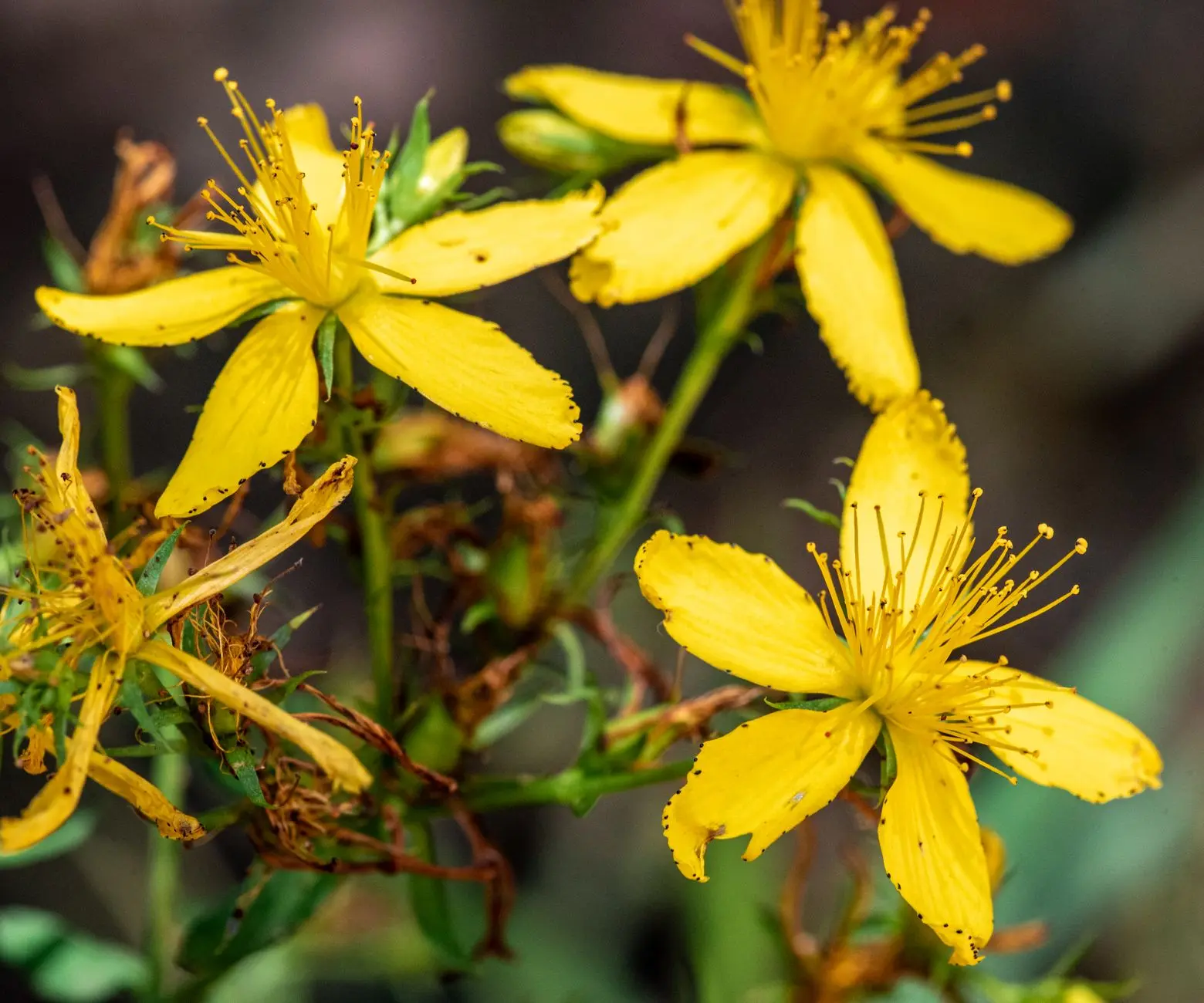
St John’s wort has the best evidence of any herbal option here, which is exactly why its risks deserve more attention than they get. It is sold without prescription in many countries and treated as harmless because it is a plant.
An analysis of herb-drug interactions published in the AAPS Journal found that while St John’s wort has an encouraging safety profile taken alone, it causes interactions that are relevant and in some cases life threatening. The well-documented ones include serotonin syndrome or lethargy when combined with serotonin reuptake inhibitors, unwanted pregnancies in women taking oral contraceptives, reduced blood concentrations of ciclosporin, and reduced levels of antiretroviral and anticancer medicines including indinavir, nevirapine, irinotecan and imatinib.
Read that second one again, because it is the one that catches people. St John’s wort can make hormonal contraception fail. If you are taking any prescription medication at all, and particularly an antidepressant, the contraceptive pill, an HIV medication, a cancer treatment or an immunosuppressant, this is a conversation with a pharmacist or doctor before you buy it, not after.
Natural remedies for depression and anxiety in perimenopause
Mood symptoms in midlife are common enough that they deserve a specific mention, and they are frequently dismissed as stress or personality. Disrupted sleep is often tangled up in them, and the relationship runs in both directions, since poor sleep worsens mood and low mood disrupts sleep.
If that describes your situation, treating the sleep is a reasonable place to start, and our guide to perimenopause insomnia covers what actually has evidence there. For anxiety specifically, rather than repeat it here, our detailed guide to reducing anxiety without medication goes through the breathing and grounding techniques in full. If your nights involve a body that will not settle, the signs of a dysregulated nervous system may be a more useful frame than either label.
One caution specific to this stage of life. Hormonal changes can produce mood symptoms that look like depression, and depression can be misattributed to hormones and left untreated for years. Both errors are common. That is a reason to be assessed properly rather than to self-treat with supplements and hope.
What is worth being sceptical about
Plenty of products marketed as natural remedies for depression and anxiety have thin evidence behind them, and the gap between marketing and data is wide. Be cautious with anything promising to balance neurotransmitters, since that is not a measurable thing a supplement does. Be sceptical of proprietary blends that hide doses behind a trademark, of anything claiming to work in days, and of products that advise stopping prescribed medication.
Two structural points are worth holding onto. Supplements are not assessed for effectiveness before sale the way medicines are, so a product on a shelf is not evidence of anything. And because mood fluctuates naturally, almost any intervention started during a bad patch will appear to work as things drift back toward baseline. That is why controlled trials matter and testimonials do not.
How to use any of this sensibly
Start with exercise, since it has the best evidence and no interactions, and pick the form you will actually repeat rather than the one with the largest effect size on paper. Walking counts, and consistency beats intensity you abandon. Keep sleep and alcohol in view, because both shape mood more than most supplements do, and our sleep calculator helps set a realistic schedule if that is part of the picture.
Add one thing at a time and give it six to eight weeks. Tell your doctor or pharmacist about every supplement you take, including the ones that seem too minor to mention, since the interaction above is a good illustration of why that matters. And treat any of these as additions to proper care rather than as a way of avoiding it.
It is also worth being honest about why natural remedies for depression and anxiety appeal in the first place. They are available without an appointment, they carry no diagnosis, and they let you act immediately rather than waiting weeks for an assessment. Those are real advantages and none of them is a reason for shame. They are also, precisely, the reasons this route can delay treatment that would work better, so the sensible approach is to start the exercise and sleep work today while also booking the appointment, rather than treating the two as alternatives.
If cost is the barrier to getting help, say so when you contact a service. Walking, relaxation practice and sleep timing cost nothing, which is a genuine argument for starting there, and in many countries talking therapies are available without payment through a referral or a self-referral route.
When to get help rather than keep reading
Speak to a doctor if low mood or anxiety has persisted for more than two weeks, if it is affecting your work, relationships or ability to function, if you have lost interest in things you previously enjoyed, or if sleep and appetite have changed noticeably. Depression is common and treatable, and waiting rarely improves it.
If you are having thoughts of harming yourself or that life is not worth living, contact your doctor, an emergency service or a crisis line now rather than working through any list. In the UK you can call Samaritans on 116 123 at any hour. In the US and Canada you can call or text 988. Those numbers exist for exactly this and using them is not an overreaction.
Nothing in this article is a substitute for an assessment by someone who can actually examine you, and none of it is a reason to stop a treatment that is already working.
Frequently asked questions
What is the most effective natural remedy for depression?
Exercise has the strongest evidence. A 2024 BMJ network meta-analysis of 218 studies and 14,170 participants found moderate reductions in depression from walking or jogging, yoga and strength training, and concluded these could be considered alongside psychotherapy and antidepressants as core treatments. The authors also rated their confidence as low to very low, so the effect is real but the precision is limited.
Is St John’s wort safe to take?
Taken alone it has a reasonable safety record, but its interactions can be serious and in some cases life threatening. Documented problems include serotonin syndrome when combined with SSRI antidepressants, contraceptive failure leading to unplanned pregnancy, and reduced effectiveness of HIV medications, cancer treatments and immunosuppressants. Speak to a pharmacist or doctor before taking it if you use any prescription medication.
Can natural remedies replace antidepressants?
No, and you should not stop prescribed medication to try them. The evidence supports these approaches as additions to treatment rather than substitutes, and stopping antidepressants abruptly can cause withdrawal effects and relapse. If you want to reduce or stop medication, that is a plan to make with the doctor who prescribed it.
How long before natural approaches show any effect?
Allow six to eight weeks and change one thing at a time. Mood also fluctuates on its own, which is why anything started during a bad week can appear to work as things return to baseline. That natural drift is exactly what controlled trials are designed to separate out, and it is why personal testimonials are weak evidence.
Do omega-3 supplements help with depression?
A 2024 umbrella review found omega-3 fatty acids showed better efficacy than placebo or control conditions for depression, alongside exercise, acupuncture, St John’s wort, relaxation and vitamin D. Evidence is strongest for formulations weighted toward EPA rather than DHA. The effect is modest and it is an addition to treatment rather than a replacement for it.
Sources
- Effect of exercise for depression: systematic review and network meta-analysis of randomised controlled trials. BMJ, 2024
- The efficacy and safety of complementary and alternative medicine for depression: an umbrella review. Brazilian Journal of Psychiatry, 2024
- Herb-drug interactions with St John's wort (Hypericum perforatum): an update on clinical observations. The AAPS Journal, 2009
This article is general health information for adults and not medical advice. It does not know your history, your medication or your results. For a decision about your own health, talk to a doctor or another qualified clinician who does.