


Will low progesterone cause hair loss? For most women the honest answer is no, not on its own. Low progesterone is real, and it does plenty around perimenopause, but the direct evidence that it makes your hair fall out is thin. The hormone shifts of your 40s and 50s can add to thinning, yet the bigger drivers are usually falling estrogen, a relative rise in androgen activity, and ordinary non-hormonal causes like low iron, thyroid trouble, and stress shedding. This article walks through what progesterone actually does, what the research shows, and what to check before you pin the blame on one hormone.
What progesterone actually does for your hair

Progesterone is the hormone that rises in the second half of your cycle, after ovulation. Its main jobs are preparing the uterine lining for a possible pregnancy and balancing the effects of estrogen. It is not a hair growth hormone in any direct way.
The one plausible hair link is indirect. Progesterone can act as a mild brake on 5-alpha-reductase, the enzyme that turns testosterone into dihydrotestosterone, or DHT. DHT is the androgen that shrinks genetically sensitive follicles in pattern hair loss. In theory, when progesterone drops, that brake eases and a little more DHT can form. In practice, no randomized trial has shown that low progesterone by itself thins hair, or that progesterone creams and pills regrow it. The mechanism is believable. The clinical proof is not there. So when women ask will low progesterone cause hair loss, they are usually picturing this DHT pathway, and in the studies that effect looks small next to the other causes below.
If you want the wider picture of what this hormone does and does not cause, we cover the signs of low progesterone in women, and why it often takes the blame for weight gain it is not responsible for.
Will low progesterone cause hair loss on its own?
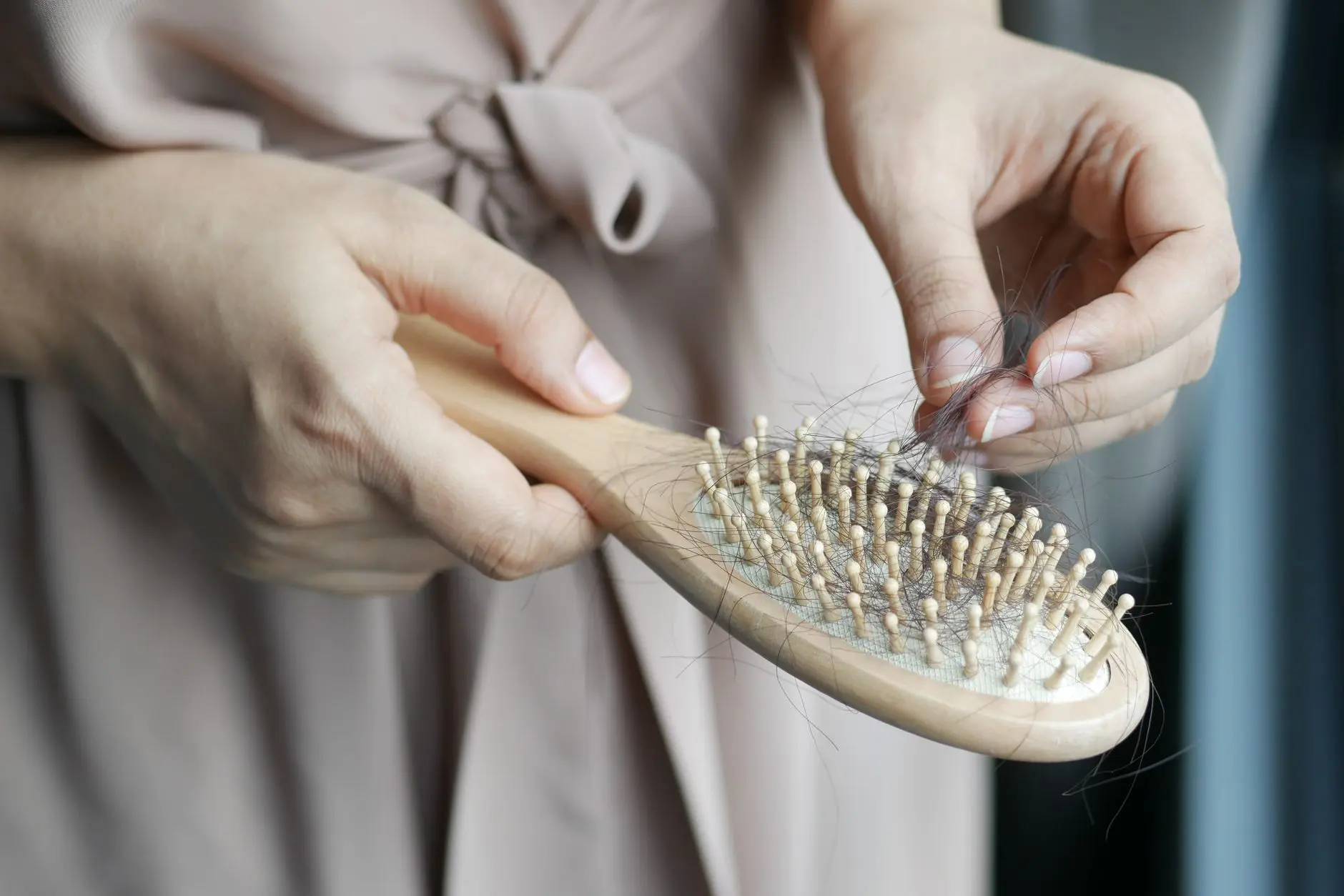
Short version: on its own, low progesterone is not an established cause of hair loss. Reviews of female hair loss do not list it as a primary driver. The most common cause of thinning in women is female pattern hair loss, an androgen-related condition that increases with age, according to a 2020 review in Dermatologic Therapy. Progesterone does not appear on that list of main causes. Put plainly, the research that asks will low progesterone cause hair loss keeps landing on the same result: not on its own, and not in a way you could separate from the stronger drivers.
This matters because the fix follows the cause. If you treat a progesterone number that was never the problem, your hair keeps thinning while the real trigger goes unaddressed. So the useful question is not whether low progesterone can nudge hair in the wrong direction. It is which cause is actually behind your shedding, because that is the one worth treating.
The hormone that matters more in perimenopause: estrogen

If you are losing hair during perimenopause, estrogen is the hormone to look at first. Estrogen helps keep hairs in their growth phase, called anagen, for longer. Most of the hair on your scalp is growing at any one time, and only a small share is resting and ready to shed. As estrogen falls, more hairs slip into the resting phase sooner, so you grow fewer and finer hairs over the following months.
Progesterone and estrogen both decline across the menopause transition, which is why the two often get lumped together. The better-supported hair story is the estrogen side and the way it changes the balance between estrogen and androgens, not progesterone alone. We explain that balance in more detail in our guide to the high progesterone, low estrogen pattern. Keep in mind this part of the picture rests on how the hair cycle works rather than on large trials, so treat it as the current best reading, not settled fact.
It also explains why progesterone takes more blame than it deserves. The two hormones fall together, the hair thins at the same time, and the timing makes progesterone look guilty by association. But correlation in a messy transition is not cause, and the hormone with the clearer tie to the growth phase is estrogen.
What usually drives thinning in your 40s and 50s
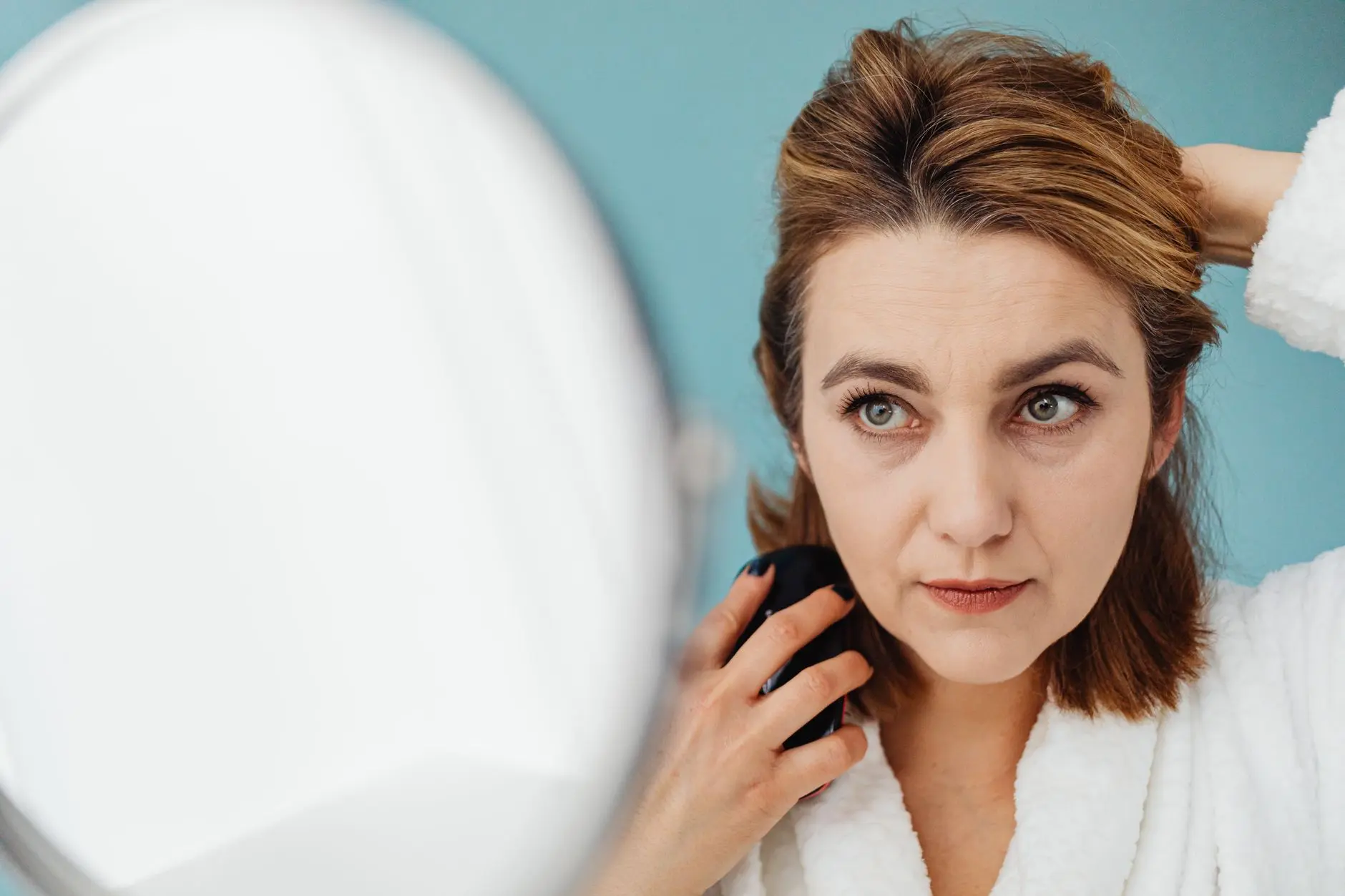
When thinning is hormonal, the mechanism is almost always androgens acting on the follicle, not a progesterone shortage. The enzyme 5-alpha-reductase converts testosterone into DHT, and DHT gradually miniaturizes follicles that are genetically prone to it. Hairs come back thinner and shorter with each cycle until some stop growing. This is female pattern hair loss, and it tends to show as a widening part and loss of volume across the top of the scalp rather than a receding hairline.
There is a family history in many cases, which is why it often appears in the same decade a mother or aunt started thinning. The follicles that react to DHT are set by genetics, and the hormone shifts of midlife simply let that tendency show. That is a different problem from a passing drop in one hormone, and it calls for a different plan.
Conditions that raise androgen activity speed this up. Polycystic ovary syndrome is the clearest example, and the hair thinning that comes with it follows the same DHT route. We look at how far that can be turned around in our piece on whether PCOS hair loss is reversible. The thread tying these together is androgens, which is exactly why a progesterone level, taken alone, tells you so little.
The non-hormonal causes that get blamed on hormones
Here are the numbers competitors skip. It is normal to shed 50 to 100 hairs a day, according to the American Academy of Dermatology. Shedding noticeably more than that is excessive shedding, known medically as telogen effluvium, and it is a reaction to a trigger rather than a hormone deficiency. The timing is the giveaway: the shedding usually shows up about 3 to 4 months after the event that set it off, as noted in a 2019 review in Clinical, Cosmetic and Investigational Dermatology. Big weight loss, childbirth, surgery, a high fever, crash dieting, and major stress are common triggers.
Iron is the other usual suspect. Serum ferritin is the blood test that confirms low iron stores, and several studies have tied low iron to diffuse shedding, though the evidence is mixed. A 2006 review in the Journal of the American Academy of Dermatology found the data too inconsistent to screen every person with hair loss, but it was clear that iron deficiency anemia should be treated. Heavy periods, which are common in perimenopause, are a frequent reason iron runs low, something we cover in iron deficiency from heavy periods. Thyroid disease, both underactive and overactive, is another cause of diffuse shedding, and so is low vitamin D, which we look at in can vitamin D deficiency cause hair thinning.
What to check before you blame progesterone
A progesterone level on its own is hard to read, because the number swings across the cycle and is only meaningful if drawn about a week after ovulation. Before you spend money on hormone creams, it is worth ruling out the causes that are easier to measure and easier to fix.
- Ferritin and a full blood count to catch low iron and anemia.
- TSH to check thyroid function.
- Vitamin D, since a shortfall is common and simple to correct.
- A look at your scalp by a clinician to tell pattern hair loss apart from stress shedding, since the two are treated differently and often overlap.
Tracking your cycle also tells you whether low progesterone is even plausible. A short second half of the cycle, called a short luteal phase, is one sign that progesterone may be running low. You can map your cycle length with our period calculator and bring that record to your appointment instead of guessing. Running these checks first is the fastest way to answer, for your own case, will low progesterone cause hair loss or is something more common doing the damage.
What actually helps
The fix depends on the cause, which is the whole point. If shedding started after a clear trigger, telogen effluvium usually recovers on its own as the body resettles, often within six months, so the job is to remove the trigger and support regrowth with enough protein, iron, and calories. If low iron or thyroid trouble shows up on your labs, correcting it is the single most useful step, and it can take three to six months before you see the difference at the roots.
For female pattern hair loss, topical minoxidil has the most evidence behind it, and starting earlier protects more follicles. Hormone therapy around menopause may help some women keep hair density, but the evidence for using it as a hair treatment is limited, so it is not prescribed for hair alone. Diet will not reverse pattern loss, but it does support the follicle, and a few sensible choices are set out in best foods for hair loss in women. If you still want to work on progesterone itself for other reasons, we list food-based options in foods that increase progesterone naturally, with honest limits on how much they move the needle.
So, will low progesterone cause hair loss and ruin your hair for good? For most women, no. It is rarely the main cause, and the ones that usually are, estrogen decline, androgens, low iron, thyroid problems, and stress shedding, are the ones you can actually measure and act on.
Frequently asked questions
Can low progesterone cause hair loss by itself?
There is no strong evidence that low progesterone causes hair loss on its own. The link is indirect at most, through a small effect on the enzyme that makes DHT. No randomized trial has shown that a low progesterone level thins hair without another cause present, so it is rarely the main problem.
Does progesterone cream regrow hair?
No good trial has shown that progesterone cream or pills regrow hair in women with female pattern hair loss. The idea is based on a plausible mechanism rather than clinical results. Topical minoxidil has far more evidence, and treating low iron or thyroid problems helps when those are the cause.
How can I tell if my hair loss is hormonal or something else?
Pattern hair loss from androgens usually shows as a widening part and thinning across the top of the scalp. Sudden, diffuse shedding that started two to four months after a trigger points to telogen effluvium instead. Blood tests for ferritin, TSH, and vitamin D, plus a scalp check, sort out most cases.
Will my hair grow back after perimenopause?
It depends on the cause. Shedding from a stressor, illness, or low iron often recovers once the trigger is fixed, usually within about six months. Female pattern hair loss is gradual and does not reverse on its own, but treatment started early can slow it and keep more of the hair you have.
What hormone test should I ask for if I think it is low progesterone?
Progesterone is only meaningful when drawn about a week after ovulation, so timing matters. Even then, ferritin, TSH, and vitamin D tend to be more useful for hair, because they catch the causes that are common and treatable. Ask your clinician to look at those alongside a scalp exam.
Sources
- Do you have hair loss or hair shedding?. American Academy of Dermatology, 2024
- Telogen effluvium: a comprehensive review. Clinical, Cosmetic and Investigational Dermatology, 2019
- Female pattern hair loss: A comprehensive review. Dermatologic Therapy, 2020
- The diagnosis and treatment of iron deficiency and its potential relationship to hair loss. Journal of the American Academy of Dermatology, 2006
This article is general health information for adults and not medical advice. It does not know your history, your medication or your results. For a decision about your own health, talk to a doctor or another qualified clinician who does.