


The signs of codependency in women rarely look like a warning. They look like devotion. They look like being the reliable one, the fixer, the woman who somehow always knows what everyone else needs before they say it out loud. That is exactly why the signs of codependency in women go unrecognized for years, sometimes decades. The behavior gets praised. The exhaustion gets normalized. And the underlying pattern, an identity that has quietly stopped existing outside of managing someone else, never gets named.
Breaking the pattern starts with the day-to-day moments, and our guide on how to manage emotional triggers gives you tools for exactly those.
Codependency is not a diagnosis in the DSM, and it is not simply another word for people-pleasing or being generous. Research now traces it to something more specific: an attachment pattern formed early, often reinforced by family roles that asked a girl to manage adult emotions before she had the nervous system to do it. Understanding the signs of codependency in women through that lens, attachment and family systems, changes the entire conversation. This is not a character flaw or a lack of self-esteem you can affirmation your way out of. It is a learned relational strategy, and learned strategies can be unlearned.
This guide walks through what the research actually says about the signs of codependency in women, why the pattern shows up differently for women than the generic checklists suggest, the two-part mechanism behind it (attachment style plus childhood role), nine specific signs to watch for, and a real path toward what psychologists call differentiation of self, the actual antidote to codependency.
What the Signs of Codependency in Women Actually Look Like

Most lists of the signs of codependency in women focus narrowly on romantic relationships, but the pattern shows up everywhere a woman has a relationship to manage: with a partner, an adult child, an aging parent, a friend in crisis, even a coworker. The common thread is not who the relationship is with. It is what happens inside the woman herself. Her mood becomes a mirror of the other person’s mood. Her sense of being okay depends on whether they seem okay. Her own preferences go quiet, not because she is being polite, but because she has genuinely lost track of what she wants.
Research published through the National Institutes of Health describes codependency as a relational pattern marked by excessive focus on another person’s needs at the expense of one’s own autonomy, with prevalence estimates ranging from 10 to 20 percent in the general population and as high as 36 percent in clinical samples. Among the studies reviewed, women were consistently overrepresented, which tracks with what shows up clinically: the signs of codependency in women are amplified by decades of socialization that reward exactly this behavior in girls and punish its absence.
It is worth being precise about what codependency is not. Caring deeply about someone is not codependency. Making sacrifices during a genuine crisis is not codependency. Wanting your partner to be happy is not codependency. The line is crossed when your own internal state becomes structurally dependent on someone else’s, when you cannot access calm, worth, or clarity unless the other person is regulated first. That structural dependency, not the caring itself, is the actual pattern underneath the signs of codependency in women.
Why the Signs of Codependency in Women Get Mistaken for Love

The signs of codependency in women get missed for a specific reason: they overlap almost perfectly with traits our culture rewards in women. Anticipating needs before they are spoken. Absorbing other people’s emotional weather. Measuring your worth by how needed you are. These are not read as symptoms. They are read as being a good partner, a good mother, a good friend, a good daughter. The reward system makes the pattern nearly invisible from the inside.
This is compounded by a specific double bind. A woman who sets a boundary is often labeled cold, selfish, or difficult, while a man doing the same thing is described as having healthy limits. That gendered penalty means many women learn early that the safest way to be loved is to stay available, stay accommodating, and stay tuned to everyone else’s frequency. Over time, availability becomes identity. The signs of codependency in women are, in part, the accumulated cost of that trade.
There is also a quieter reward loop happening in the nervous system. Being needed produces a real, measurable sense of purpose and, often, a temporary lift in mood. For a woman whose sense of self was never fully allowed to develop independently, being needed can feel like the only reliable source of that lift. This is different from the fawn stress response that drives pure people-pleasing. It is closer to what attachment researchers call an anxious or preoccupied strategy: a nervous system that learned, early, that closeness has to be actively maintained or it will be lost.
The Real Root: Attachment Style, Not a Character Flaw

The most useful reframe for understanding the signs of codependency in women is this: codependency is not primarily a self-esteem problem. It is an attachment strategy. Attachment theory, first developed by John Bowlby and expanded by Mary Ainsworth, describes how the emotional availability of early caregivers shapes a child’s internal template for closeness. A child who experienced caregivers as inconsistently available, sometimes warm and present, sometimes distracted, dismissive, or overwhelmed, often develops what is called an anxious or preoccupied attachment style.
An anxious attachment strategy is built around one core belief: closeness is not guaranteed, so it has to be earned and actively protected. Adults with this pattern tend to hyper-monitor a partner’s emotional state, over-give to prevent disconnection, and struggle to tolerate the normal, healthy distance that exists in any relationship. A 2025 integrative review published through the National Institutes of Health specifically links codependency to this anxious or preoccupied attachment pattern, and connects it to Bowen family systems theory, particularly the concept of differentiation of self, a person’s capacity to stay emotionally connected to someone while still remaining a separate, grounded individual with their own internal compass.
This distinction matters because it changes what actually helps. If the signs of codependency in women were purely about low self-worth, the fix would be building confidence. But if the root is an attachment strategy, the fix is building differentiation, the capacity to stay close to people without losing yourself in the process. That is a specific, learnable skill, and it is very different from generic self-esteem work. Building a felt sense of your own worth is still part of the picture, and it is covered in depth in this guide on how to build self worth as a woman, but differentiation is the piece most codependency resources leave out entirely.
Parentification: The Childhood Blueprint Nobody Names
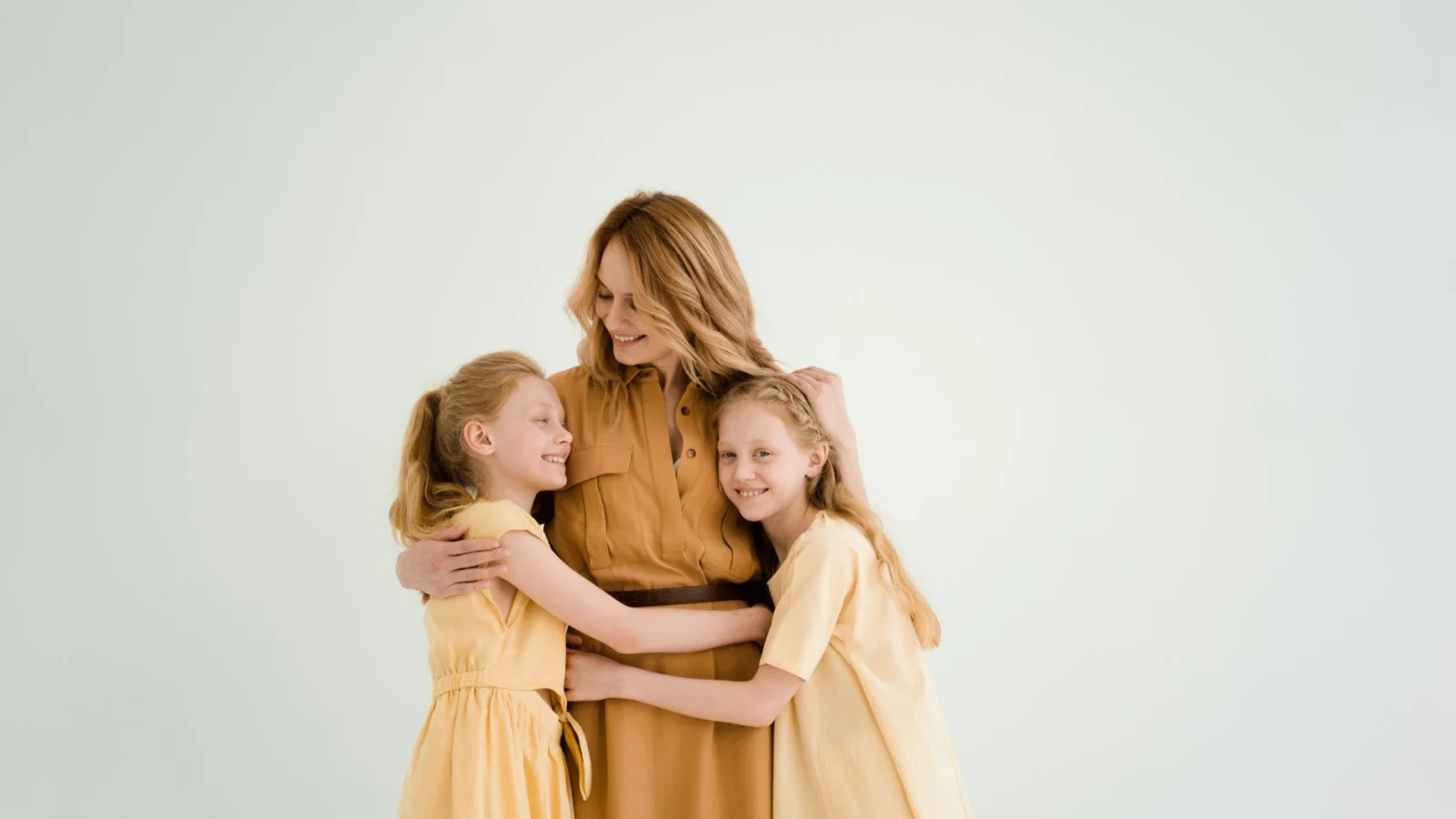
If attachment style is the strategy, parentification is often the training ground where it formed. Parentification happens when a child is placed, implicitly or explicitly, into an adult emotional role: managing a parent’s feelings, mediating conflict between adults, caretaking younger siblings, or becoming the household’s emotional stabilizer. It can be practical, where a child takes over adult tasks, or emotional, where a child becomes the confidant and regulator for a parent who should have been regulating themselves.
A 2025 study on childhood parentification found that both parent-focused and sibling-focused parentification were positively associated with adult codependency, and that this relationship was mediated by differentiation of self. In plainer terms: children who were parentified grew into adults with a reduced capacity to separate their own emotional state from someone else’s, and that reduced capacity is what produced the codependent pattern later in life. The research also noted that most participants in parentification studies were female, reflecting how disproportionately this role gets assigned to girls in families.
This is where the signs of codependency in women often trace back to a specific origin most women have never connected to their adult relationships. If you were the child who checked on a parent’s mood before you walked in the door, who mediated arguments between adults, who felt responsible for keeping the household emotionally stable, you were being trained, without anyone naming it, to manage other people’s internal states as a survival strategy. That strategy did not turn off when you left home. It just found new relationships to attach to.
The connection between early caretaking roles and adult patterns is explored further in this guide on how to heal your inner child as a woman, which covers the wound underneath the role.
9 Signs of Codependency in Women
These are the specific, research-grounded signs of codependency in women that go beyond generic checklists. Not every sign needs to be present for the pattern to be real. Two or three, especially if they feel long-standing and automatic, are worth taking seriously.
1. Your mood tracks someone else’s mood in real time. If a partner, parent, or adult child seems tense, you feel it in your body within seconds, before a word is exchanged. Your day can be derailed entirely by a shift in someone else’s tone.
2. You feel responsible for emotions that are not yours to fix. When someone you love is upset, your first instinct is to solve it, soothe it, or absorb it, even when the upset has nothing to do with you and is not yours to resolve.
3. Saying no produces disproportionate guilt. A small, reasonable boundary, declining a request, asking for space, triggers guilt that is out of scale with the actual situation, as if you have done something genuinely wrong.
4. You struggle to name what you want, separate from what would please someone else. Asked directly what you want for dinner, for your birthday, or from your career, you find yourself scanning for the answer that will keep things smooth rather than accessing your own preference.
5. You stay in draining or one-sided relationships longer than makes sense. Even when a relationship consistently costs more than it gives, leaving or setting real limits feels riskier than staying, because the fear of disconnection outweighs the cost of staying.
6. Being needed feels like the most reliable source of your worth. When no one currently needs your help, fixing, or advice, you feel unmoored rather than free, and you may unconsciously look for a problem to solve.
7. You over-explain or preemptively apologize before setting any limit. A simple, direct request from you rarely stays simple. It comes wrapped in justification, softening language, and apology, as if the request itself needs defending.
8. You have difficulty tolerating someone else’s disappointment, even briefly. If a person you love is disappointed in a decision you made, even a healthy one, you feel an urgent pull to undo it or make it right immediately, rather than letting the disappointment exist and pass.
9. Your identity noticeably shrinks or expands depending on your closest relationship. Friends, hobbies, and interests you had before a significant relationship quietly fall away, and you notice, looking back, that entire seasons of your life were organized around someone else’s needs rather than your own.
Codependency vs. People-Pleasing vs. Just Being a Caring Person
These three get collapsed together constantly, but they are distinct, and the signs of codependency in women make more sense once the differences are clear. Being a caring person means you can genuinely prioritize someone else’s needs sometimes, from a place of choice, without losing your own footing. You can say no when it matters. Your identity stays intact even when you are being generous.
People-pleasing, covered in depth in this guide on how to stop people pleasing as a woman, is primarily driven by the fawn stress response, a nervous system reflex that prioritizes appeasement to avoid conflict or perceived threat in the moment. It tends to be situational and reactive, showing up most strongly around conflict or confrontation.
Codependency is broader and more structural. It is not just about avoiding conflict in a given moment. It is an ongoing, cross-situational pattern where your internal stability depends on someone else’s state, your identity organizes around their needs, and the dependency itself, not just the desire to avoid friction, is the defining feature. Many women have both patterns simultaneously, since fawning under stress and codependent attachment often reinforce each other, but distinguishing them matters because the interventions are different. Fawning responds well to nervous system regulation in the moment. Codependency requires the slower work of rebuilding a separate sense of self, which is where differentiation of self becomes central.
How the Signs of Codependency in Women Resurface During Life Transitions
The signs of codependency in women rarely stay at a constant intensity. They tend to spike during transitions that threaten the relational structure a woman has built her identity around: a partner’s job loss, a child leaving for college, a parent’s declining health, a divorce, or even a partner finally getting healthier or more independent after years of needing to be managed. Each of these events removes or shifts the role that has been organizing her sense of purpose, and the resulting disorientation is often mistaken for grief alone, when it is also an identity crisis.
Perimenopause adds a layer worth naming directly. As estrogen and progesterone become more erratic in the years before menopause, many women report a sharpened, less tolerant relationship to the patterns that once felt automatic. The tolerance for self-erasure that carried a woman through her twenties and thirties often thins considerably in her forties, not because something is going wrong, but because the buffering that made constant accommodation feel sustainable is genuinely changing. Many women describe this stage as the first time the signs of codependency in women they have lived with for decades finally become impossible to ignore.
Recognizing that transitions predictably intensify these patterns is useful precisely because it takes the shame out of the spike. A woman who suddenly finds herself anxious, over-functioning, or unable to tolerate a loved one’s distance during a major life change is not backsliding. She is encountering the exact structural gap, the missing sense of self outside the relationship, that the transition has exposed.
Differentiation of Self: The Path Out of Codependency
Differentiation of self, a concept developed by family systems theorist Murray Bowen, is the clearest antidote to the signs of codependency in women identified in this research. It describes the capacity to remain in close emotional connection with someone while still maintaining a stable, separate sense of your own thoughts, feelings, and values, even when that person is upset, disapproving, or in distress. A well-differentiated person can stay warmly connected without needing the other person to be okay in order to feel okay themselves.
Building differentiation is gradual, and it starts smaller than most people expect. A few concrete places to begin:
Practice the pause before you fix. When someone you love is upset, build in a deliberate pause before jumping to solve, soothe, or absorb it. Ask yourself: is this actually mine to fix, or am I stepping in because their distress is uncomfortable for me to witness?
Let disappointment exist without rushing to repair it. Practice tolerating a few minutes, then hours, of someone else’s disappointment without immediately trying to undo it. Differentiation grows every time you survive that discomfort without abandoning your own decision.
Rebuild a preference practice. Set aside small, low-stakes decisions, what to eat, what to watch, how to spend a free hour, and answer only from your own preference, without scanning first for what would please someone else. This sounds minor. It is actually one of the fastest ways to reconnect with a self that has gone quiet.
Set one boundary without an accompanying apology. State a limit plainly, without over-explaining or softening it into oblivion. The specific scripts and structure for this are covered in this guide on how to set boundaries without guilt, which pairs well with differentiation work because both are ultimately about holding your own ground while staying connected.
Track the physical sensation of being separate. Notice, in your body, what it feels like to hold a different opinion, need, or boundary than someone you love, without collapsing into guilt or over-explaining. That physical tolerance is differentiation being built in real time, one rep at a time.
The patterns here run late into the night, and the page on how to fall asleep faster covers what to do when the mind will not stop at bedtime.
Frequently Asked Questions
Is codependency the same thing as low self-esteem?
They often coexist, but they are not the same thing. Low self-esteem is a belief about your own worth. Codependency is a relational strategy in which your internal stability depends structurally on someone else’s state. You can raise someone’s self-esteem without touching the codependent pattern, because the pattern is about attachment and boundaries, not just self-image. That is why the signs of codependency in women often persist even after confidence-building work, unless the underlying attachment and differentiation piece is also addressed.
Can you be codependent without being in a romantic relationship?
Yes. The signs of codependency in women show up in parent-child relationships, adult sibling relationships, friendships, and caregiving roles just as often as romantic ones. Any relationship where your emotional stability becomes structurally dependent on managing another person’s state can carry the pattern, regardless of the relationship type.
How do I know if I’m codependent or just a naturally caring, generous person?
The distinguishing question is not how much you give. It is whether your own footing survives the giving. A caring person can prioritize someone else and still access her own preferences, say no when it matters, and feel stable even if the other person is upset with her. If your internal calm and sense of worth depend on the other person being okay first, and disappearing your own needs feels automatic rather than chosen, that points toward the signs of codependency in women rather than simple generosity.
Does therapy help with codependency, and what kind works best?
Therapy is often the most effective path, particularly approaches that directly address attachment and family systems patterns rather than surface behavior alone. Attachment-based therapy, family systems therapy informed by Bowen’s model, and Internal Family Systems work all target the actual mechanism behind codependency rather than just the symptom. Co-Dependents Anonymous, a peer support model built specifically around these patterns, is also widely used alongside individual therapy. If codependency intersects with a loved one’s active addiction, a therapist experienced in family addiction dynamics is particularly valuable.
Signs of Codependency in Women: Recognition Is the First Real Shift
The signs of codependency in women are not evidence of weakness or a flawed personality. They are evidence of an attachment strategy that made sense once, often formed in a childhood role that asked too much too early, and reinforced by a culture that rewards women for disappearing into other people’s needs. None of that makes the pattern permanent. Attachment strategies, unlike fixed traits, are learned in relationship, and they can be relearned in relationship too.
The work is not about caring less. It is about building the kind of self that can stay close to people without dissolving into them, the differentiation that lets you hold your own preferences, your own boundaries, and your own emotional weather while still loving fully. That shift does not happen in a single insight. It happens in small, repeated moments: a pause before fixing, a boundary stated without apology, a preference named just because it is yours.
If you recognized yourself in several of the signs of codependency in women covered here, that recognition itself is meaningful progress. Patterns this old do not change overnight, and they do not require you to overhaul every relationship at once. They ask for one small, consistent shift at a time, held long enough for a different pattern to take root.
Medical disclaimer: This article is for educational and informational purposes only and is not a substitute for professional medical or psychological advice, diagnosis, or treatment. Codependency and its underlying causes can be complex, particularly when intertwined with trauma, addiction in the family, or other mental health conditions. Please consult a licensed therapist or healthcare professional for personalized guidance, especially if these patterns are affecting your safety or wellbeing.
Related Articles
- Signs of Imposter Syndrome in Women: 8 Patterns You Might Not Recognize
- Signs of Self-Sabotage in Women: 8 Patterns That Keep You Stuck
- Signs Your Nervous System Is Dysregulated (And How to Fix It)