


Power training over 50 is the part of the gym conversation most women never hear, and it may be the part that decides how well you move at 70. Search for training advice in your fifties and the answer is the same everywhere: lift heavy, build strength, protect your bones. That advice is sound. It is also incomplete. Strength is how much force you can produce. Power is how much force you can produce quickly. Those are two different qualities, they fade at different rates, and the second one is what catches you when your foot snags on a curb.
Here is where most articles get it wrong. They claim power training over 50 means putting the heavy weights down and whipping light dumbbells around. The research does not say that. In the trials that isolated these two things properly, the weight on the machine stayed identical and only the speed of one phase of the lift changed. That single distinction should reshape how you structure your sessions.
This is also a topic the fitness internet oversells. Power work is genuinely worth doing, but the highest-quality review of the evidence concludes it produces effects broadly similar to conventional resistance training for most functional outcomes, with a modest edge on specific tasks. You will get the honest version here, limits included.
What Power Training Over 50 Actually Means
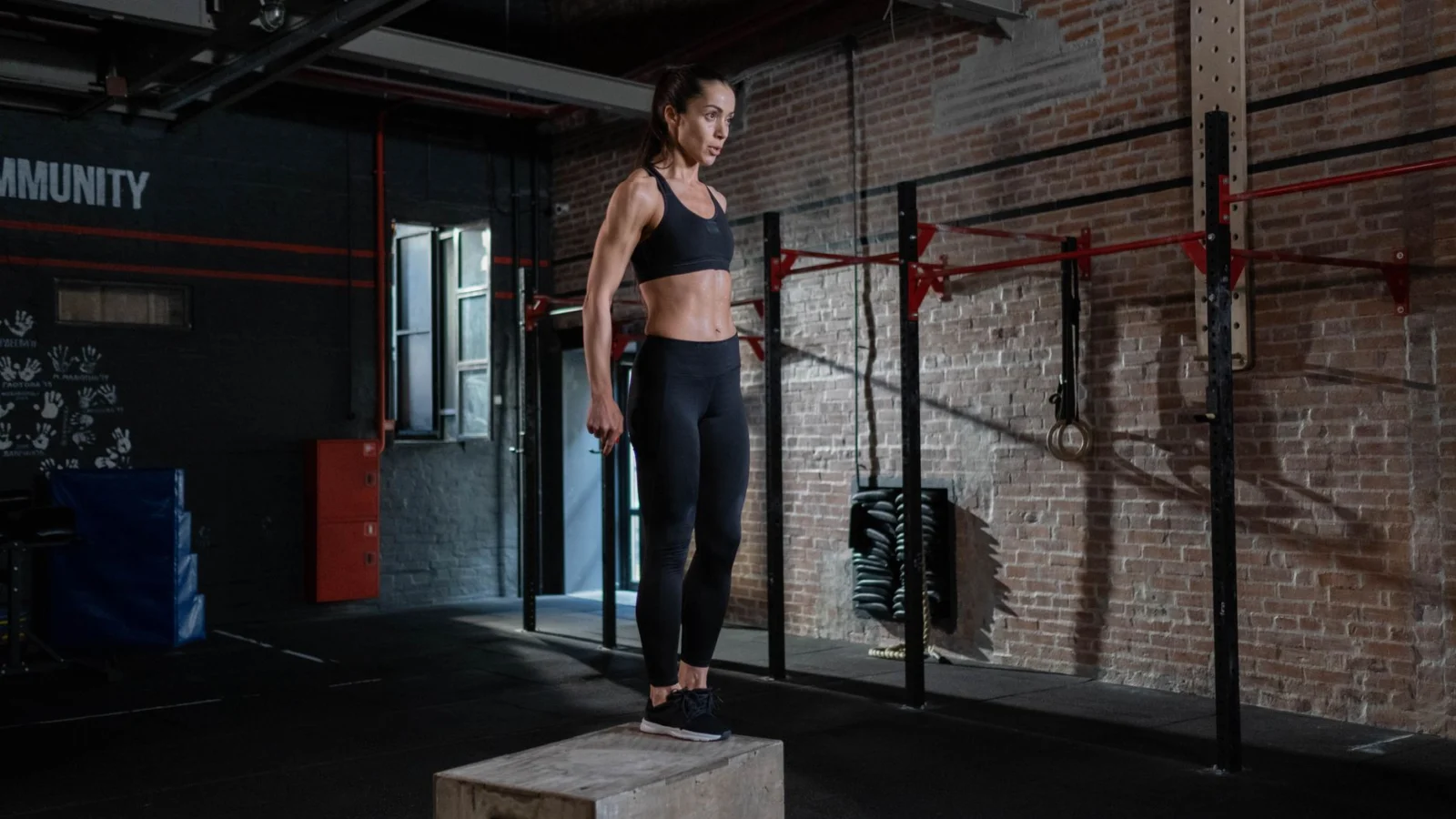
Physics offers a clean definition: power is force multiplied by velocity. You can raise power by moving a heavier load, or by moving the same load faster. Strength training traditionally chases the first route. Power training chases the second.
The clinical literature is refreshingly precise about this. In the 2023 systematic review published in the Journal of Physiotherapy, researchers defined high-velocity power training as work performed with the intent to complete the concentric phase as quickly as possible, compared against traditional resistance training performed with a concentric phase of two seconds or longer. Read that definition again and notice what is missing from it. There is no mention of load. The defining variable is intent and tempo, not the number on the dumbbell.
The concentric phase is the lifting or pushing half of a repetition: standing up out of the squat, pressing the weight away from your chest, driving the leg press out. The eccentric phase is the lowering half. In power work, you accelerate hard through the concentric phase and then lower under control at a normal speed. You are not flinging the weight in both directions.
That distinction matters for anyone already following a structured plan. If you are working through progressive overload as a beginner, power training is not a replacement for that framework. It is a modification to how you execute some of your repetitions inside it.
Why Power Fades Before Strength Does
Muscle is not a single uniform tissue. It contains slow fibres, built for endurance and posture, and fast fibres, built for rapid, forceful contraction. Aging does not treat them equally, and that asymmetry is the whole reason this topic exists.
A cross-sectional study of 53 healthy adults aged 20 to 85, published in the Journal of Exercise Nutrition and Biochemistry and archived at the NIH, took muscle samples from the thigh and compared fibre composition and function across age and sex. Among the women in that sample, older participants showed isotonic power 36.5% lower than younger participants, against isometric strength 24.2% lower. The power gap was noticeably wider than the strength gap. The muscle biopsies pointed to why: the proportion of fast myosin heavy chain IIa was significantly lower in the older women, and the researchers found that fibre type correlated positively with strength and function while the slow type correlated negatively.
Two honest caveats belong with that number. It is a small sample of 21 women, and it is cross-sectional, meaning it compares different people at different ages rather than following the same women as they age. The authors also reported that the overall pattern of age-related decline reached statistical significance more consistently in the men than in the women. So treat it as a signal about which quality erodes faster, not as a precise personal forecast.
The practical translation is simple. If your training only ever asks your muscles to produce force slowly, you are never asking the fast fibres to do the one thing they exist to do. They respond accordingly. This is the entire rationale for power training over 50: you are deliberately recruiting the fibre population that ordinary slow lifting leaves half asleep.
The Biggest Myth About Power Training Over 50
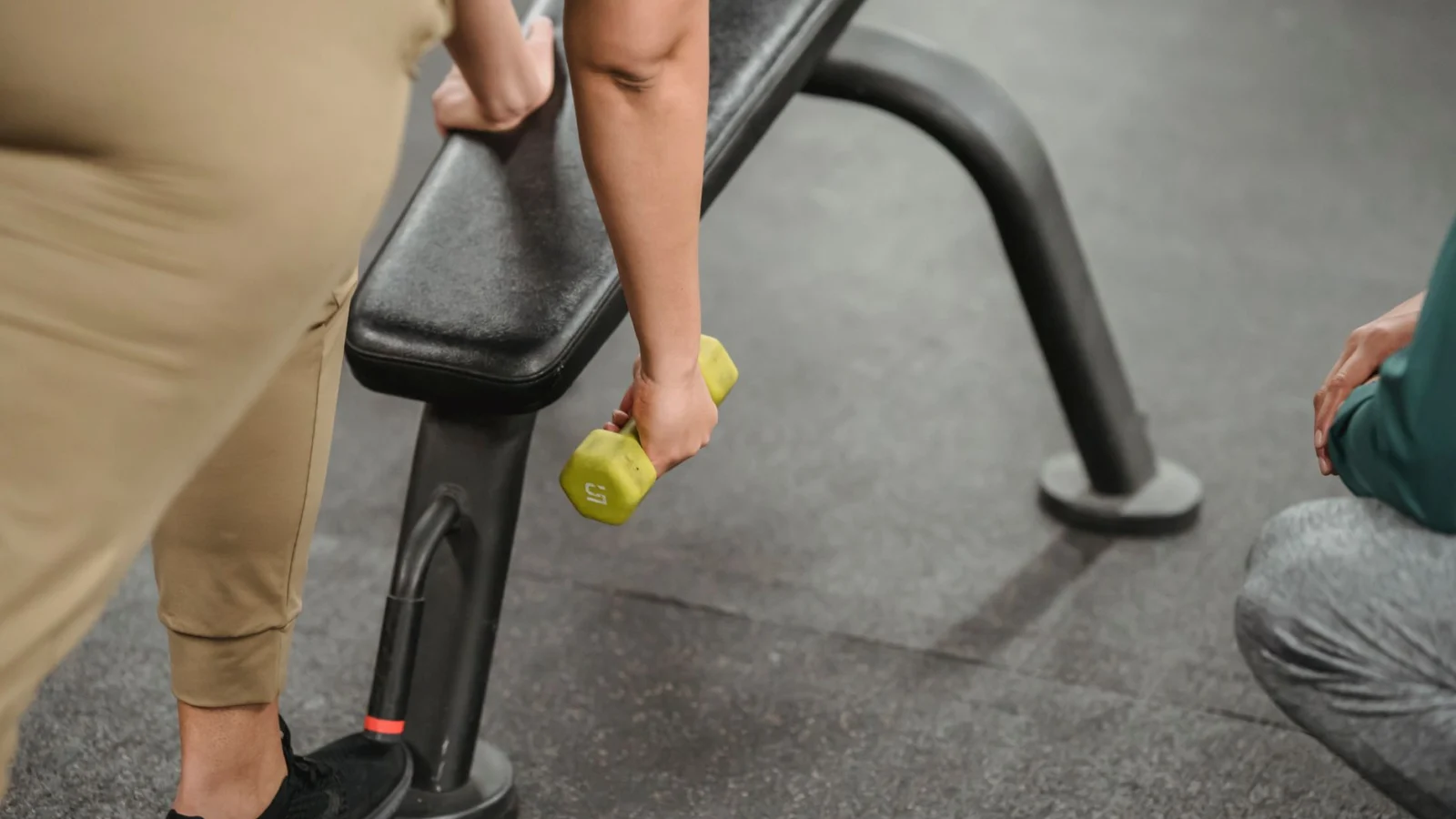
Almost every consumer article on this topic tells women that power training over 50 means switching to lighter weights. It is an intuitive idea, and it is not what the cleanest trial on the question found.
Researchers at Wake Forest randomised 45 older adults with self-reported difficulty in daily activities, averaging just under 75 years old, into power training, strength training, or a wait-list control group. Both training groups used the same two machines, knee extension and leg press. Both trained three times a week for twelve weeks. Both worked at roughly 70% of their one-repetition maximum. Both paused briefly at the midpoint and lowered the weight over two to three seconds.
Exactly one variable separated them. The power group completed the concentric phase “as fast as possible.” The strength group took two to three seconds over it.
Both groups improved their one-repetition maximum compared to controls, so strength gains were comparable. But maximum knee extension and leg press power increased approximately twofold in the power group relative to the strength group. At twelve weeks, maximum power was significantly increased against controls in the power group but not in the strength group.
Same machines. Same weight. Same sessions. Roughly double the power adaptation, from tempo alone. That is the finding the internet keeps burying under advice to pick up a lighter dumbbell. Lighter loads can absolutely be used for power work, and plenty of trials do use them, but lightness is not the active ingredient. Intent to accelerate is.
This also means power work sits comfortably alongside heavier training rather than replacing it. If you have been reading about lifting heavy during perimenopause for bone density, you do not have to choose between the two goals. Heavy loading drives the bone stimulus. Fast intent drives the power stimulus. They can live in the same programme.
What the Evidence Supports, and What It Does Not

Now for the part the fitness industry skips. Power training over 50 is not magic, and the research community is openly uncertain about how much better it is than what you are probably already doing.
The 2023 Journal of Physiotherapy systematic review pooled 19 randomised trials covering 1,055 older adults. Compared with traditional resistance training, high-velocity power training produced a weak-to-moderate advantage on the Short Physical Performance Battery, a standardised mean difference of 0.27 with a confidence interval running from 0.02 to 0.53, and on the Timed Up and Go test, a standardised mean difference of 0.35 with a confidence interval from 0.06 to 0.63. The authors graded both of those as low-quality evidence. For every other outcome they measured, the effect remained very uncertain. The average quality-of-reporting score across the included trials was 53%, with only two rated high quality.
Their conclusion was that the two approaches had similar effects on functional performance, with considerable uncertainty in most estimates.
A larger network meta-analysis in the Journals of Gerontology added an important wrinkle. Across 79 trials involving 3,575 older adults, the researchers found that velocity effects are test-specific rather than universally superior. High-velocity resistance exercise came out most effective for fast walking speed, the Timed Up and Go, and the five-times sit-to-stand test. Traditional resistance exercise came out most effective for the 30-second sit-to-stand test and the six-minute walk. Their conclusion was that resistance exercise velocity effects in older adults depend on which function you are measuring.
Put those two findings together and you get a genuinely useful answer, and one you will not find in the listicles. Fast intent appears to help most with tasks that are themselves fast and reactive: rising quickly, turning, changing direction, recovering a step. Slower conventional work appears to help more with repetition and endurance tasks. That is an argument for including both, not for swapping one out.
Falls, Stairs, and the Recovery Step

The reason researchers keep testing Timed Up and Go and sit-to-stand is that these are proxies for the situations where a slow muscle costs you something real.
The stakes are well documented. According to the CDC’s older adult falls data, falls are the leading cause of injury for adults aged 65 and older, and more than 14 million older adults, one in four, report falling each year. About 37% of those who fall report an injury that required medical treatment or restricted their activity for at least a day, which works out to an estimated nine million fall injuries. The CDC also reports that the age-adjusted fall death rate rose 21% between 2018 and 2024, from 64.7 to 78.4 per 100,000 older adults.
Think about the mechanics of a near-fall. Your weight shifts past your base of support and you have a fraction of a second to get a foot out and generate enough force to arrest the movement. Maximum strength barely enters into it, because there is no time to develop maximum force. What you need is force delivered fast. That is the specific quality power training targets, and it is why the functional test results in the gerontology literature cluster around speed-dependent tasks.
This is not a reason to panic about your fifties. It is the reason power training over 50 is framed around function rather than appearance: you are building a quality now that is far easier to maintain than to rebuild later.
How to Add Power Training Over 50 to Your Week
The trials above were supervised, machine-based, and run in research settings, so translate them into your own gym with some judgement rather than treating them as a prescription.
Start from a base. Every one of these studies screened participants and taught technique first. If you are new to resistance training, spend a couple of months building competence and connective tissue tolerance before adding speed. A structured starting point like strength training for women over 40 is the right foundation to build on.
Apply speed to a few exercises, not everything. Compound lower-body movements are where the functional payoff sits: leg press, goblet squat to a box, step-ups, sit-to-stand from a chair. Upper body pressing and rowing can work too. Isolation moves and anything loaded near your absolute limit are poor candidates.
Accelerate up, control down. The concentric phase is where intent goes. Push or stand as fast as you can manage with good form, then lower over two to three seconds. This is the tempo the Wake Forest protocol used, and it protects you from turning the lift into an uncontrolled drop.
Keep the sets short. Power is the first thing to disappear when you fatigue. Once your reps visibly slow down, the set has stopped being power work. Lower rep counts with full recovery between sets preserve the quality you are training for.
Place it early. Power work belongs after your warm-up and before your heavy or high-volume work, when your nervous system is fresh.
Do not add it to everything at once. Two sessions a week containing some fast-intent work is a reasonable place to begin. Power training over 50 is a modification to an existing programme, not a fourth training day bolted onto a full week. If you are already struggling with recovery, read when to push through and when to rest before adding anything.
Training Fast Without Getting Hurt
Moving quickly under load raises the stakes on technique, and power training over 50 deserves a straight safety answer rather than blanket reassurance.
Acceleration means higher forces through joints and tendons in a shorter window. If you have osteoarthritis, a joint replacement, diagnosed osteoporosis, a history of vertebral fracture, uncontrolled high blood pressure, or any cardiovascular condition, speak with your doctor or a physiotherapist before adding explosive work, and ask specifically which movements are appropriate for you. Some conditions call for modified exercise selection rather than avoiding speed altogether, and that is a judgement your clinician should make with your history in front of them, not one an article can make for you.
Machines and supported variations are a sensible entry point precisely because they restrict the movement path. Standing up quickly from a chair, a leg press, or a step-up holding a rail all let you practise acceleration with less demand on balance than a free-weight movement. Building up to unsupported variations later is reasonable if your balance and technique allow it.
Finally, distinguish fast from careless. Fast intent still means a controlled range of motion, a stable spine, and a deliberate lowering phase. If speed is only achievable by shortening your range or throwing your torso, the load is too heavy for power work that day.
Mistakes That Undo Power Training Over 50
Turning it into cardio. Rushing through sets with short rests produces fatigue, not power. Conditioning has its own place, and a structured approach like HIIT for women over 40 handles that goal better than a rushed lifting session does.
Abandoning heavy work entirely. The evidence does not support replacing conventional training. The network meta-analysis found traditional resistance exercise superior for several functional tests, and heavy loading remains the primary driver of maximal strength.
Accelerating the lowering phase. The eccentric portion stays controlled. Dropping into the bottom of a squat quickly is how people get hurt.
Expecting a transformation. Power training over 50 improves a specific quality. It will not by itself change your body composition, and it is not a substitute for adequate protein and total training volume if muscle growth is your goal. The mechanics of that are covered in building muscle as a woman naturally.
Chasing speed at the cost of form. Every trial cited here was supervised. Unsupervised, technique tends to erode when speed becomes the target. Film a set occasionally and check that it still looks like the movement you intended.
Power work belongs on the strength days the guideline asks for, and the page on how to start working out shows the beginner’s week those days sit in and why they matter more with age.
Power Training Over 50: Common Questions
Is power training safe if I have never lifted weights before?
Not as a starting point. Every study discussed here recruited participants who were screened and supervised, and several taught the movements before adding velocity. Build several weeks of ordinary resistance training first so that your technique is automatic, then introduce fast intent on a small number of exercises. If you have any diagnosed joint, bone, or cardiovascular condition, clear it with your doctor before you begin.
Should I use lighter weights for power training over 50?
Not necessarily, and this is the most widely repeated error on the topic. A Tufts trial in older women produced roughly double the power gains using 70% of one-repetition maximum, the same load the slow-velocity group used. Lighter loads are used in many protocols and are a reasonable option, but the variable that drives the adaptation is the intent to accelerate through the lifting phase, not the lightness of the weight.
How often should I train for power?
The trials referenced here typically ran three supervised sessions a week over roughly twelve weeks. For most women adding this to an existing routine, applying fast intent within two sessions a week is a practical starting point. Because power degrades quickly with fatigue, keeping the volume modest and the rest generous matters more than the raw session count.
Does power training help prevent falls?
The evidence is encouraging but not conclusive. Power training improves performance on tests strongly associated with fall risk, particularly the Timed Up and Go and the five-times sit-to-stand. That is not the same as a demonstrated reduction in falls themselves, and the systematic review evidence comparing power work to conventional training was graded low quality. Balance training, vision checks, medication review, and home hazard removal all remain part of fall prevention, and none of them are replaced by lifting fast.
Is this different from what younger women should do?
The principle is identical, since power is force times velocity at any age. What changes is the urgency. Fast fibre proportion and power output decline earlier and more steeply than maximal strength, so the quality is easier to preserve in your fifties than to reclaim in your seventies. Motivation is often the harder part, and if that is the sticking point, practical gym motivation strategies may be more useful than another programme.
The Bottom Line
Power training over 50 deserves a place in your week, and it deserves to be described accurately. The defining feature is the intent to move the load quickly through the lifting phase, not a switch to lighter weights. A trial that held the weight at 70% of one-repetition maximum and changed only the tempo produced roughly double the power adaptation, which is about as clean a demonstration of that principle as the literature offers.
It is also worth keeping expectations calibrated. The best available synthesis found high-velocity work broadly similar to traditional resistance training for functional performance overall, with a modest advantage on speed-dependent tasks and considerable uncertainty throughout. The sensible reading is not that power training replaces strength training, but that the two target different qualities and a good programme in your fifties includes both.
Start conservatively. Pick two or three compound movements, accelerate the lifting phase, lower under control, stop the set when the bar or the machine slows down, and keep your heavier work in place around it. The quality you are protecting is not how much you can lift. It is how fast you can respond, which is a quality that tends to go quietly until the day you need it.
Related Articles
- Strength Training for Women Over 40: The Complete Beginner’s Guide
- HIIT Workout Plan for Women Over 40: The Safe Way to Do It
- Cardio vs Weight Training for Women: Which Burns More Fat
This article is for informational purposes only and is not a substitute for professional medical advice, diagnosis, or treatment. Always consult your doctor, physiotherapist, or another qualified healthcare professional before starting a new exercise programme, particularly if you have any bone, joint, or cardiovascular condition.
Sources
- PubMed, NIH. High-velocity power training has similar effects to traditional resistance training for functional performance in older adults: a systematic review.
- PubMed Central, NIH. Age- and sex-related differences in myosin heavy chain isoforms and muscle strength, function, and quality: a cross sectional study.
- PubMed Central, NIH. Lower Extremity Muscle Function After Strength or Power Training in Older Adults.
- PubMed, NIH. Does High-Velocity Resistance Exercise Elicit Greater Physical Function Benefits Than Traditional Resistance Exercise in Older Adults? A Systematic Review and Network Meta-Analysis.
- CDC. CDC's older adult falls data.
- PubMed, NIH. High-velocity resistance training increases skeletal muscle peak power in older women.